Kids Sleeping Bag Size By Height Calculator
Match a child to a sleeping bag length, shoulder fit, warmth buffer, pad loft, age range, and packed volume before a campout.
🧒 Child Size Presets
📏 Sleeping Bag Fit Inputs
Measure around shoulders and upper arms while wearing sleep layers.
Recommended Sleeping Bag Fit
🧭 Size Class Comparison Grid
Best for about 34–40 in tall with low empty foot space.
Fits many preschool and early elementary campers.
Common scout and school-age size for tent camping.
Useful when a child is near adult short bag territory.
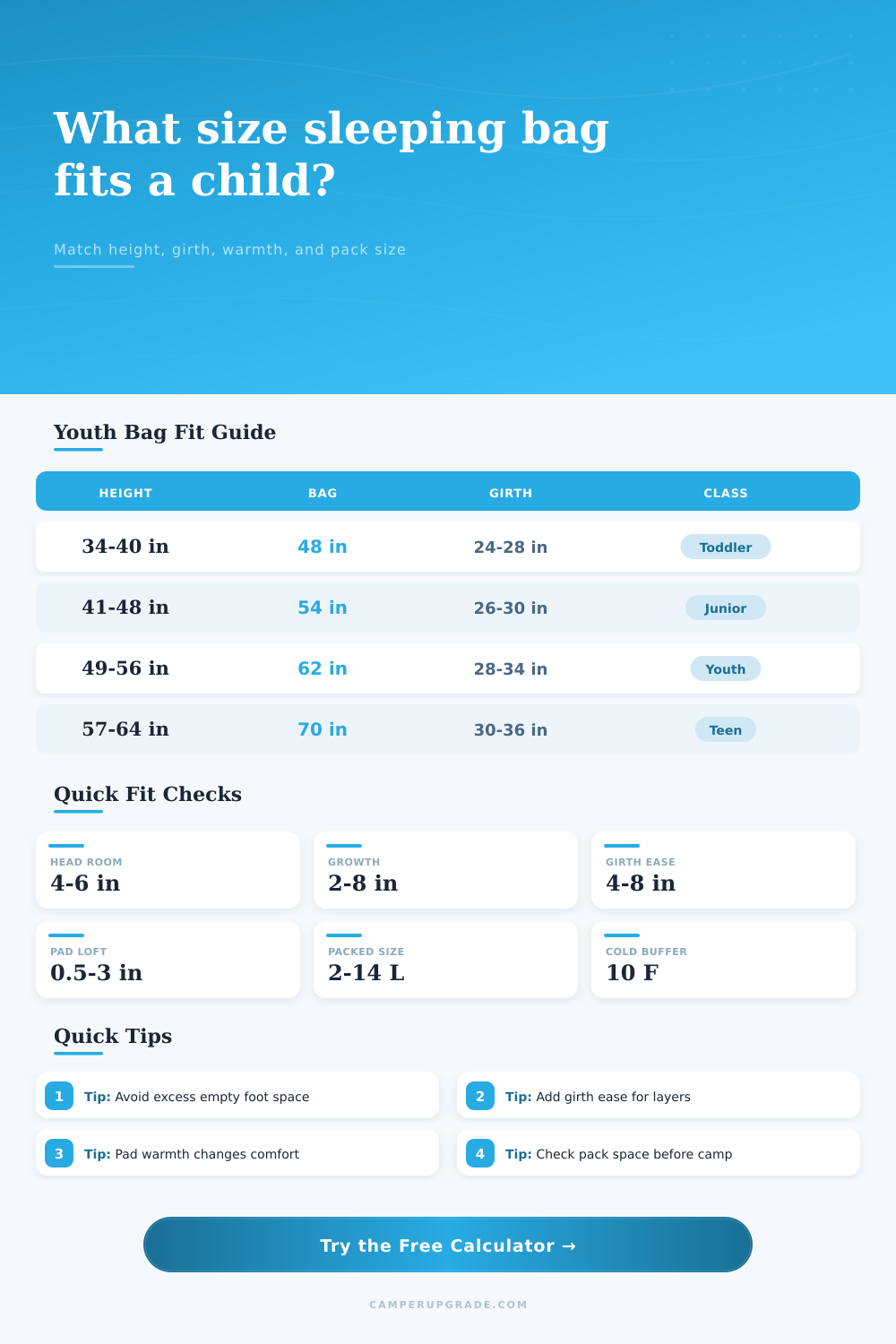
📊 Child Height To Bag Length Table
| Child Height | Metric Height | Suggested Bag Length | Typical Size Class |
|---|---|---|---|
| 34–40 in | 86–102 cm | 48 in / 122 cm | Toddler camp bag |
| 41–48 in | 104–122 cm | 54 in / 137 cm | Junior kids bag |
| 49–56 in | 124–142 cm | 62 in / 157 cm | Youth sleeping bag |
| 57–64 in | 145–163 cm | 70 in / 178 cm | Tall youth or teen bag |
| 65–70 in | 165–178 cm | 75 in / 191 cm | Adult short or regular |
🌡 Temperature Rating And Pad Thickness Table
| Expected Low | Bag Rating Target | Pad Thickness | Fit Note |
|---|---|---|---|
| 55–65°F | 50°F bag | 0.5–1 in | Warm-weather or indoor use |
| 45–55°F | 40°F bag | 1–1.5 in | Summer tent camping |
| 35–45°F | 30°F bag | 1.5–2.5 in | Three-season youth camp |
| 25–35°F | 20°F bag | 2–3 in | Cold shoulder-season nights |
| 15–25°F | 10°F bag | 3 in or more | Winter-rated youth setup |
🎒 Packed Volume Reference Table
| Packed Volume | Best Use | Likely Fill | Tradeoff |
|---|---|---|---|
| 2–4 L | Small youth pack | Light synthetic or down | Less roomy, careful sizing |
| 5–7 L | Scout hike or sleepover | Youth mummy or semi-rect | Balanced warmth and bulk |
| 8–10 L | Tent or family camping | Most synthetic kids bags | Good comfort, moderate bulk |
| 11–14 L | RV, cabin, car camping | Rectangular comfort bag | Warm and roomy, bulky |
📝 Age And Girth Fit Table
| Age Range | Common Height | Shoulder Girth | Room To Add |
|---|---|---|---|
| 2–4 years | 34–40 in | 22–26 in | 4 in ease |
| 5–7 years | 41–48 in | 24–29 in | 4–6 in ease |
| 8–10 years | 49–56 in | 27–32 in | 5–7 in ease |
| 11–13 years | 57–64 in | 30–35 in | 6–8 in ease |
| 14+ years | 65+ in | 32–38 in | Adult sizing check |
💡 Fit Tips
Sometimes, it’s on that drive to the campsite that the panic sets in. The zipper’s closed. The kid is shivering. Is the sleeping bag too big? Is it too small? Are their toes curling up because you can feel the heat radiating off them? That’s what purchasing for kids are like. You want the kid to feel snug, but you also want them to stay warm. Those two aims tend to oppose one another.
But first, there’s length. Longer is better, right? He wants it longer so that he can grow into it. But a sleeping bag that is eight inches too long will have cold spots because it has more empty space. Because children don’t produce as much body heat as we do, they’re challenged when it comes to warming up all that unused space at the bottom of the bag. So what you’ve got is a little kid who can’t seem to keep his tummy cozy-warm but whose lower-legs is swathed in unnecessary fabric.
How to Choose the Right Sleeping Bag for Kids
This sleeping-bag length calculator does the math for you: just plug in your childs height and how much extra room you want him to have. That way you avoid having to guess about whether a longer bag is actualy worth a loss of warmth.
Fit also plays a big role in sleep comfort. Just because it’s long enough doesn’t mean it fits well. The shoulder width might be too narrow, this can cause the zipper to catch or the insulation to get compressed. Insulation that are compressed no longer does its job. It’s little things like this that matter for holding heat.
And when you’re getting measured for your kid, remember, they’re not lying on a tape measure naked. They’re wearing what they’ll wear to bed. A hat, a thermal base layer, and pajamas all makes a difference. Get the right fit in the store because if it feels too tight, they will suffocate in the tent.
One other thing most folks forget about is the sleeping pad. Raising the kid up from the ground on a good pad helps keep them warm. It also makes them taller which can make a difference in how much room they take up in the bag. Otherwise the zipper won’t close all the way, and even then it could be too tight around the kid’s knees. Bent knees lead to no circulation and cold feet. And this chain reaction begins with a roll of foam.
That temp rating on the tag isn’t completely true. That’s for lab tests in still air. At a real campsite there is a draft. Wind leaks into your tent, and real kids toss and turn, kicking the liner down. A tent is drafty. So build a buffer. If it’s going to be forty degrees out, don’t take a chance with a forty-degree bag. Go up; don’t go down. Always unzip to cool off. You can’t warm yourself up in a bag that has reached capacity.
And that brings us to the last constraint: Packed Size. There isn’t a lot of space in youth packs. A big ol’ rectangular duffle may fit well on your back, but it will fill the whole pack. No more room for an extra pair of socks or snacks! Mummy bags take up less space and weigh less to. But sometimes they can make you feel like you’re trapped in a bag. Packed size versus packing comfort (which do you prefer? On the page), the tables breaks out some broad category ranges: Toddler through Teen.
But each kid is unique. Some kids will be thinner and taller than others. Some will be broader and shorter. Rather than just rely off age ranges, you can enter your own height/girth data into the tool and it will help guide you through the differences. Age isn’t a great proxy for size. Two 10-year-olds might differ by several pounds of weight or inches in height.
While shopping, lay your kid down in the bag. Are their feet touching the end? No, they are dangling. Is there enough space for the baby’s shoulders to move freely without squishing the fill? If you get those two criteria correct, you’ve cracked the code.
Now it’s time to pack. It’s all about fitting that bag correctly, then the drive home won’t be a scene from Panic City. You should of checked the fit first.