RV Park Monthly vs Nightly Rate Calculator
Compare nightly, weekly, and monthly RV park billing with stay length, included nights, discount thresholds, metered electric, taxes, fees, extra guests, and pet charges.
🏕RV Park Stay Presets
📋Stay Length And Rate Inputs
🏷Discount Thresholds
⚡Metered Electric And Utility Inputs
🧾Taxes, Fees, Guests, And Pets
Selected Plan Breakdown
📌Current Rate Snapshot
📊Live Comparison Grid
Nightly
$0Good for short stays, simple taxes, and parks without weekly thresholds.
Weekly
$0Uses weekly blocks after the weekly threshold, then bills remaining nights.
Monthly
$0Uses the monthly rate after the monthly threshold and selected remainder rule.
Spread
$0Difference between the lowest and highest all-in billing result.
📘Billing Method Reference Tables
| Billing Path | Base Site Rent Formula | Best Fit | Watch Item |
|---|---|---|---|
| Nightly | Billed site nights x nightly rate | Weekends, stopovers, and short vacations | Taxes and nightly resort fees can dominate short stays. |
| Weekly | Full 7-night blocks x weekly rate plus leftover nights | Seven to twenty-seven night stays | Some parks require a minimum stay before weekly billing applies. |
| Monthly | Full park months x monthly rate plus selected remainder rule | Snowbird, workamping, seasonal, and relocation stays | Electric, deposits, and admin fees are often handled separately. |
| Included nights | Deducted from site-rent nights before rate comparison | Membership, host credit, rally comp, or promo stays | Guest, pet, utility, and resort fees may still apply every night. |
| Stay Length | Likely Rate Check | Common Electric Rule | Calculator Setup |
|---|---|---|---|
| 1 to 6 nights | Nightly usually applies | Often included | Set weekly threshold to 7 and electric mode as included if power is bundled. |
| 7 to 13 nights | Weekly rate can beat nightly | Included or metered varies | Enter weekly rate, weekly threshold, and any weekly discount percent. |
| 14 to 27 nights | Two or three weekly blocks may win | Meter fee may appear | Compare weekly blocks against monthly threshold before booking. |
| 28 to 31 nights | Monthly often becomes competitive | Metered electric is common | Set park month to 28, 30, or 31 nights to match the posted policy. |
| 32 nights or more | Monthly plus remainder rules matter | Allowance or meter read | Choose nightly, weekly, or prorated remainder billing for extra nights. |
| Electric Rule | How To Enter It | What Gets Billed | Planning Note |
|---|---|---|---|
| Included power | Choose electric included | No separate kWh charge | Useful for short-stay resorts where power is bundled in the site rate. |
| Fully metered | Choose metered electric and set kWh/day | All estimated kWh plus meter fee and electric tax | Common on monthly RV park stays, especially during hot or cold seasons. |
| Daily allowance | Choose allowance and enter included kWh/day | Only kWh above allowance | Works for parks that include a small amount of power before charging overage. |
| Flat utility admin | Use meter fee even with low kWh | One-time utility or meter-read fee | Short stays can show a high electric average if the flat fee is included. |
| Fee Type | Calculator Field | Applied To | Comparison Effect |
|---|---|---|---|
| Resort or trash fee | Fee per night | All stayed nights | Moves every rate path upward by the same nightly amount. |
| Reservation or admin | Fee per stay | One-time stay charge | Raises short stays more on an average-night basis. |
| Extra guest fee | Guest count minus included guests | Each extra guest per night | Can shift a family stay away from a park with a low base rate. |
| Pet fee | Pets times pet fee, with optional cap | Each pet per night or capped stay total | Monthly pet caps can make long stays less expensive than nightly totals. |
| Tax percent | Lodging, fee, and electric tax fields | Selected taxable subtotal | Different tax handling can change the true monthly break-even point. |
📐Formula Notes
rent nights = max(0, stay nights - included nights)weekly site rent = full 7-night blocks x weekly rate + leftover rent nights x nightly rate, then weekly threshold discount when eligiblemonthly site rent = full monthly cycles x monthly rate + remainder charge, then monthly threshold discount when eligibleall-in total = discounted site rent + electric + guest fees + pet fees + nightly fees + stay fees + applicable taxes
🧭Rate Comparison Tips
That’s why it’s so easy to be lured into booking an RV site by its advertised nightly rate; until you arrive to see that monthly rate appears much more attractive. The bottom-line number isn’t the headline number. It is hidden in electric meter, the pet fee cap, and how the park bills for extra nights that don’t fit neatly in thirty days. Most travelers just get stuck on brochure price.
The calculator above lets you plug in the park’s true billing rules along with how much electricity you use and how long you stay (then runs entire calculation).
The Real Cost of RV Parks
And there’s another one: electricity. Many short-term rentals includes electricity in their nightly price. This is convenient at first, but it’s bad when you’re blasting AC for three weeks straight. Because of this, many monthly parks moves to metered pricing, which means charging you based off how much electricity you use.
Here’s where most people fail. A low-priced month can be ruined by utilities. Use this formula. Estimate how many kilowatts you use per day and multiply that number by the park’s cost-per-kilowatt. Then, compare that figure against the discounted monthly fee. Does the discount survive electricity bill?
And then there are friction fees. Resort fees, reservation admin fees, and trash collection charge are almost always charged per stay or per night, whether you pay by the month or the night. These fees do not go away if you changes your billing period. In some cases, they may skew an average night’s price wildly differently depending on length of stay. That single twenty-dollar admin fee tacks over six bucks onto your effective night price if it’s a three-night visit, but it is hardly even noticeable for a forty-five night seasonal rental. It’s hardly even noticeable.
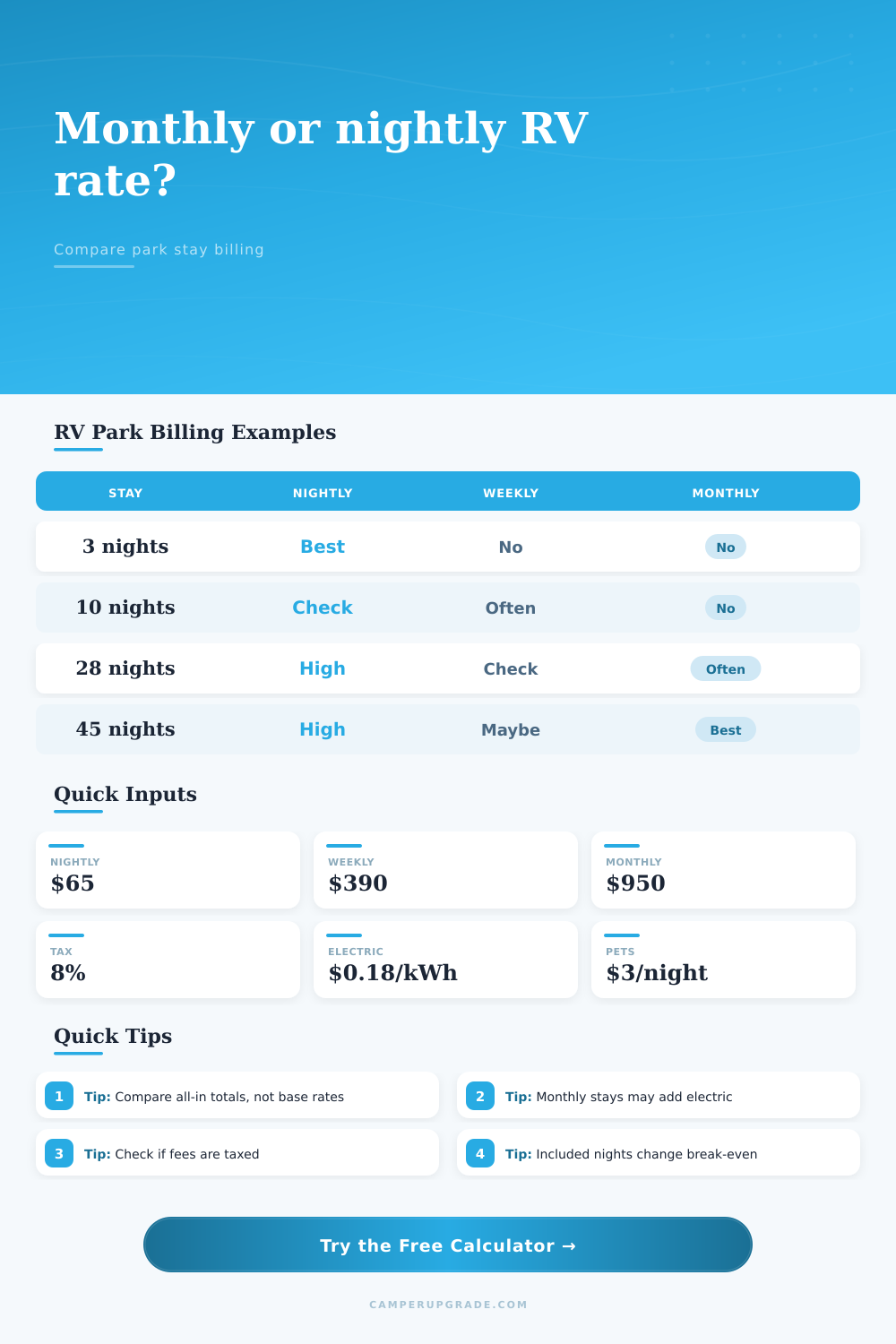
If you want to get a sense for real difference in prices, you have to include those flat fees in your calculations. This is where the reference table on the page breaks it down, showing that as stay length increases so does optimal strategy.
Since weekends are typically best time to get away, nightly billing offers most security (no minimum stay fees, no complicated leftover calculation). At seven nights, week-long stays will start kicking in, and you’ll see a slight savings. But, things really open up at twenty-eight nights. There’s a good chance your park has a monthly rate, too. The problem? How do they calculate the remainder? Some will charge you an entire second month for four extra days. Other parks pro-rate it. That could mean difference between saving or losing several hundred dollars.
There’s also the extra detail of pet and guest policies. Most parks allows two guests at base rate; beyond that, they’ll have a per-head fee. They may also cap their pet fees after x number of nights. This means longer stays will be favored. So while the monthly rate may seem high when you’re bringing along your big family or two dogs, guest allowance and fee caps could drastically reduce average over time. Ask if the park charges a per-pet nightly fee (which renews each month) or a one-time fee across the duration of your stay.
And then there’s those included nights. A few loyalty programs and RV clubs will give you free nights which will come off of your site rent. Those are typically for base site price only (no taxes/utilities). Small potatoes, I know… but it counts. Using a free night toward a nightly rate will save you more cash up front than using it toward month-long block. However, you may lose out in the overall average calculation because of the longer timeframe. Run numbers both ways to see if it makes a difference.
In short, what’s right for you is based off the combination of cost, length of stay, and the number of people in your party. There is no one right answer here. If you’re a snowbird spending only 3 months there, it’ll almost always make sense to go with month rate (even though they charge by the kilowatt). If you’ve got an 8 day trip as a family, you’ll probably end up saving more than the week rate. You should of checked the math first. It would of been better if you did.
It’s not about finding the smallest number on the page; it’s about knowing which cost structure fits your actualy lifestyle on the road. The headline gets you booked into the spot, the details get you paying.