Gear Rental vs Buy Calculator
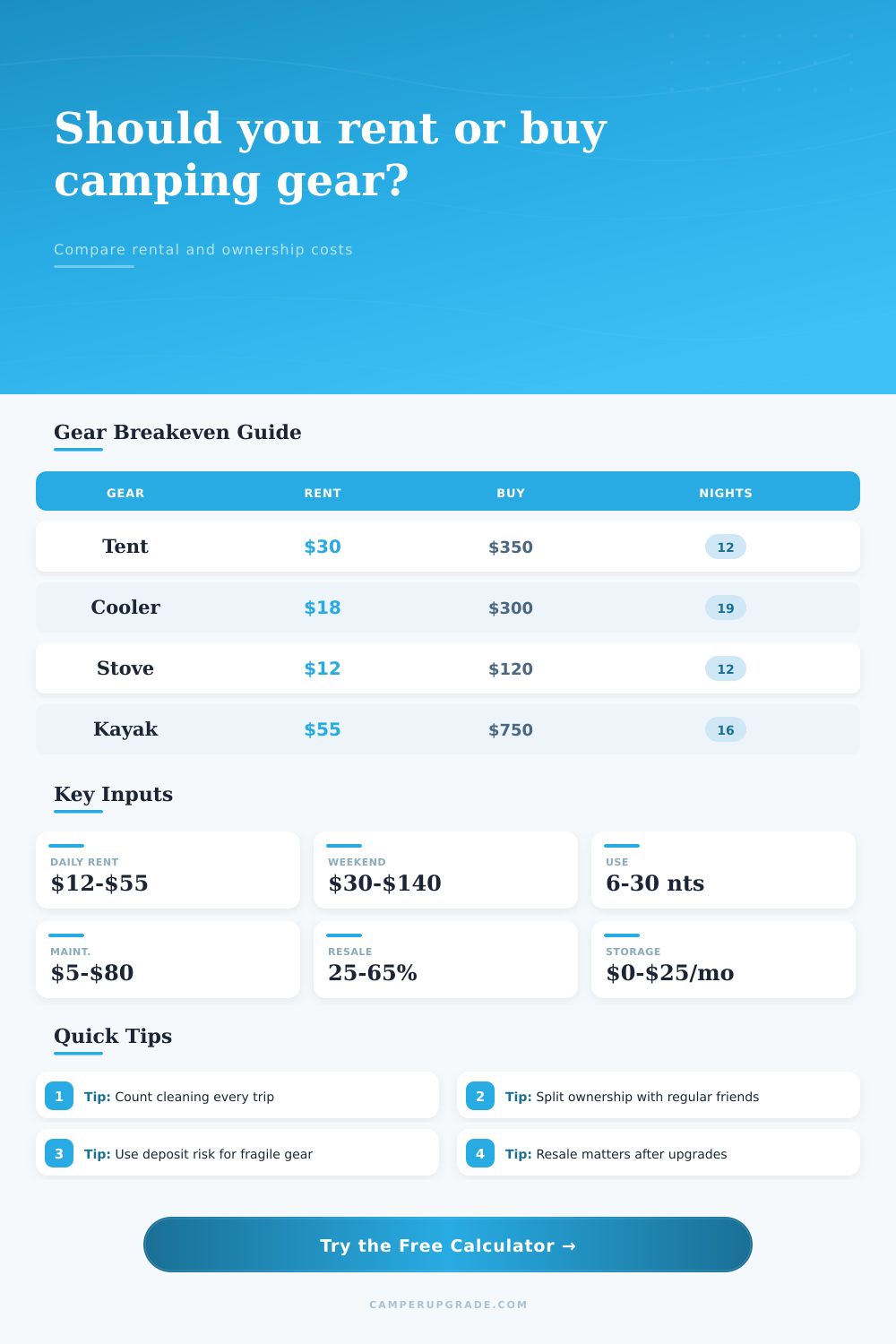
Compare rental daily and weekend rates against purchase price, expected camping nights, maintenance, cleaning, deposit risk, resale value, storage cost, and group sharing.
Cost Breakdown
| Gear type | Typical rental pattern | Ownership cost pressure | Usually buy when |
|---|---|---|---|
| Family tent | Weekend package plus cleaning. | Moderate maintenance, low storage. | Used across several trips each year. |
| Bear canister | Low daily rate but frequent pickup friction. | Low maintenance, low resale loss. | Required on repeat backpacking routes. |
| Premium cooler | Weekend or event rentals are common. | High purchase price, good resale. | Used for camping, road trips, and home events. |
| Paddle gear | High daily rate, transport sometimes included. | Storage and straps matter. | You paddle often and can store it dry. |
| Power station | Daily rate rises quickly on longer trips. | Battery aging and resale matter. | You also use it for home backup or work. |
| Input | Low estimate | Typical estimate | High estimate |
|---|---|---|---|
| Maintenance per year | $0 to $10 | $15 to $45 | $60+ for complex gear |
| Owner cleaning per trip | $0 to $3 | $5 to $12 | $15+ for large fabric items |
| Deposit risk | 0% to 1% | 2% to 5% | 8%+ for fragile or wet gear |
| Resale after use | 20% to 35% | 35% to 55% | 60%+ for durable popular gear |
| Storage per month | $0 | $5 to $15 | $20+ for bulky items |
| Sharing setup | Best use case | Cost effect | Watch item |
|---|---|---|---|
| Solo household | Personal fit, frequent trips. | All ownership costs stay with you. | Storage and cleaning discipline. |
| Two households | Family friends with different trip dates. | Purchase and storage roughly halve. | Scheduling and damage expectations. |
| Group club | Shared specialty gear. | Breakeven can arrive fast. | Checkout rules and repair fund. |
| Trip-only rental split | One-off group camps. | Rental cost drops for each trip. | Who holds the deposit. |
| Breakeven signal | What it means | Calculator behavior | Practical read |
|---|---|---|---|
| Below breakeven nights | Renting costs less per year. | Recommendation usually says rent. | Keep cash and avoid storage. |
| Near breakeven nights | Costs are close. | Recommendation says close call. | Let fit, availability, and hassle decide. |
| Above breakeven nights | Owning costs less per year. | Annual difference favors buying. | Buy if storage and care are realistic. |
| No breakeven | Annual owner cost exceeds rental even at high use. | Result keeps rent favored. | Storage, resale, or maintenance is too heavy. |
Rent
$0/yrBest when use is occasional, storage is awkward, fit changes, or you want newer rental fleet gear without repair chores.
Buy
$0/yrBest when you camp often, can dry and store gear properly, and the resale value stays meaningful after several seasons.
Share
Best when families use the item on different weekends and agree upfront about deposits, cleaning, repairs, and pickup.
Hybrid
$0Buy the core item you use most, then rent specialty add-ons that are bulky, expensive, fragile, or needed only once.
rental annual cost = trips x (trip rental rate + cleaning fee + deposit amount x deposit risk) / rental split.ownership annual cost = ((purchase price - resale value) / years + maintenance + storage + owner cleaning x trips) / ownership split.breakeven nights = ownership annual fixed cost / rental cost per night, adjusted for per-trip fees and cleaning.
The math in your head is fraying as you glance at new family tent’s price tag and consider your tiny garage. How much do you really camp? And buying seems like such a long-term commitment, but what if it goes unused? Renting sounds like tossing dollars out the window. But which is better: renting or buying?
The gear rental vs buy calculator above do all the work for you. It compares purchase cost, storage, maintenance, cleaning, resale value, deposit risk, shared ownership assumptions, and use frequency. This find the annual cost difference between renting and purchasing. It eliminates the emotional tug-of-war and makes your decision clear… No more guessing, just planning.
Renting or Buying Camping Gear?
People tend to think about just sticker price, which is single largest trap. That $300 tent sounds like a lot until you compare it to the $500/year you’d spend renting one for each weekend. But that $1,000 name-brand cooler make all kinds of sense until you realize you only take camping trip twice a year. It’s frequency that drives whole equation without anyone ever noticing. You’re paying for depreciation, maintenance and storage even if you don’t use the equipment. This stuff eats away at your wallet slowly over time.
Use the tool to see exactly how many nights a year you need to hit break even. This will help you know when buying makes more sense then renting.
No one wants to talk about the silent price of ownership, which is maintenance. You purchase the sleeping bag, but you also purchase the need to wash it, dry it properly, and eventually replace the down or shell fabric. Rental outfits roll this cost into their daily rate, which means they also send it back to you via deposit risk and cleaning fees. Put a tiny little percentage for lost deposit (because let’s face it, someone always loses a stake) and you can plug that into the calculator. Three percent risk per trip shifts the numbers by enough to make a close call go the other way. It makes you consider the hassle of having to return something and pay for minor damage you didn’t even know happened.
Your resale value is your exit strategy… unless it’s not. Fragile and trendy stuff will lose value quickly. Stuff with solid resale value tends to be popular gear. The calculator takes into account that you’ll get back a certain percentage (of what you paid) in a few years. This reduces your net cost of owning something. When you buy something high end and only get 60% resale, you’re effectively only buying 40% (at best) over the course of your use. If you use it enough, that’s still a better deal than renting.
The reference table on the page show how various kinds of gear (e.g., power station vs kayak) have wildly different ownership pressure points. Some things is expensive to store, and that eats up whatever savings you might get from resale.
It’s true what they say: Sharing is caring (literally). For example, halving your purchase with someone whose camping schedule doesn’t match yours means you’ll also be splitting half of the hassle of storage space. You can enter multiple households into the calculator for ownership split or rentals, this is where it gets realy useful. It’s not theoretical pricing; it models how the world actualy works.
But there are some things to keep in mind. Everyone need to agree on cleaning standards. And calendars need to line up. One careless individual leaving muddy footprints inside tent will lead directly to repair costs for the other camper. It assumes that everyone will work together perfectly, so you should of planned for people to make mistakes.
For many of us, it makes the most sense to be somewhere in between. Rent the big, rare-use items (i.e., special cooking equipment, an extra lantern) but purchase the core items you always bring along (your sleeping pad, sleeping bag). The tool’s comparison grid show how much this would cost each year, whether you share, buy, rent, or some combination of all three.
It emphasizes that if finding a good fit is important or if storage space is easy to get, then buying is ideal; if flexibility is more important, then renting is the winner. The formula notes provide the details behind the math: the yearly cost of owning something is calculated as the total of depreciation + maintenance + storage cost, all divided by your sharing split. It is simple enough to get to bottom of things.
In the end, this goes beyond the spreadsheet. It’s a choice based off who you are and what you do in life. Do you enjoy maintaining your own equipment? Then owning can be a source of pride. Or maybe keeping stuff clean drives you crazy, so renting would save you time, despite the extra cost. Use the calculator as a starting point, see what most folks would do. And modify inputs according to your own habits. Once you do that, you’ll know when you’re over-thinking, and when you should simply get outside.