Camping Meal Portions by Age Calculator
Estimate camp food portions from adult, teen, child, and toddler counts, activity level, meal type, protein, starch, vegetables, snacks, trip days, and waste buffer.
Detailed portion breakdown
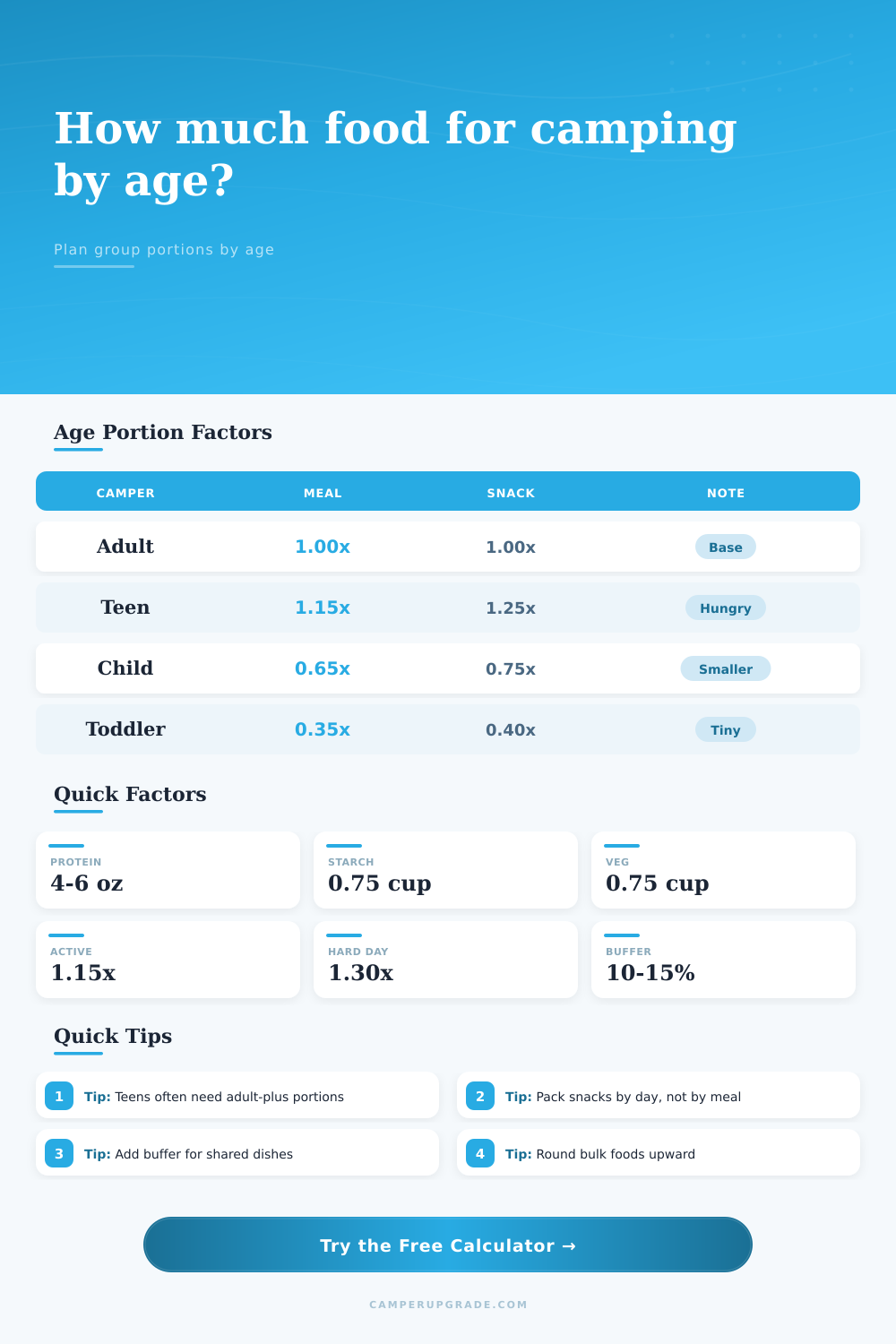
| Age group | Meal factor | Snack factor | Planning note |
|---|---|---|---|
| Adult age 18+ | 1.00 adult portion | 1.00 snack portion | Baseline for protein, starch, vegetables, and snack planning. |
| Teen age 13 to 17 | 1.15 adult portions | 1.25 snack portions | Often needs more food during active trips, especially at breakfast and dinner. |
| Child age 5 to 12 | 0.65 adult portions | 0.75 snack portions | Plan smaller meals but keep snacks easy to divide. |
| Toddler age 2 to 4 | 0.35 adult portions | 0.40 snack portions | Use small servings and flexible backup foods. |
| Shared buffet group | Add buffer | Add buffer | People self-serve unevenly, so waste and seconds matter more. |
| Meal pattern | Multiplier | Typical protein | Typical starch or veg |
|---|---|---|---|
| Breakfast focused | 0.85x | 2 eggs or 3 oz sausage | 0.75 cup oats, potatoes, or fruit |
| Trail lunch focused | 0.90x | 3 to 4 oz deli, tuna, or beans | 1 tortilla, bun, or 0.75 cup side |
| Mixed camp meals | 1.00x | 4 to 6 oz protein | 0.5 to 1 cup starch and vegetables |
| Dinner focused | 1.10x | 5 to 7 oz protein | 1 cup starch plus 0.75 cup vegetables |
| Cookout main meal | 1.20x | 6 oz protein or two smaller mains | Extra buns, sides, and vegetables |
| Activity level | Meal factor | Snack factor idea | Use when |
|---|---|---|---|
| Restful campground | 0.95x | 0.80x to 1.00x | Mostly sitting, short walks, and easy campground days. |
| Normal camp day | 1.00x | 1.00x | Regular camping with light walks, chores, and play. |
| Hiking or swimming | 1.15x | 1.20x | Moderate movement, long lake time, or day hikes. |
| Long trail day | 1.25x | 1.35x | Backpacking, paddling, climbing, or long bike mileage. |
| Cold or strenuous day | 1.30x | 1.50x | Cold camp, snow play, hard hikes, or very hungry crews. |
| Example group | Age mix | Adult-equivalent people | One mixed active day |
|---|---|---|---|
| Small family | 2 adults, 2 kids | 3.3 people | About 11 adult-equivalent meal portions with 3 meals. |
| Teen patrol | 1 adult, 7 teens | 9.05 people | About 31 adult-equivalent meal portions with 3 meals. |
| Family reunion | 8 adults, 4 teens, 6 kids, 2 toddlers | 17.2 people | About 59 adult-equivalent meal portions with 3 meals. |
| Toddler cabin | 4 adults, 3 kids, 3 toddlers | 7.0 people | About 24 adult-equivalent meal portions with 3 meals. |
| Backpack crew | 5 adults, 1 teen | 6.15 people | About 24 adult-equivalent meal portions with hard-day factor. |
Car Camp Family
FlexibleUse normal portions, a moderate waste buffer, and larger shared starches that can become leftovers.
Teen Crew
High demandTeens push both meal and snack factors upward, especially after swimming, paddling, or long hikes.
Toddler Group
Small mealsMeal portions are lower, but snacks, simple backups, and familiar foods keep the plan smoother.
Trail Basecamp
Snack heavyKeep dinner generous, stage snacks by day, and raise the activity factor before packing protein.
meal age-equivalent people = adults x 1.00 + teens x 1.15 + children x 0.65 + toddlers x 0.35.adjusted meal portions = age-equivalent people x days x meals per day x meal type factor x active day factor.final protein, starch, and vegetables = adjusted meal portions x adult portion size x (1 + waste buffer).snack servings = snack-equivalent people x days x base snacks per person-day x active day factor x snack factor x (1 + waste buffer).
When planning for meals, you always over-estimate, since you’re stocking for an adult with a sedentary lifestyle and a predictable feeding schedule. At the camp site it’s something else entirely: your teens will be tired out from their hikes; your toddler will eat very little but will graze on snacks and want constant attention; and adults themselves gets mighty peckish once they’ve pitched the tent, which means you might have an empty cooler by mid-week. That’s where this calculator comes in.
Rather than just counting heads, it aims to account for the calories you’ll move. Portions is assigned through weighted equivalence. One is the baseline multiplier for an adult. Because they’re more active and growing, teens tend to burn more calories then adults, so the calculator multiplies portions by a larger factor. Children are like grazing animals, though not during mealtimes. Because they have smaller stomachs per meal, they get a lower multiplier. They also snack a lot, which is reflected in the reference table. Toddlers don’t actualy eat most of their main meals but will wolf down lots of snacks. These considerations are all explained in the reference table: if you use the same approach for a four year old as you would for an adult, you’ll be wasting food. If you apply the same treatment for a fifteen year old as you do a small adult, you’ll leave them hungry.
How to Use the Camp Food Calculator
Next is the activity level. Food needs differs for a restful car camping adventure versus a strenuous backcountry hike. The meal type input adjusts the baseline up/down, while the activity factor adjust it up/down. So if you choose to have a heavy cookout dinner then the multiplier increases. While a light trail lunch decreases it. Avoid the mistake of overpacking heavy proteins for light meals and underpacking for heavy ones.
Once you’ve selected your profile the math just runs itself. Groups also need a waste buffer. One person will grab two servings while another grabs one. The pasta sticks to the side of the pot. The toddler drops their sandwich on the ground. And so forth. There’s no way around this, which is why I account for a ten to fifteen percent buffer. This means there is enough food for seconds and room for error, rather than the last meal being whatever scrapes out of the bottom of the bag. The plan would of been brittle without the buffer; with it, your plan has some wiggle-room.
There’s also a plan for snacks. Snacks aren’t filler; they’re the glue that holds the camp day together. The calculator has separate snack servings, apart from meal portions. Why? Because snacking depends on mood and weather. One day, they might crave crackers & hot cocoa (cold), and the next, salty jerky (hot hike). The tool allows you to adjust the snack factor independent of everything else. You can tighten up your meals while increasing the snacks on a rough day.
Then there is the practical side of packing. Don’t just stuff a bunch of stuff in the same cooler space. Plan your meals and days. Separate Tuesday lunch from Tuesday dinner. That way the early crowd doesn’t steal the other guys’ supper, and more importantly it keeps smells confined to their respective places. Opening the cooler too often will melt ice and make things messy.
Round up bulk items like beans, rice, buns, and potatoes. These are forgiving and inexpensive. Pasta? Better too much than not enough. Pre-made desserts? Count them exactly. Staples? Round up a bit. Your judgment provides the safety margin, and the calculator the baseline.
Begin by counting the group. Add a buffer. Account for the hike. Tweak for age. Print it out. Keep the cooler stocked. Stay happy. Your weekend plans stays intact.