Burger Patty Count for Group Calculator
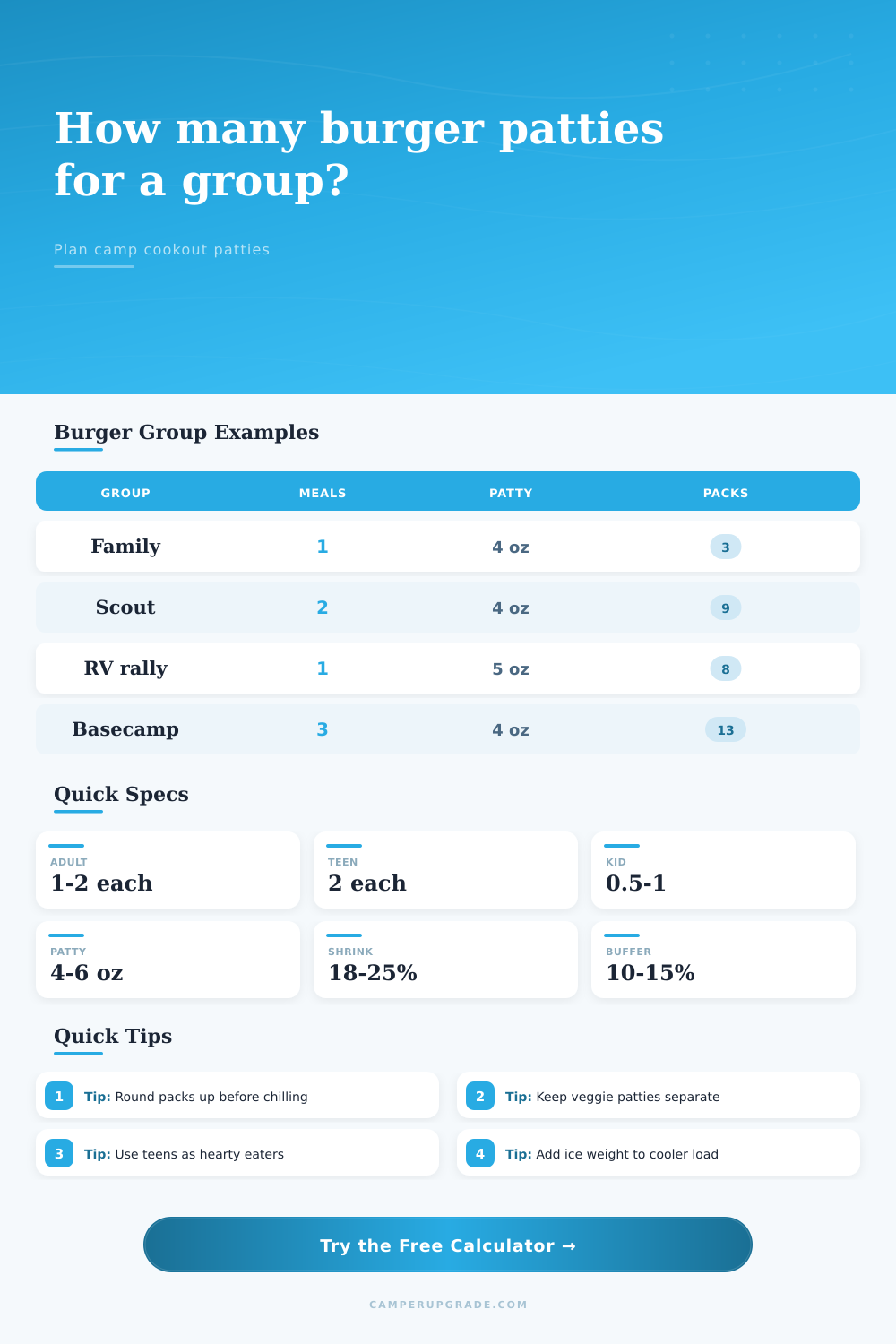
Estimate beef and vegetarian burger patties for campsite cookouts, RV rallies, scout meals, and family weekends using adults, teens, kids, meal count, patty size, shrinkage, pack size, buffer, and cooler load.
| Guest Type | Light Meal | Normal Camp Meal | Hearty Meal |
|---|---|---|---|
| Adults | 1 patty per meal | 1.25 patties per meal | 1.5 patties per meal |
| Teens or hungry hikers | 1.25 patties per meal | 1.75 patties per meal | 2 patties per meal |
| Kids under 12 | 0.5 patty per meal | 0.75 patty per meal | 1 patty per meal |
| Late arrivals or extra guests | Add 5% buffer | Add 10% buffer | Add 15% to 20% buffer |
| Pack Size | At 4 oz Patties | At 5 oz Patties | Best Camp Use |
|---|---|---|---|
| 4 patties | 1.0 lb raw meat | 1.25 lb raw meat | Small family cooler or mixed veggie split. |
| 6 patties | 1.5 lb raw meat | 1.88 lb raw meat | One picnic table or compact RV freezer stack. |
| 8 patties | 2.0 lb raw meat | 2.5 lb raw meat | Common group pack for one grill round. |
| 12 patties | 3.0 lb raw meat | 3.75 lb raw meat | Large campsite lunch or repeated meals. |
| 16 patties | 4.0 lb raw meat | 5.0 lb raw meat | Rally, youth team, or basecamp kitchen. |
| Shrinkage | 4 oz Cooked Patty | 6 oz Cooked Patty | Use This When |
|---|---|---|---|
| 15% | 3.4 oz cooked | 5.1 oz cooked | Leaner patties, griddle cooking, or gentle heat. |
| 20% | 3.2 oz cooked | 4.8 oz cooked | Typical camp grill plan with normal browning. |
| 25% | 3.0 oz cooked | 4.5 oz cooked | Hot grill, fattier blend, or longer holding time. |
| 30% | 2.8 oz cooked | 4.2 oz cooked | High drip loss, thin patties, or heavy flare-ups. |
| Food Weight | Half-Ice Load | One-to-One Ice | Planning Note |
|---|---|---|---|
| 5 lb patties | 7.5 lb total | 10 lb total | Works for a small one-meal family cookout. |
| 10 lb patties | 15 lb total | 20 lb total | Use a rigid cooler or RV fridge bin. |
| 20 lb patties | 30 lb total | 40 lb total | Split between coolers so raw meat stays cold. |
| 35 lb patties | 52.5 lb total | 70 lb total | Large groups need staged storage and grill batches. |
Camp cookouts make us all nervous. Most of our apprehension stems from figuring out exactly how much meat to buy. Bringing home a pound of ground beef is nice, but how much does one hamburger weigh? How many people can each burger serves?
You don’t need to guess. Just plug in the number of meals you want to plan and the number of folks joining you, and this tool do the rest for you.
How to Calculate How Much Meat to Buy
Age is first variable. Kids aren’t the same as adults when it comes to food consumption. One teen could eat two patties, while another eats a quarter pounder. A 7 year old may eat half a patty. By separating out kids and adults, you avoid an incorrect average that would lead to poor planning. Ten adults and ten kids? Don’t plan on one patty per person or you’ll leave the grown ups starving. Better to under estimate adults and over estimate teens. Big eaters can also bump up total weight requirement, as seen in reference table.
The other thing to be aware of is shrinkage. When you cook your beef, some water will evaporate and some of fat will render out, shrinking the meat. In fact, burgers typically loses about twenty percent of their size during cooking. That four ounce raw patty turns into a three ounce cooked disk. If you don’t account for the raw weight, then you won’t have enough food, assuming you are planning for the cooked size. To make sure that you end up with enough cooked product, given the amount of raw weight you buy, just enter in how much you think burger should shrink. This allows the calculator to adjusts for shrinkage. It is a small detail but it makes a difference.
Then there are vegetarian guests that make things more complicated. You can’t just buy fewer meats because you have special vegetarian patties. Those patties arrives in various size packs. The tool divides the amount so you can purchase the right amount of veggie packs and meat packs. Food safety requires they be kept apart in the cooler. Even if you believe you’re well packaged, cross contamination remain a risk.
It also shows you how much all the stuff (including ice) weigh going into the cooler. That’s key when transporting items. A 50 pound cooler is no joke and hard to lug around. If you know what you’re carrying, you can properly plan your loads.
The last problem is rounding pack sizes. The store doesn’t sell 43 patties, they sell eight and they sell twelve. So you’ll end up with forty-eight or maybe sixty. The calculator does that for you by rounding up. And it gives you a little bit more because sometimes things go wrong. Sometimes a patty falls on the ground or someone unexpectedly comes over. Ten to fifteen percent is normal to leave as a buffer. Better to be left with extra than to run out of beef and have to buy hot dogs at some later point.
It’s not about being perfect. It’s about being confident. You want to be sure that you have enough food for those who made the effort to bring it. Stop your guessing and measure. The math isn’t complicated. Plug the numbers into the calculator, weigh the cooler, add an extra pack and go shopping. Better to have a little too much beef than an explanation as to why dinner is late. The fire’ll be hot, the bun’ll be toasty and the beef oughta just be right there.