Pancake Batter Camp Batch Calculator
Plan one camp breakfast or a full trip: pancakes, batter volume, dry mix, liquids, eggs, containers, and griddle rounds.
⛺Camp Breakfast Presets
🥞Batch Inputs
Camp Pancake Batch Results
🧂Recipe Style Spec Grid
📊Batter Yield by Pancake Size
The calculator scales batter from a 4 inch pancake using the circle-area ratio and a thickness multiplier: thin 0.85, standard 1.00, fluffy 1.18.
| Pancake diameter | Thin batter each | Standard batter each | Fluffy batter each |
|---|---|---|---|
| 3 in mini pancakes | 0.24 cup | 0.28 cup | 0.33 cup |
| 4 in camp standard | 0.43 cup | 0.50 cup | 0.59 cup |
| 5 in wide griddle cakes | 0.66 cup | 0.78 cup | 0.92 cup |
| 6 in plate-sized cakes | 0.96 cup | 1.13 cups | 1.33 cups |
🥛Recipe Ratio Reference
Ratios are per cup of finished batter, so large batches can be measured into separate breakfast bags or mixed in one food-safe container.
| Batter style | Dry mix cups | Liquid cups | Egg or binder guide |
|---|---|---|---|
| Classic camp batter | 0.55 per cup batter | 0.42 per cup batter | 1 egg per 4 cups batter |
| Buttermilk style | 0.54 per cup batter | 0.44 per cup batter | 1 egg per 4 cups batter |
| Whole-grain hearty | 0.58 per cup batter | 0.45 per cup batter | 1 egg per 4.5 cups batter |
| Protein breakfast mix | 0.60 per cup batter | 0.46 per cup batter | 1 egg per 5 cups batter |
| Just-add-water dry mix | 0.62 per cup batter | 0.50 per cup batter | No eggs unless mix requires them |
| Egg-free camp batter | 0.56 per cup batter | 0.46 per cup batter | Use binder for every 4 cups batter |
| Gluten-free blend | 0.57 per cup batter | 0.48 per cup batter | 1 egg per 3.5 cups batter |
🧺Camp Container and Mixing Reference
Leave headroom in every container. The calculator uses 85% usable fill so batter can be shaken, stirred, and poured without overflow.
| Container | Total volume | Usable batter fill | Best camp use |
|---|---|---|---|
| 1 quart bottle | 4 cups | 3.4 cups | Couples or mini batches |
| 2 quart pitcher | 8 cups | 6.8 cups | Family breakfast line |
| 1 gallon jug | 16 cups | 13.6 cups | Patrol or cabin group |
| 2 gallon dispenser | 32 cups | 27.2 cups | Large camp kitchen |
🔥Common Camp Batch Examples
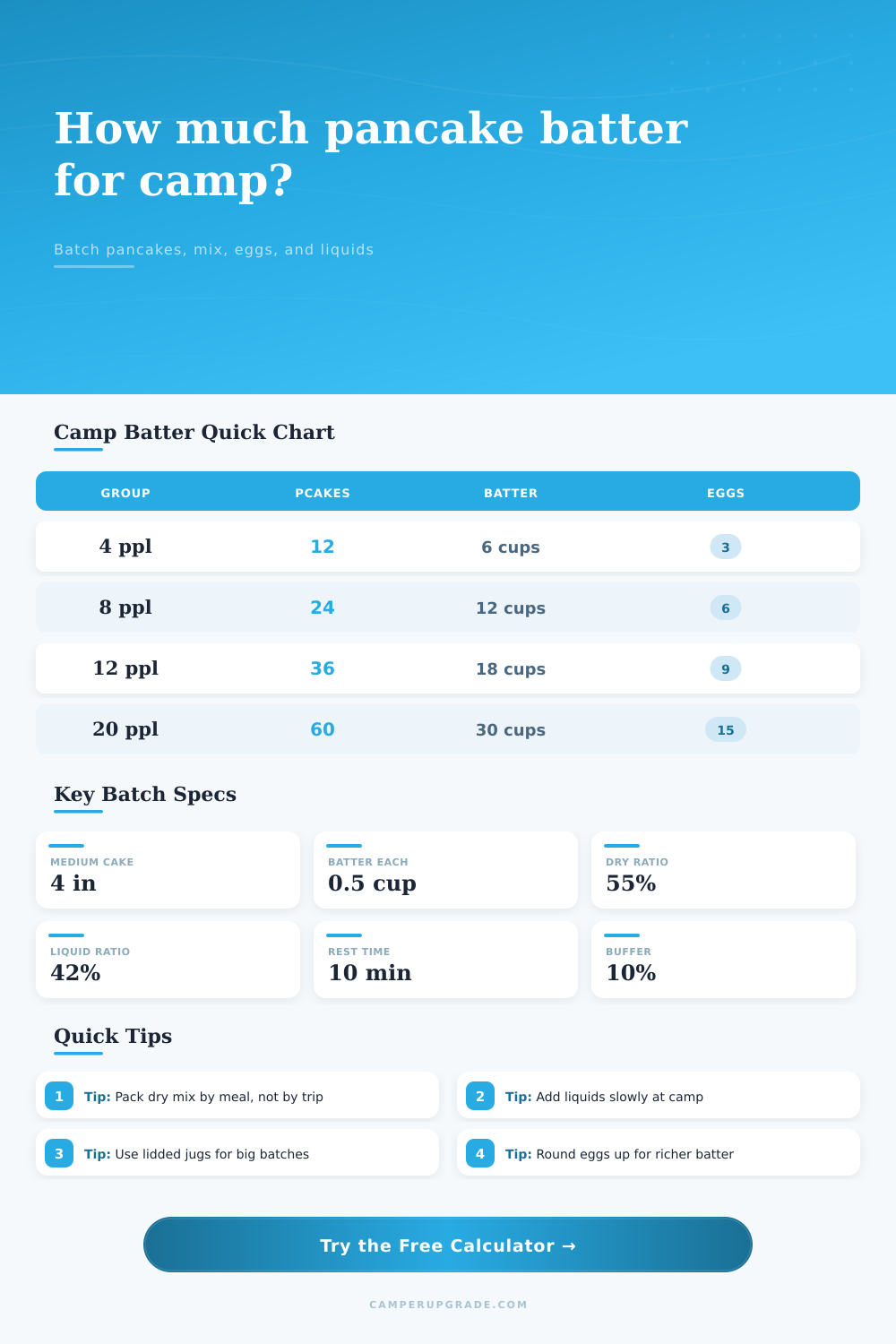
Examples assume 4 inch standard pancakes, classic batter, 10% buffer, and 3 pancakes per person unless noted.
| Camp breakfast | People and meals | Batter needed | Dry mix and eggs |
|---|---|---|---|
| Two-person skillet | 2 people, 1 meal | 3.3 cups batter | 1.8 cups dry, 1 egg |
| Family griddle | 5 people, 1 meal | 8.3 cups batter | 4.5 cups dry, 3 eggs |
| Scout patrol | 8 people, 1 meal | 13.2 cups batter | 7.3 cups dry, 4 eggs |
| Basecamp weekend | 10 people, 2 meals | 33.0 cups batter | 18.2 cups dry, 9 eggs |
| Volunteer feed | 25 people, 1 meal | 41.3 cups batter | 22.7 cups dry, 11 eggs |
📐Formula Breakdown
| Step | Formula | Why it matters | Conversion used |
|---|---|---|---|
| Pancake count | campers x meals x pancakes each | Sets the base serving target | Rounded up after buffer |
| Batter per pancake | 0.5 x (diameter / 4)2 x thickness | Scales 4 inch batter yield | 1 inch = 2.54 cm |
| Total batter | pancakes x batter each x buffer | Sizes mixing containers | 1 cup = 236.588 ml |
| Dry and liquid | batter cups x recipe ratio | Builds the ingredient list | Dry cup = 3.9 oz average |
| Cook rounds | pancakes / griddle capacity | Estimates breakfast line timing | Time = rounds x minutes |
💡Camp Batch Tips
Ingredient ratios are planning estimates for camp cooking. Adjust liquid slowly on site for altitude, humidity, flour blend, and the exact texture you want on the griddle.
By converting guessing into exact numbers, this calculator will save you from a chaotic morning. Before leaving home, you’ll have a perfect idea of how much to pack based off the size of your griddle, the speed at which you can cook pancakes and the preferences of your group. You remember you packed up the dry mix but now has no idea how much water or milk you need to add to make it all work out. Breakfast should be easy. Instead, it’s become a logistical crisis. The fire’s going, the coffee’s brewing, and we’re still not sure how we’re supposed to get it all together. With this tool, that panicked feeling goes away because you have clear numbers.
For example, one of the biggest concerns when packing for a campsite with lots of batter is: How much do I bring? You’d be surprised how many folks forget that there’s quite a bit of liquid involved! This tool recognizes that fact by separating out amount of eggs, the amount of liquids, and amount of dry mix. Why does it matter? Because it sucks to lug around all those tiny bottles filled with heavy liquids. If you know ahead of time that you’re going to use a whole bunch of batter (let’s say a full dozen or more), you can carry the dry mix in lightweight bags and top them off with some water or milk at your destination. No more spillage worries, no more complicated packing job, just make sure you have enough and go!
Why This Calculator Makes Camping Breakfast Easy
Pancake size matters more then most cooks might think. A six inch diner size isn’t the same as a four inch camp standard. The calculator accounts for this by being aware of area covered by each. This means it knows that doubling your diameter quadruples the amount of batter required. It also takes into account that thicker pancakes (i.e. Fluffy ones) need a bit more liquid and eggs to be able to rise up properly, so it accounts for those in its calculation. That’s what throws folks off. They believe there’s a direct relationship between ingredient amounts and pancake size when in fact it’s a geometric one. A slightly larger pancake needs much more batter. The reference table on the page illustrates how much amount changes based on style (thin, standard, fluffy).
The other thing that derails camping breakfasts is timing. Even if you’ve got just enough batter for everyone (but who does?) getting 6 pancakes onto your griddle require several rounds. How long will it take? That’s why there’s a “minutes per round” setting. The number of minutes you expect to be standing over the griddle flipping things. Combined with size of your griddle, it calculates how much time it all takes. So instead of cold pancakes by the time the hot ones come out, you know when to get up in the morning or whether to drag someone else out of bed to turn some cakes. A couple of minutes of prep means an hour spent managing the griddle.
Another useful feature of this calculator is container size. Novice backpackers has been tripped up by this one before. To account for stirring/shaking, the calculator uses an 85% capacity of your container. Why? Batter increases in volume when shaken or stirred. A full pitcher would overflow in the backcountry or even in the cooler. So, by entering the container size, the calculator also tells you how many GALLONS/QUARTS you realy need to bring the mix. A small detail, but it makes a huge difference in camp cleanliness.
The ratios adjust automatically depending on what style of batter you want. Gluten-free blends tend to need a little more egg for binding. Buttermilk batters tends to need more liquid than classic batters. Instead of having to remember complex conversion factors, you simply choose your style and let the math take care of itself, it eliminates the mental effort of “does this whole-grain mix absorbs more or less moisture than that white flour?” You can leave the chemistry to the chemistry and concentrate on the flavor profile.
The other factor is rest: Batter should sit for roughly ten minutes so it can relax (so the gluten settles down and the leaveners gets going). The calculator incorporates that into the process as well; it will tell you that there is more to prep than simply mixing, there’s waiting too. Make sure not to rush here, or your pancakes come out tough and dense; give the mix some time to breathe, and they’ll be softer and more delicious. This makes a big difference at breakfast.
The final touch is planning for syrup so you don’t run out in the middle of breakfast. That’s what brings all this together into one breakfast plan and accounts for everything from dry mix to sweet finish. You’ll know how many pancakes you can make, how long they will take to cook, and you can arrive at the campsite with confidence. Make pancakes without panic. The griddle can be a beat instead of a battle if you’ve got your breakfast game on point: Pack Smart Cook Steady Everyone Eats. Sounds simple enough, doesn’t it? It’s all about breakfast as a reward, not a race. You should of planned better!