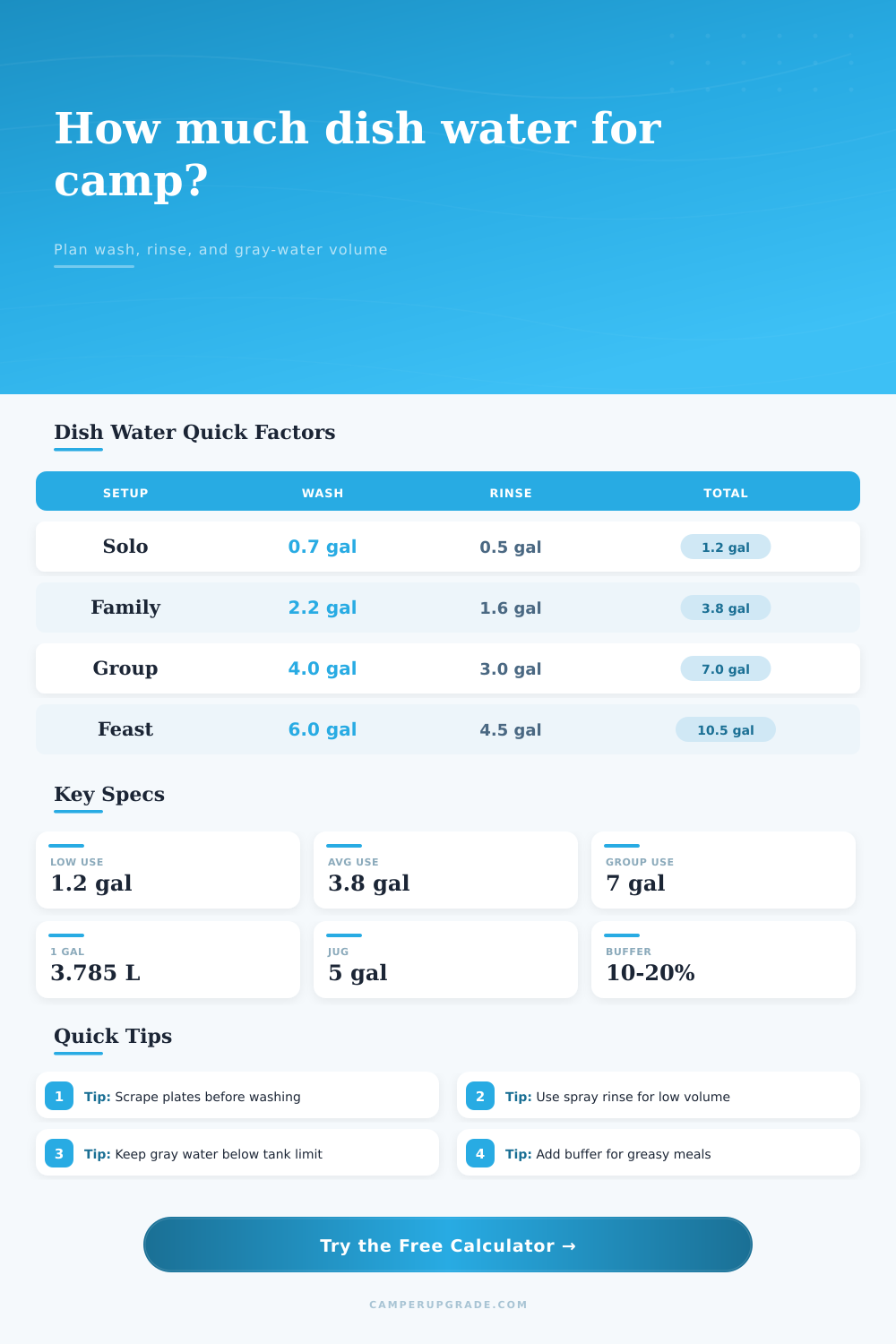
Camp Dish Water Volume Calculator
Estimate wash water, rinse water, total fresh water, container refills, and gray-water capacity for camp dish cleanup.
⛺Camp Dishwashing Presets
🧼Dish Load Inputs
Dish Water Estimate
💧Basin and Rinse Setup Specs
📋Wash and Rinse Factor Table
| Method | Water Factor | Best Use | Planning Note |
|---|---|---|---|
| Scrape + sponge wash | 0.055 gal/item, 0.21 L/item | Dry camping and short stops | Works best when plates are scraped first. |
| Two-basin camp wash | 0.075 gal/item, 0.28 L/item | Most RV and tent-camp meals | Balances low water use with clean rinse flow. |
| Large basin soak | 0.105 gal/item, 0.40 L/item | Sticky starches and larger pots | Adds water for soaking and detergent dilution. |
| Running spigot habit | 0.145 gal/item, 0.55 L/item | Hookup sites with abundant water | Consumes water quickly and fills gray storage. |
| Spray bottle rinse | 0.030 gal/item, 0.11 L/item | Minimal rinse volume | Use a food-safe spray bottle for controlled rinsing. |
| Dip rinse basin | 0.045 gal/item, 0.17 L/item | Simple camp kitchens | Change rinse water when it turns cloudy. |
| Pour-over kettle rinse | 0.065 gal/item, 0.25 L/item | Hot-water rinse routines | Good control, but heavier cookware needs more. |
| Open spigot rinse | 0.095 gal/item, 0.36 L/item | High-flow camp sinks | Plan extra gray capacity before using this method. |
🫗Container and Basin Reference
| Container or Basin | Gallons | Liters | Dishwater Role |
|---|---|---|---|
| Small collapsible basin | 1.5-2.0 | 5.7-7.6 | Solo and two-person wash water. |
| Standard dishpan fill | 2.5-3.0 | 9.5-11.4 | Typical family camp wash basin. |
| Two-basin setup | 4.5-6.0 | 17.0-22.7 | Separate wash and rinse water. |
| One-gallon jug | 1.0 | 3.8 | Small rinse reserve or coffee cleanup. |
| Five-gallon cube | 5.0 | 18.9 | Common fresh-water carry container. |
| Seven-gallon aquatainer | 7.0 | 26.5 | Group dishwater and handwashing reserve. |
🍽Common Camp Dish Loads
| Camp Meal Scenario | Dish Items | Typical Water | Gray-Water Check |
|---|---|---|---|
| Solo mug, bowl, spoon, small pot | 5-7 | 0.7-1.2 gal | Fits a 1-gallon jug only with tight rinsing. |
| Two-person dinner with one skillet | 14-18 | 1.8-2.8 gal | Fits most compact basins and gray jugs. |
| Family breakfast with griddle | 28-36 | 3.8-5.8 gal | Plan a five-gallon container plus buffer. |
| Four-person RV dinner | 25-32 | 3.4-5.0 gal | Check tank capacity if also showering. |
| Eight-person basecamp dinner | 55-70 | 7.5-11.5 gal | Split wash rounds to avoid dirty rinse water. |
| Twelve-person troop lunch | 70-90 | 9.5-14.5 gal | Use staged basins and a dedicated gray carrier. |
⚖Dish Setup Comparison Grid
| Setup Type | Water Control | Best Capacity | Tradeoff |
|---|---|---|---|
| Single basin wash | Moderate | 1-3 people | Lowest gear bulk, but rinse water is separate. |
| Two-basin wash and rinse | High | 2-6 people | Predictable volume and cleaner rinse routine. |
| Spray rinse station | Very high | Dry camp trips | Slow for large pots, excellent for plates. |
| RV sink with stopper | Moderate | Hookup or tanked RVs | Convenient, but tank capacity becomes the limiter. |
| Pour-over hot rinse | High | Greasy cookware | Uses fuel-heated water but improves soap removal. |
| Open spigot cleanup | Low | Serviced camp kitchens | Fast cleanup with the highest gray-water load. |
💡Planning Tips
Conversions use 1 gallon = 3.785411784 liters. Cookware is weighted as dish-equivalent items because a pot or greasy skillet normally needs more water than a plate.
The most common way camping trips don’t go well isn’t because someone has lost their gear or endured some extreme weather. It’s because they’re running out of water to wash dishes at a bad moment when everyone is already tired and hungry. But the sink is two thirds filled with gray water smelling of soapy residue and grease. There’s no more clean water. And there are dirty plate. No one want to cook anymore.
Anticipating how much dishwater you’ll need before leaving home avoids this particular flavor of misery. It makes it a routine… One that finishes on schedule instead of a chaotic scramble. Plugging the number of meals, the type of wash, and the size of containers into this calculator (above) does all of that for you and spares you the guesswork about how many cups of water it takes to clean up after a greasy skillet.
How to Save Water When Washing Dishes
But first, let’s get clear on what we’re actualy measuring here. This isn’t just a matter of tallying cups. We’re also matching amount of grey waste that our tanks can hold with amount of fresh water going in. And if you don’t take the size of the grey tank into account, you’ll run out quick. That’s where most camper fail. They think about washing, they forget that each gallon of soapy water used on a greasy skillet must eventually be sent off elsewhere.
First, consider amount of food soil on your plates. You’ll use much more water making a dinner with baked-on pasta sauce, cheese, or bacon compared to a simpler breakfast of fruit and oatmeal. Heavy meals also leave grease behind on metal and plastic surfaces where even the most gentle detergent struggle to clean, unless you rinse thoroughly. To account for this, the calculator count heavy meals more heavily. Why is this important? It compels you to recognize what you’re eating when you sit down to eat. Cleaner fare isn’t only good for your waistline; it’s good for your water bill.
Everything else depends based off your washing method. I admit it’s nice having a spigot to run water from, but five gallons of water empties a jug in minutes. A two-basin rinsing system will cut that amount almost exactly in half. This is laid out plainly on the page, including a reference table showing how spray bottles save you liters over open taps. There is less waste and more cleaning power per ounce.
That does require you to shift expectations. Letting water do some of the work means that scrubbing take longer. But typically speaking, time is cheaper then additional weight carried uphill.
This equation has another important but supporting variable: basin size. Smaller collapsible tub mean lots of refills. Bigger tubs hold more water, but also get unwieldy to haul around when full. This isn’t one of those situations where there’s a single best option… Just options involving tradeoffs (e.g., bulk vs frequency).
The calculator turns the number of items into total gallons needed for a fill. This lets you see at a glance how many jugs it takes to do the job and whether you should of brought a spare jug as insurance. Do not overlook the rinse water. It’s usually almost half the volume. A cloudy rinse basin means you are not rinsing anymore, just smearing dirt around. Frequent changes require more water but leave your plates truly cleaned. If you’re being mindful with resources, the calculator lets you enter how efficiently you’re reusing them. Useful if you’re dry camping and need every drop.
Scrape food off before ever getting water on dishes (especially true of meats), this will decrease how much you use while washing and keep your gray water less contaminated. It sounds obvious, but that is why they are called no-brainers.
You’re budgeting for convenience and comfort. With this knowledge, you can fill up your tanks with confidence. You will no longer need to over-pack your backpack or car. You won’t worry about running out in the middle of meal time, and you won’t be worried about disposing of soapy water close to lakes or streams. It’s all about having a full tank when you need it and a clean kitchen at the end of the day.
Take these numbers and go use them on your next trip. They’ll save you from standing there with an empty jug and a dirty plate, wondering what happend.