Brine Ratio Camp Calculator
Mix a cold camp brine by protein weight, target salinity, salt style, sugar level, cooler volume, and ice reserve without guessing from vague cup measures.
Camp Brine Mix
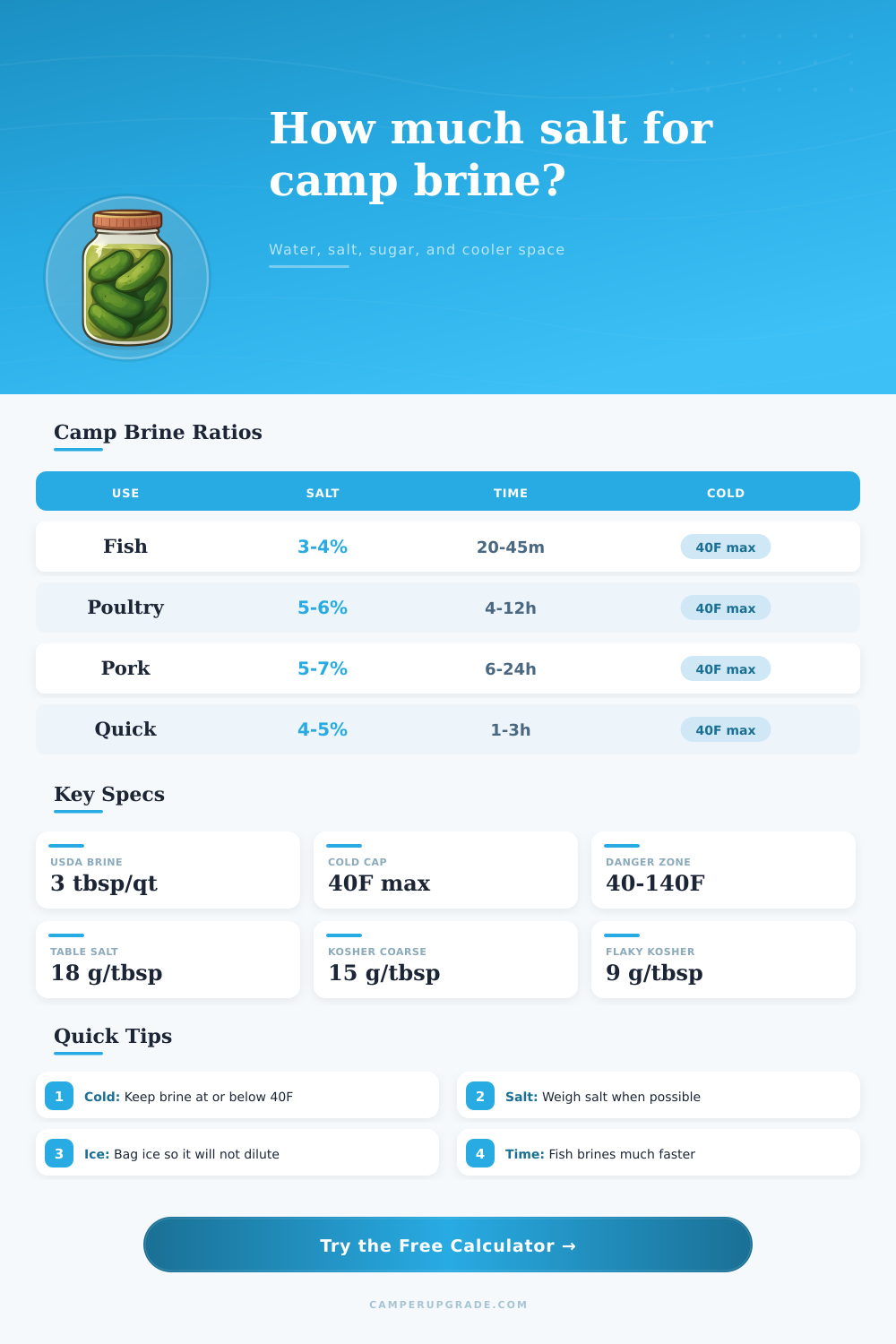
Brine strength by camp use
| Food profile | Common salt range | Typical cold time | Planning note |
|---|---|---|---|
| Fish fillets | 3% to 4% | 20 to 45 minutes | Use a short clock; fish texture changes quickly. |
| Chicken pieces | 5% to 6% | 4 to 12 hours | A cooler bag works well when fully chilled first. |
| Whole poultry | 5% to 6% | 8 to 24 hours | Large birds need enough container clearance to stay submerged. |
| Pork chops or shoulder pieces | 5% to 7% | 6 to 24 hours | Thicker pieces tolerate longer brines than thin chops. |
| Venison or lean game | 4% to 6% | 2 to 8 hours | Moderate salt helps moisture without masking lean meat flavor. |
| Cured ham rinse brine | 1% to 2.5% | 1 to 4 hours | Use lower salt because the meat is already cured. |
Salt measure conversion
| Salt style | Approx grams per tbsp | Why it matters | Best camp method |
|---|---|---|---|
| Fine table or pickling salt | 18 g | Packs densely, so spoon measures are saltier. | Use grams or reduce spoon count from kosher recipes. |
| Coarse kosher salt | 15 g | Middle-density flakes are common in savory brines. | Good if spoon measuring is unavoidable. |
| Flaky kosher salt | 9 g | Large flakes fill a spoon with more air. | Weigh it; volume can under-salt by nearly half. |
| Coarse sea salt | 16 g | Crystal size varies by package and humidity. | Crush or weigh before adding to cold water. |
Coverage water per food weight
| Container method | Water per lb | Water per kg | Camp fit |
|---|---|---|---|
| Tight zipper or vacuum bag | 0.25 qt/lb | 0.52 L/kg | Best when cooler space is tight and food can be turned. |
| Covered pot or food-safe bucket | 0.38 qt/lb | 0.79 L/kg | Balanced for most poultry, pork, and camp kitchen tubs. |
| Wide cooler pan or loose tub | 0.55 qt/lb | 1.15 L/kg | Needs more brine because surface area is broad. |
| Partial brine plus injection | 0.18 qt/lb | 0.38 L/kg | Useful for large birds when container height is limited. |
Cold holding and cooler checks
| Condition | Target | Calculator response | Field check |
|---|---|---|---|
| Cold brine temperature | 40°F / 4°C or below | Adds ice reserve and warning if plan is hot. | Use a probe thermometer in the brine, not just the cooler air. |
| Danger zone exposure | Under 2 hours total | Flags long warm handling as unsafe planning. | Pre-chill food, water, and container before packing. |
| Above 90°F weather | Under 1 hour warm exposure | Raises ice estimate for hot camp settings. | Keep the brine cooler shaded and separate from drinks. |
| Whole poultry brining | No more than 2 days | Flags overlong plans for texture and safety review. | Rinse only if your recipe requires it, then sanitize surfaces. |
Brining meat while camping is a challenge because you have to combine taste and food safety. On one hand, who doesn’t love some seasoning on fish or chicken? But on the other hand, how do you keep things cool (and bacterial-free) when it’s hot outside? Brining keeps flavor locked into your meat… No need for extra sauces!
But how do you get a good amount of salt into the cooler without worrying about melting ice? To be fair, salt does not dissolve evenly in water… Meaning different amounts has different weights. You can adjust for target salinity and protein weight and let the calculator work out the right amount.
How to Brine Meat While Camping
Swapping salts without adjusting for weight is single biggest mistake camp cooks make. Table salt weigh more than a cup of kosher salt does. For instance, a tbsp of flaky kosher salt may weigh 9 g, while fine table salt will pack eighteen grams into the same scoop. Make sure to account for weight when switching between salts, otherwise your brine will be too strong or to weak.
By having salt weighed out and packed in labeled bags, we eliminate this variable from the process. It’s one little step that eliminates texture issue down the line.
It will also request how much water you put in it so that all meat is covered. If the meat are in a wide pan in the bottom of a cooler, more water will be needed than if it’s tightly packed into a zipper bag. Why? Because water sticks right to surface of the food inside the bag. Inside a loosely packed tub, the brine simply gets spread too thin requiring more water to come up over same amount of meat.
It also accounts for water displacement by adding headspace to make room for the turkey in the water. If not for this, you’d have salty water overflowing once you snapped down your cooler lid.
It is important to keep the brine within forty degrees Fahrenheit. If it gets too warm, the system alert you that ambient heat may be raising the temperature of the brine. In hot weather, don’t worry so much about the brine; worry about the ice instead. How frequently will you check? Checking frequent means quicker melting, which raises the brine temp.
Separating the brine vessel from your drink cooler ensures the brine stays at a constant temp and won’t dilute your drinks with salty water.
How long should you brine? Brine time vary by protein. For example, fish fillets pick up salt fast; just 20-45 minutes. Any longer than that and they get tough as scrambled eggs. Similarly, poultry is forgiving and can takes from four to twelve hours depending on the cut size. However, whole birds will require longer because the salt needs more time to reach all the way through to the breast meat.
Leaner game like venison (in the table) need to stay moist without letting too much salt take over the flavor. The salt sharpens; the sugar mellows. Most poultry use a two percent sugar solution to help brown in the oven and counterbalance the salt’s harshness. Some water may be replaced by acidic liquid such as vinegar or cider, which will tenderize more quick than plain water. Use sparingly if your brine period is lengthy; otherwise you might end up with mushy rather than firm flesh before it reaches the grill.
The calculator handles math for you once you plug in your protein weight and target salinity. Preparation beats improvisation when it comes to camp cooking. With this calculator in hand, you have an exact recipe based off your own weather and cooler setup. That way, there’s no more guessing… Just sitting back and enjoying the evening.
If you’re willing to measure by weight and honor the cold chain, proper brining makes even basic camp fare taste like it was cooked well. Even if everything else about camping are chaotic, your meal will taste good.