Sled Load Weight Calculator
Estimate winter camping sled load, payload margin, balance, towing tongue weight, and snow pull effort before you pack.
🛷Trail Load Presets
⚙Sled And Gear Inputs
📊Sled Capacity And Surface Grid
🧰Sled Spec Comparison
| Sled type | Typical rating | Empty weight | Best camping use | Load note |
|---|---|---|---|---|
| Kids utility sled | 60-100 lb | 8-18 lb | Day firewood, small fishing kit | Low sidewalls limit bulky gear |
| Sport pulk | 100-140 lb | 14-22 lb | Solo winter overnight | Best with a rigid harness |
| Touring pulk | 140-180 lb | 18-28 lb | Backcountry camp gear | Handles rolling terrain well |
| Cargo utility sled | 200-300 lb | 25-40 lb | Family campsite cargo | Watch sidehill stability |
| Freight toboggan | 250-400 lb | 30-50 lb | Basecamp and wood hauling | Long deck spreads dense loads |
| Snowmobile tow sled | 400-700 lb | 45-90 lb | Cabin or trail support | Balance affects tongue load |
❄Snow Drag Reference
| Snow surface | Drag factor | 100 lb load pull | 200 lb load pull | Planning note |
|---|---|---|---|---|
| Packed trail or lake ice | 0.06 | 6 lb | 12 lb | Fast travel if runners are clean |
| Firm tracked snow | 0.09 | 9 lb | 18 lb | Good default for groomed approaches |
| Fresh powder | 0.14 | 14 lb | 28 lb | Expect bow wave and more drag |
| Wet spring snow | 0.18 | 18 lb | 36 lb | Waterlogged gear adds weight too |
| Breakable crust / brush | 0.22 | 22 lb | 44 lb | Split loads before long climbs |
🎒Winter Camping Load Reference
| Item group | Light load | Typical load | Heavy load | Calculator input |
|---|---|---|---|---|
| Shelter and sleep system | 18-28 lb | 30-55 lb | 60-90 lb | Base gear |
| Food per person per day | 1.3-1.6 lb | 1.7-2.1 lb | 2.2-2.8 lb | Food rate |
| Stove fuel and kitchen | 2-4 lb | 5-10 lb | 12-25 lb | Fuel load |
| Starting water | 1 qt | 2-4 qt | 5-8 qt | Water carried |
| Tools and camp extras | 3-8 lb | 10-25 lb | 30-80 lb | Extra cargo |
📏Common Sled Load Scenarios
| Scenario | Typical load | Suggested rating | Surface caution | Balance target |
|---|---|---|---|---|
| Day ice-fishing haul | 55-95 lb | 120 lb sled | Slush pockets | 50% center |
| Solo overnight pulk | 80-135 lb | 150 lb pulk | Sidehill roll | 47-50% front |
| Hot tent weekend | 140-230 lb | 250 lb cargo sled | Stove and wood weight | 48-52% center |
| Family campsite cargo | 180-320 lb | 300-500 lb sled | Bulky gear catches brush | 50-55% rear |
| Snowmobile tow load | 250-550 lb | 500-700 lb tow sled | Tongue weight | 45-50% front |
💡Load Planning Tips
Formulas use 1 kg = 2.20462 lb, 1 quart water = 2.086 lb, deck area = length × width, pull effort = load × snow drag plus grade resistance, and tow tongue estimate from load bias.
It’s also an invaluable resource for planning your gear weight for winter camping trips, saving you from unnecessary fatigue along the way. Just input your trip length and items you’ll be packing into your sled, and it handles the math to help you avoid snapping a strap or ruining your back. Now you don’t need to guess if you’re going to cause yourself some back pain or bust a few straps on long winter trip with that hot tent.
Before you pack, learn about capacity margin. A common error is packing exactly up to sled’s rated load, which doesn’t allow any wiggle room. For example, maybe you are using touring pulk rated for 150 pounds. It is packed out to the very last ounce in ideal conditions on level ground. Now, what happens when there’s wet, heavy snow? Or the trail turns uphill? You’ll have nothing left over, so you’ll want some headroom for forgotten gear, more clothes then planned, or build-up of ice.
How to Pack Your Sled Properly
The tool indicate the percentage of unused capacity for you to see whether your load is overly snug. If it reaches less than fifteen percent, its time to adjust your packing strategy before departure.
How hard it pulls depends on what’s under your runners. You won’t work so hard dragging a sled across packed ice at a frozen lake. But that same load will be far harder to pull through soft spring crust or fresh powder snow. The calculator takes this into account and provide a reasonable estimate of how much effort you’ll expend pulling (rather than some idealized figure for flat terrain). That lets you know whether to expect longer rest stops or if you are strong enough to pull intended distance.
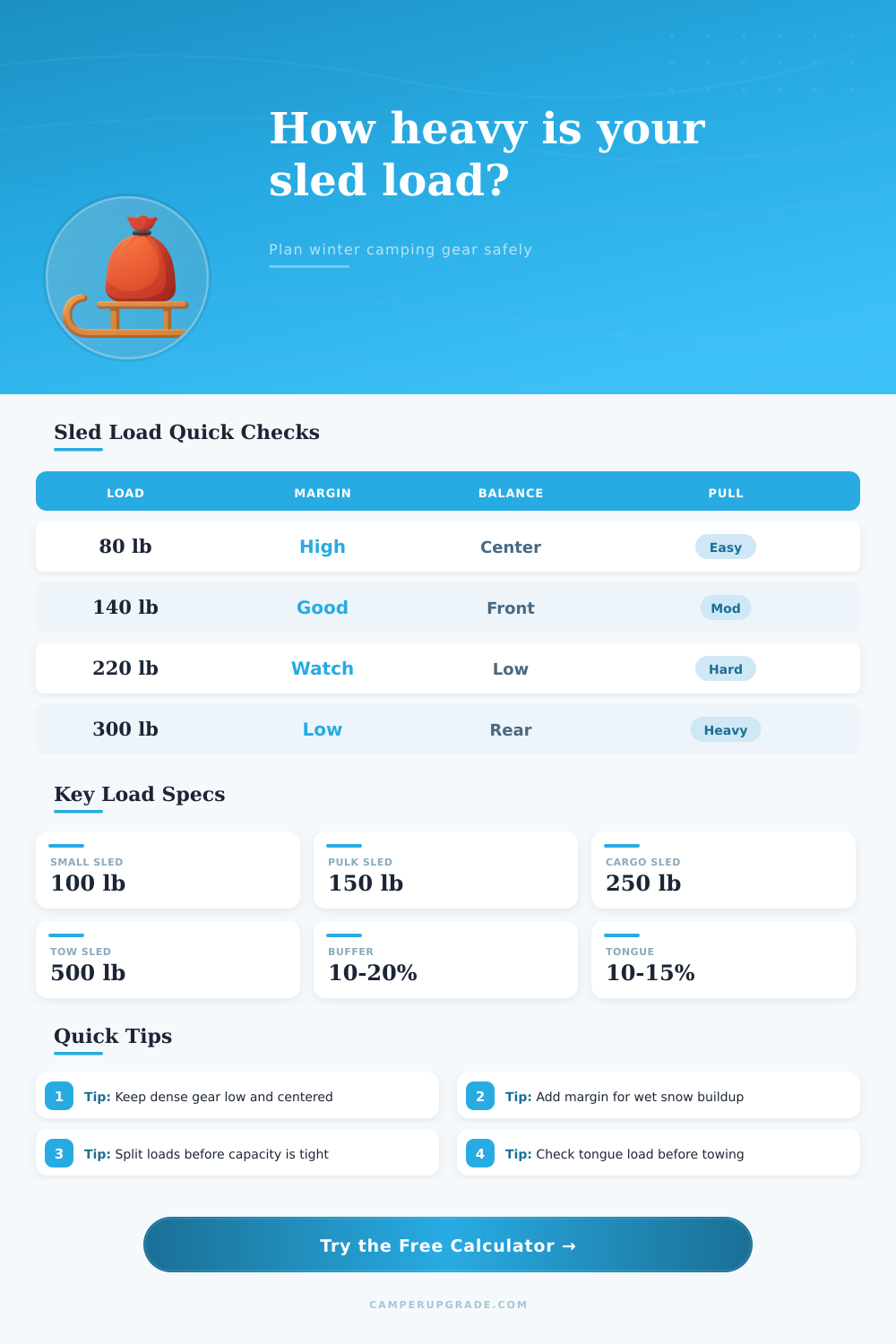
Starting out, it’s hard to find balance. Too much weight up front makes the tongue dig into snow and provides extra braking resistance (like a brake on the sled). This increases pressure against your harness. Weight too far back, and sled won’t track straight in the wind, and tends to becomes unstable enough to tip over on slopes. Pack heavy things like dense food, water, and fuel centrally and low in the sled. Sleds vary in response to where you pack them. The chart below shows how various sled style respond to loading. Note that while a sport pulk is best packed precisely for stability, a long freight toboggan can handle a spread-out load better.
On shorter trips, people underestimate food weight. When you are only out for a couple of days, it’s simple to forget about all those pounds of caloric energy that you’re going to use up. But when you go on an extended trip, say five days. Food start adding a lot to your overall load weight. To illustrate this point, I inputted food consumption rate per person in the calculator and its shocking how fast the bulk adds up.
To maintain a reasonable starting weight, you may decide to eat more high density foods or melt snow for water. Every ounce counts when you are packing close to your maximum weight. Nine pounds of extra weight (that’s what 4 quarts of H2O weighs) is no small amount of added weight. To reduce weight, some hikers opt not to carry as much water, instead relying on melted snow/ice holes to refill their bottles. You will have to give up convenience to save weight, but this way you can enter how much water you start with and track how it affect the total weight.
There are always compromises to make when packing your sled. Bringing too much stuff means having a uncomfortably ride to and from your destination. These calculations allow you to plan ahead, ensuring the worst aspect of the journey isn’t the trek itself. That should of been the frigid temperatures, not bad planning.