Baby Carrier Hiking Weight Calculator
Estimate the loaded carry weight for a child hiking carrier, including the child, frame, water, diapers, feeding gear, layers, trail difficulty, and comfort margin.
🧭Family Hiking Presets
Baby Carrier Hiking Load Snapshot
⚙Carrier, Child, And Trail Inputs
🎒Carrier Material And Spec Comparison
📋Reference Tables
| Carrier Type | Typical Empty Weight | Best Trail Use | Load Planning Note |
|---|---|---|---|
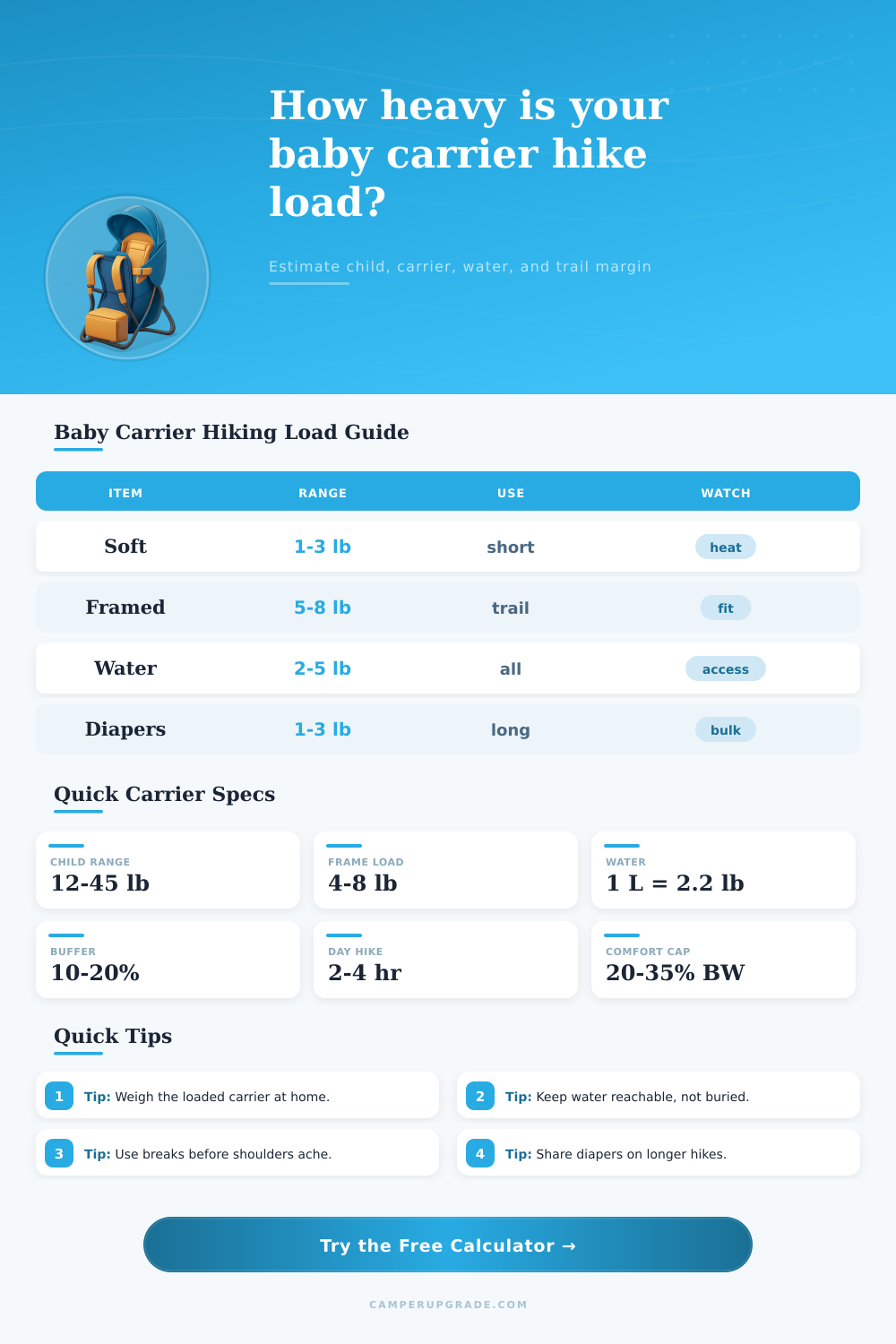
| Soft structured cotton or mesh carrier | 1 to 3 lb / 0.5 to 1.4 kg | Short loops, naps, travel days, low storage needs | Great compact option, but the load can feel shoulder-heavy with bigger toddlers. |
| Full framed backpack carrier | 5 to 8 lb / 2.3 to 3.6 kg | Day hikes, rougher footing, parent comfort, extra supplies | Heavier on the scale, but a good hip belt can reduce perceived load. |
| Lightweight framed carrier | 3.5 to 5 lb / 1.6 to 2.3 kg | Moderate trails where storage is still controlled | Often a good middle ground when the child is mobile but still rides often. |
| Travel compact frame or seat carrier | 2 to 4 lb / 0.9 to 1.8 kg | Flights, city approaches, short nature trails | Pack less water and gear on the carrier if the support is minimal. |
| Child Stage | Common Planning Weight | Carrier Load Pattern | Practical Check |
|---|---|---|---|
| Older infant with head control | 14 to 22 lb / 6.4 to 10 kg | Child is lighter, but diapers, feeding, and sun protection add up. | Confirm the carrier is approved for the child's size and posture. |
| Young toddler | 22 to 30 lb / 10 to 13.6 kg | Often the sweet spot for framed carriers and moderate day hikes. | Use a real loaded test walk before steeper routes. |
| Older toddler | 30 to 40 lb / 13.6 to 18.1 kg | Child weight dominates; water and layers can push comfort limits quickly. | Plan walk breaks if the child will hike part of the route. |
| Large toddler near carrier limit | 40 to 48 lb / 18.1 to 21.8 kg | Frame fit, hip belt transfer, and parent conditioning matter most. | Compare total load with the carrier's stated child and gear limit. |
| Hike Duration | Water Planning Weight | Baby Supplies | Load Note |
|---|---|---|---|
| Under 1 hour | 16 to 24 fl oz / 0.5 to 0.7 L | One diaper, wipes, tiny snack or bottle | Small loads still feel different because the child sits high. |
| 1 to 2.5 hours | 32 to 48 fl oz / 0.9 to 1.4 L | Two to three diapers, snack, sun or rain item | Most family day hikes fit this middle band. |
| 2.5 to 4 hours | 48 to 80 fl oz / 1.4 to 2.4 L | Extra food, changing layer, bigger care kit | Share some supplies with another adult when possible. |
| Over 4 hours | 80 fl oz+ / 2.4 L+ | Full diaper kit, meal, layers, backup warmth | Recheck trail goals, nap timing, and turnaround options. |
| Trail Or Weather Factor | Typical Multiplier | Why It Matters | Adjustment Idea |
|---|---|---|---|
| Smooth path or packed gravel | 1.00x to 1.04x | Low balance demand and predictable foot placement. | Normal water and diaper planning usually works. |
| Roots, rolling grade, or warm sun | 1.06x to 1.10x | More stabilizing work and more frequent hydration. | Keep snacks and water accessible for short breaks. |
| Rock steps, steady climbing, or drizzle | 1.12x to 1.18x | Load feels heavier because of braking, balance, and wet layers. | Reduce extras or share more gear with another adult. |
| Steep, loose, muddy, cold, or exposed | 1.20x+ | Footing, weather bulk, and fatigue can outrun the scale weight. | Use a shorter route or lower comfort-use target. |
💡Planning Tips
This planning tool estimates hiking load and comfort margin only. Follow the carrier maker's fit instructions, age and weight limits, and any medical advice for the child or carrying adult.
A big framed carrier goes on and you head out the door. Maybe you feel like an athlete. Your core is engaged and your hips absorbs the shock so the initial quarter mile are going well. Then the trail rise. Leaves and roots start to show themselves and tree canopy is broken up by sunlight.
Terrain change the way weight impacts you and makes every pound of water that much more noticeable. Before leaving car, calculating your load matter because most people guess and that never works. Parents assume they can approximate their hiking weight based off where a kid fits on a chart plus gear. They don’t realize fatigue multiplies effective weight and this approach fail miserably.
How to Pack Smart for Hiking with a Baby
To make the tool work, input your water volume, trail conditions, and type of carrier. Plug in that extra jacket and let calculator do the math for you. It will save you from guessing if an additional layer puts you outside of your comfort zone. The key to the tool is separating out perceived load from scale weight. A 30 lb toddler who’s sitting still isn’t the same than a 30 lb toddler who’s jumping up and down in a pack when you’re climbing. Your body work hard to stabilize every little move to keep kid safe and comfortable, but you burn more energy then if you were walking with an empty pack.
To account for this, the tool include a multiplier based on footing and elevation. So you can see how much of your comfort budget you’ve burned through. Half the battle is choosing correct frame. For day hikes in parks where you won’t be out long, soft structured carriers works great. They pack down small and spread the load over shoulder straps.
On long treks, however, they suck without hip belt. A framed back pack carrier shift most of the load onto your hips, which will hold much more then your shoulders. The downside: bulk. A fully framed pack will weigh as much as six pounds empty plus whatever baby add to that. Sounds heavy? It means hiking for four hours without hating each step.
Comfort margin: Water is a biggie. Every liter weighs more than 2 pounds. Bring too much (including some for the kid and yourself), add to that a safety buffer, and suddenly those few liter really start adding up. The calculator include an option to enter fluid ounces, which shows actual impact on your load from hydrating. Something else to consider: As you tire, it gets harder to take sips while hiking because you has to stop and reach into your deep pockets. Rather than tucking your parent water away at the very bottom of main compartment, keep it handy in exterior pockets.
And don’t overlook little stuff that piles up. A pack of diapers, baby wipes, sunscreen, a light jacket, and a snack pouch all add up to relatively nothing by themselves. In combination, they frequently weigh more than five pounds. I’ve included some reference tables below which will give you an idea of what is “normal” for various combinations of hike length/distance and stage of your childs development. These can serve as standards against which to check your own inputs prior to pushing the calculate button.
For example, if the tool tells you that you’re carrying 90% of your comfortable carry weight on a three hour hike, you might want to rethink your approach. Adjust the route or pass some of the load to another adult. The terrain does it. Even if your pack is heavy, it feels heavier on loose rocky sections than on a flat gravel trail. If there are steep pitches or sharp turns, you’ll have to slow down and set each foot carefully; those jolts will spike apparent weight. Weather plays into this as well: Rain gear gets bulky, restricts air flow, and makes it harder to bear the weight of the pack when it’s hot out.
In hot conditions, you’ll hike more slowly, requiring more water. This means more weight. This means you will hike more slowy. It’s a vicious cycle that careful planning should of avoided. It’s not about losing as much weight as possible. It’s about keeping it in your comfort range and having fun together instead of hating each other when you get back to the car.
If you really want to know exactly what your fully loaded pack weighs, weigh yourself on a bathroom scale at home and then use the calculator above to figure out your margin. Head out there knowing you’re ready to have some fun, not already beat up from carrying this thing around. That’s what makes family hikes fun; they don’t become endurance tests.