Bike Tire Rolling Circumference Calculator
Estimate bicycle tire rollout in millimeters for bike computers, trainers, gear charts, GPS distance checks, and tire swaps using tire size, measured rollout, load sag, and current sensor setting.
🚲Rolling circumference presets
⚙Measurement method and tire size
Method note: Tire size mode estimates unloaded diameter from bead seat diameter plus tire height, then applies a rolling load correction.
📏Load, pressure, and sensor comparison
Rolling circumference result
📊Result details
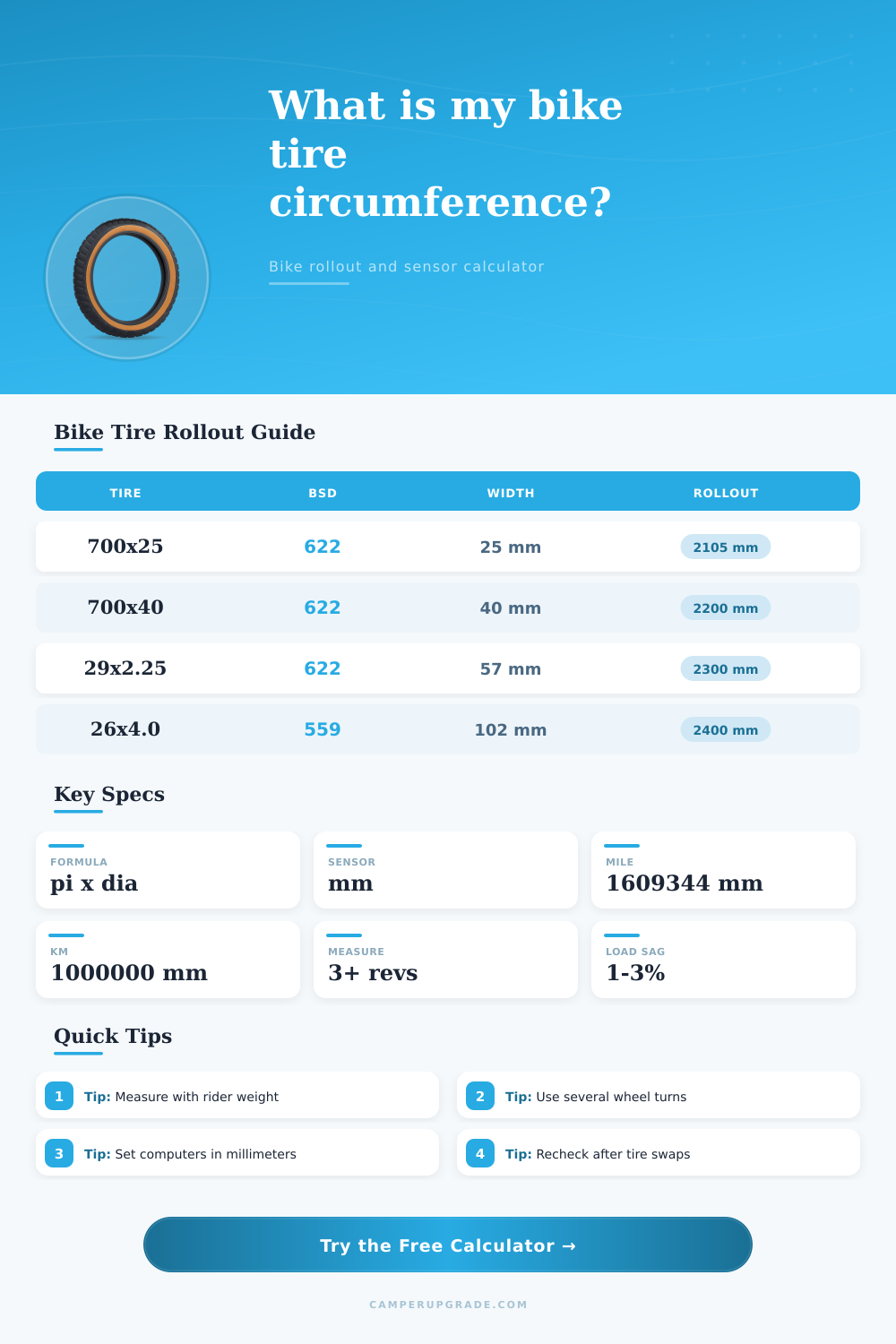
📐Common bike tire circumference table
| Tire size | BSD | Typical width | Approx rollout | Planning note |
|---|---|---|---|---|
| 700c x 23 | 622 mm | 23 mm | 2095-2110 mm | Narrow road tires vary with pressure and rim width. |
| 700c x 28 | 622 mm | 28 mm | 2130-2150 mm | Common endurance road sensor starting point. |
| 700c x 35 | 622 mm | 35 mm | 2165-2190 mm | All-road tires can differ by casing height. |
| 700c x 45 | 622 mm | 45 mm | 2220-2260 mm | Bikepacking load makes measurement more useful. |
| 29 x 2.25 | 622 mm | 57 mm | 2280-2325 mm | Tread height and pressure change the final setting. |
| 27.5 x 2.4 | 584 mm | 61 mm | 2220-2270 mm | Close to some 700c gravel rollouts despite smaller rim. |
| 26 x 2.0 | 559 mm | 51 mm | 2050-2110 mm | Touring tires vary between slick and knobby tread. |
| 20 x 1.75 | 406 mm | 44 mm | 1510-1565 mm | Small errors show up quickly on compact wheels. |
🔁Rollout conversion reference
| Circumference | Diameter | Revs per mile | Revs per km | Computer use |
|---|---|---|---|---|
| 1550 mm | 19.4 in | 1038 | 645 | 20 inch folding or BMX style wheels. |
| 2070 mm | 25.9 in | 778 | 483 | 26 inch touring or city tire range. |
| 2150 mm | 26.9 in | 749 | 465 | Typical 700c road to all-road setting. |
| 2250 mm | 28.2 in | 715 | 444 | Large gravel, 650b plus, or smaller MTB tires. |
| 2300 mm | 28.8 in | 700 | 435 | Many 29 inch trail and XC tire setups. |
| 2400 mm | 30.1 in | 671 | 417 | Fat tire or very tall loaded tire settings. |
| Measurement method | What to enter | Accuracy level | Best use |
|---|---|---|---|
| Tire size estimate | BSD, width, tire height ratio | Good for planning | Gear charts, rough sensor setup, tire comparisons. |
| One wheel turn | Distance for one loaded revolution | Fair | Quick roadside setup when tape length is limited. |
| Three to five turns | Total distance divided by turns | Very good | Bike computers, indoor trainers, repeatable testing. |
| Direct diameter | Outside tire diameter | Moderate | Useful when bike cannot roll straight indoors. |
| Error amount | 20 mile ride | 100 km ride | What it means |
|---|---|---|---|
| 0.25% | 0.05 mi | 0.25 km | Usually invisible in casual ride logs. |
| 1.00% | 0.20 mi | 1.00 km | Noticeable in distance totals and average speed. |
| 2.50% | 0.50 mi | 2.50 km | Common after a major tire size change. |
| 5.00% | 1.00 mi | 5.00 km | Large enough to distort training and navigation. |
🛞Practical rollout notes
To properly track distance and speed you have to know the rolling circumference of your bike tires. That’s how many times a wheel turn around in its entirety. It’s used in all calculations. If that number are wrong, then all your calculations will be wrong too.
Most riders don’t think about it unless they change a tire and things get screwy. Or maybe their training numbers just aren’t looking right. In theory, it’s easy; but a fraction of an inch here or there add up when each mile is made from thousands of turns. On paper a tire may appear identical, but once it is mounted and inflated, it’s not the same.
How to Measure Your Tire Circumference
A high-pressure road tire will sit closer to its unloaded dimensions. Lower air pressures in wider mountain or gravel tires expands and flatten more. This results in a shorter distance for each wheel turn. That’s why guessing by just tire diameter alone can lead you astray when loading up the bike. With this test you eliminate much of guesswork and measure the real world rollout with you onboard.
The way it’s done is to make a mark with valve stem pointed down. Then you hold whatever weight you’d ride with, turn the bar out to roll straight until you’ve gone through an entire revolution and keep going until you’re past another full rotation. Divide that length by amount of rotations made and you have it.
With the tool, I just put my wheel size in and it calculate everything so I don’t need to do math to convert units or correct for load. It’ll also tell you how far off your current setting will take you over your chosen ride distance. This way, you can see if the difference is larger then enough to justify adjusting it before you head out for a long day.
Weight distribution matters more than you might think. Bikepacking bags and rear racks pushes more weight to the back wheel, altering its deflection. This is most noticeable when comparing how a loaded tire rolls on the rear versus the front, if your sensor is on the rear wheel. Even swapping from aggressive tread to slick commuting tires will result in different rollouts.
The casing interacts with the pressure and surface; what works well on pavement may not work well after dropping pressure for dirt or gravel. Most common errors results from using the sidewall number as your last word. It’s a number for the tire when it is round and new, not when it is round and carrying your gear and your rider. And it may be a bit different at the end of its life versus the beginning (as in, worn tread), or if you swap to a wildly diffrent size rim.
Keep your distance/speed numbers honest by updating this whenever something changes enough that it should of. Small errors compound over time and after months of riding. Measuring once (with whatever load your bike carries in practice) has become a practical habit. Measure again after significant component changes or tire changes.
This one step eliminates the bulk of guesswork which gets inserted in the navigation and training log entries. Everything else remains unchanged…you just get numbers that actualy reflect wheel movement.