Bike Gear Inches Calculator
Compare bicycle gearing by chainring, cassette, tire diameter, cadence, rollout, speed, climbing ratio, and high gear range before swapping parts or loading up for a ride.
🚲Bike gearing presets
⚙Wheel, cadence, and ride target
🔗Drivetrain tooth counts
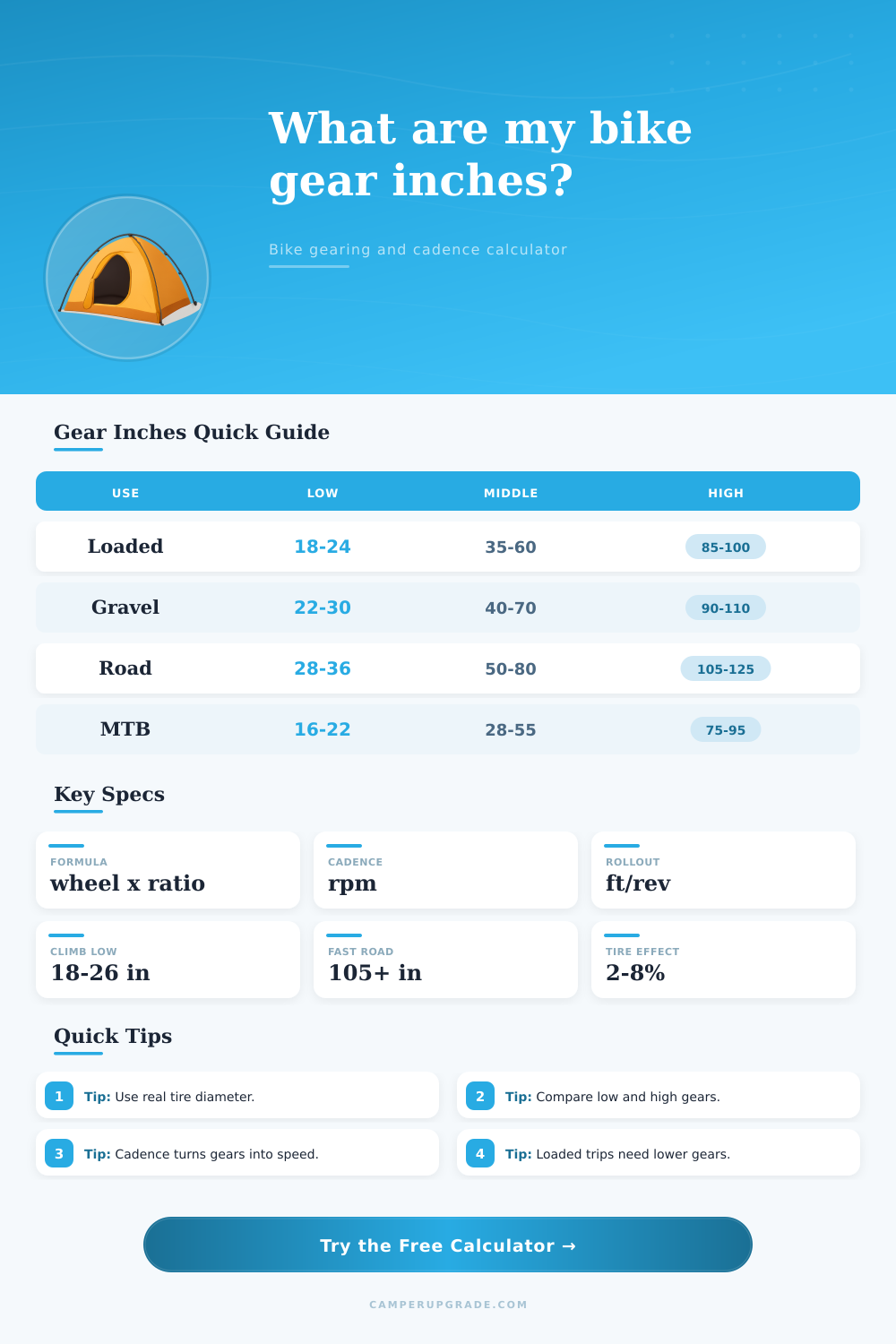
Formula: gear inches = effective wheel diameter x chainring teeth / rear cog teeth. Rollout and speed are then calculated from the wheel circumference and cadence.
Gear inches results
📊Calculated cassette chart
| Rear cog | Gear inches | Rollout | Speed at target cadence | Use read |
|---|---|---|---|---|
| 17T | 55.4 | 14.5 ft | 14.8 mph | Cruise |
🛞Gear inch reference bands
📐Reference tables
| Bike setup | Common low gear | Common high gear | Planning note |
|---|---|---|---|
| Loaded touring | 18-24 in | 85-105 in | Lower gears protect knees during long climbs with bags. |
| Gravel 1x | 22-30 in | 90-110 in | Choose the chainring by the low gear you need most. |
| Road compact | 28-36 in | 115-125 in | Good high speed, but steep climbs may need a bigger cassette. |
| Trail MTB | 16-22 in | 75-95 in | Low gears matter more than top speed off pavement. |
| Wheel and tire | Approx diameter | Effect on gear inches | Best use |
|---|---|---|---|
| 700c x 25 | 27.4 in | Baseline road value | Road bikes and fast endurance bikes. |
| 700c x 45 | 28.3 in | About 3 percent taller than 700 x 25 | Gravel bikes with larger tires. |
| 29 x 2.25 | 29.2 in | Noticeably taller for same teeth | Mountain bikes and bikepacking rigs. |
| 20 inch folder | 20.6 in | Much lower unless chainring is large | Folding and compact-wheel bikes. |
| Cadence | Low gear feel | Cruise use | Check |
|---|---|---|---|
| 60 rpm | Slow grind | Casual or tired climbing | If this is the only option, lower gearing may help. |
| 75 rpm | Manageable climb spin | Comfortable mixed riding | Good target for loaded climbs. |
| 90 rpm | Quick spin | Common road cadence | Useful for comparing cruising speed. |
| 105 rpm | Very fast spin | Sprints or descents | High gear may matter if you often spin out. |
💡Gearing tips
Until you’re trying to maintain speed descending quickly with your buddies or conquer a steep hill filled with groceries, bicycle gears seem theoretical. That is when you realize if they’re working for you or not. It is then you know whether your low gear is actualy low enough to let you ride seated rather than standing and grinding along.
Gear inches provide an easy-to-compare reference for what a bike setup will feel like, regardless of cassette size, number of chainrings, or wheel size. How do you measure? It’s simple: Take the number of teeth in the chainring(s) and multiply them by effective tire diameter. Then divide by the number of teeth in the cog(s). This gives you how far the bike moves for each turn of the pedals compared to a wheel with the same diameter if it were directly connected.
How to Calculate Your Bicycle Gears
High numbers = fast (more speed for every pedal stroke); low numbers = easy pedaling at speed (easier spinning when loaded). Since tires are actualy higher off the ground, the same number of teeth will yield different gear inches on 29er mountain bike as on a 700c road bike. Enter your actual wheel and tire size into the calculator above and it does the math for you; so no guessing which cassette to order anymore!
The other number; cadence, makes those figures dynamic. If your relaxed pace on flat ground is 90 rpm, a similar ratio could feel like a crawl on a slope or a struggle on a climb. So the tool also asks for a different climbing cadence. Most of us will slow down automaticly as the hills get steeper or the bags heavier, so a lower target rpm make sense. Then it outputs how quickly you’ll travel in the lowest gear at that cadence, which helps give you a realistic feel for if you’re going to be able to turn the pedals while seated.
And there’s this subtle thing: Tire diameter matters. When I switched from my usual 25 mm road tire to 45 mm gravel tire, each gear was about three percent lower. It doesn’t sound like much on paper, but it makes a difference over longer rides when you prefer consistency across different surfaces. On the flip side, a smaller wheel reduce all your gears, unless you adjust by upping your chainring size. Many riders who bring several wheelsets on trips find that swapping out the tires changes the feeling of entire drivetrain.
On the page, there are also reference tables of typical ranges for various types of rides. Touring bikes loaded down tend toward low gears in the low twenties so knees survives repeated climbs with weight. Road bikes geared for speed lean the other way and push into the hundreds gear inches on high end for fast descents and tailwind sprints. Endurance and gravel bikes often falls somewhere in between.
This explains why so many people are ending up with a 1x drivetrain. It is simpler and provides a wider range cassette, but it sacrifices some top speed. The other trap to avoid is thinking about only the highest number. You might think, “I’ll get a tall top end. That’s cool,” but if it’s wet out and the road gets steep, how far are you going to be able to ride?
You can use the calculator to size up both ends of your range without spending any money on parts, and know if what you’re proposing will fix what you need fixed on your own rides. Weight of the rider and anticipated load also come into play… Meaning that there is other factors that has been ignored. For example, a sporty rider with no luggage will be able to wring more out of a taller low gear then if they’re planning to lug a weeks worth of camping gear. That’s why the tool have a load profile setting. It adjusts the target low gear for your expected load. This shows how these numbers changes depending on what you might carry.
The numbers only count when they count for the kinds of rides you want to do in the first place. Once you move from a big to a little wheel, change your planned terrain, or change your typical effort level, what felt right on one bike may not feel the same as another. Running different combos through the calculator before any swap helps avoid wasted time and cash, and makes this vague number something you could of believed in on the next uphill.