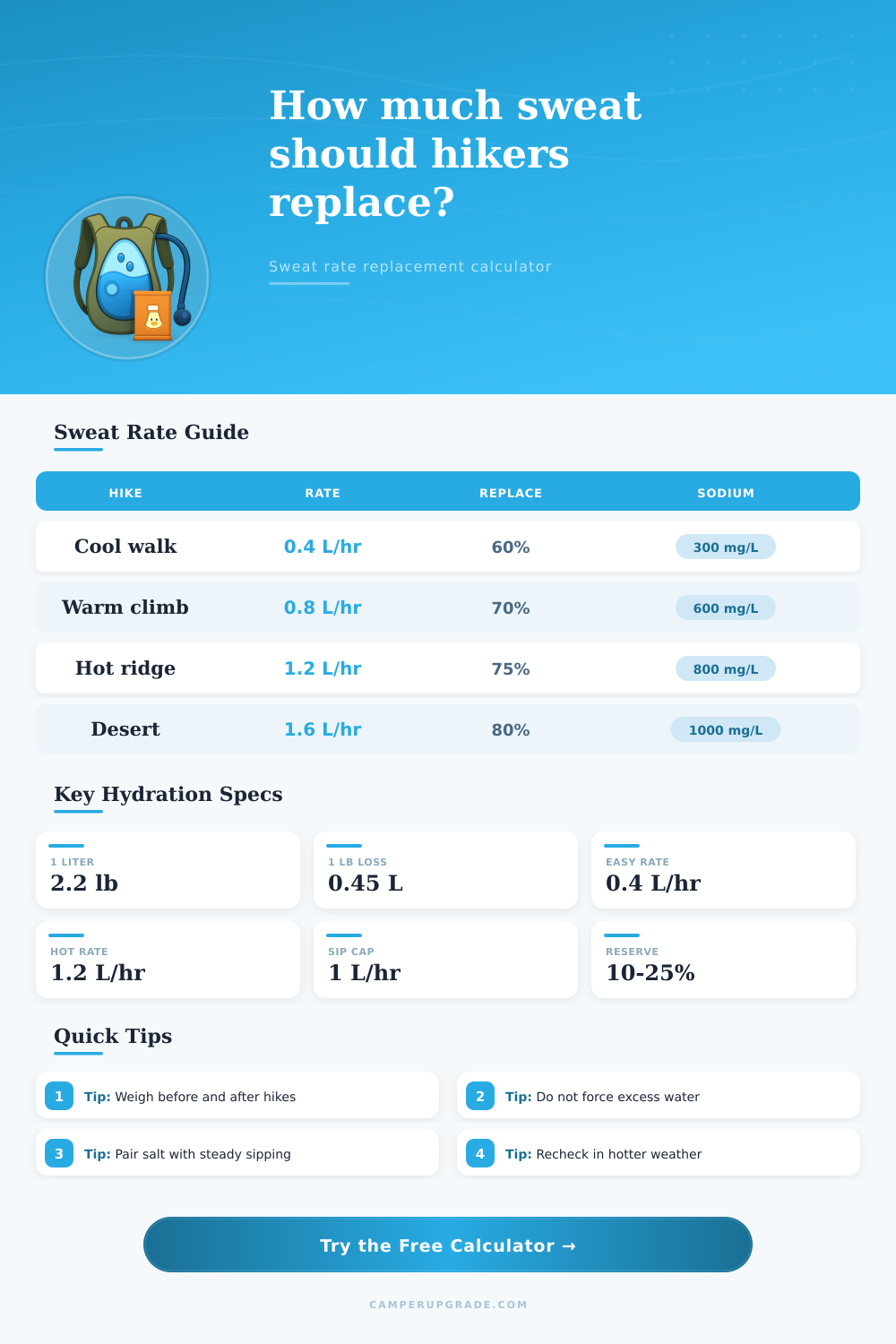
Hiking Sweat Rate Replacement Calculator
Estimate measured sweat rate, fluid deficit, replacement target, sodium support, start carry, dry-stretch demand, and post-hike rehydration from body weight, drink volume, urine stops, route time, and trail conditions.
🥾Sweat Rate Presets
📝Measured Hike Inputs
Weigh with similar clothing and empty pockets when possible.
Towel off sweat and remove wet layers for a cleaner reading.
Include hiking, climbing, scrambling, or snow travel time.
Resting in heat still adds some sweat loss.
Count plain water, sports drink, coffee, tea, and soup.
Fruit, broth, soaked meals, and similar high-water foods.
Use 0.25 L per normal pee if you did not measure.
Positive means soaked clothing made the after weight heavier.
Used to show liters per mile or kilometer.
Enter the longest miles between reliable refill points.
Use the warmest sustained hiking block if conditions changed.
Humid conditions make evaporative cooling less effective.
Exposure helps adjust your measured rate for planning.
Used for a planning-rate adjustment beyond this test hike.
Heavier packs increase work and replacement pressure.
High altitude can raise breathing water loss.
Many hikers replace part, not all, of sweat while moving.
Reserve applies to start carry and dry-stretch demand.
Total liters you can carry at the start of the dry section.
White salt marks or stinging eyes often mean a higher value.
Use lab or field-test data if you have it.
This calculator is for trip planning, not medical advice. Avoid forcing water beyond thirst, and seek professional guidance for heat illness, kidney, heart, or sodium-related conditions.
Sweat Replacement Estimate
📊Sweat Rate Planning Benchmarks
📘Replacement Reference Tables
| Sweat Rate | 60% Target | 70% Target | 80% Target | Water Weight Per 4 Hr |
|---|---|---|---|---|
| 0.4 L/hr | 0.24 L/hr | 0.28 L/hr | 0.32 L/hr | 3.5 lb total sweat |
| 0.7 L/hr | 0.42 L/hr | 0.49 L/hr | 0.56 L/hr | 6.2 lb total sweat |
| 1.0 L/hr | 0.60 L/hr | 0.70 L/hr | 0.80 L/hr | 8.8 lb total sweat |
| 1.3 L/hr | 0.78 L/hr | 0.91 L/hr | 1.04 L/hr | 11.5 lb total sweat |
| 1.6 L/hr | 0.96 L/hr | 1.12 L/hr | 1.28 L/hr | 14.1 lb total sweat |
| Sodium Profile | Concentration | At 0.7 L/hr | At 1.2 L/hr | Trail Clue |
|---|---|---|---|---|
| Light salt | 400 mg/L | 280 mg/hr | 480 mg/hr | Little salt residue |
| Average | 700 mg/L | 490 mg/hr | 840 mg/hr | Normal salty sweat |
| Salty sweater | 1000 mg/L | 700 mg/hr | 1200 mg/hr | White marks on clothing |
| Very salty | 1200 mg/L | 840 mg/hr | 1440 mg/hr | Stinging eyes or heavy crust |
| Measurement Step | What To Record | Why It Matters | Common Error |
|---|---|---|---|
| Before weight | Body weight after bathroom | Sets starting fluid mass | Holding phone, keys, or pack |
| Drink volume | Liters actually swallowed | Added back to sweat loss | Counting unused bottle water |
| Urine volume | Measured or estimated liters | Subtracted from sweat estimate | Ignoring long-route pee stops |
| After weight | Dry clothing, same scale | Shows remaining deficit | Wet shirt or mud on shoes |
| Conditions | Heat, humidity, sun, pack | Helps translate test to future hikes | Using a cool test for a hot route |
| Route Type | Reserve | Replacement Start | Carry Note | Recheck Trigger |
|---|---|---|---|---|
| Short familiar trail | 10% | 60-70% | One bottle may be enough | Warmer than planned |
| All-day mountain hike | 15% | 70-80% | Refill before dry climbs | Pace slows sharply |
| Humid summer forest | 15-25% | 70-80% | Sweat may not evaporate | Clothes stay soaked |
| Desert or canyon | 25-35% | 75-90% | Capacity limits decide route | Water source uncertain |
| Winter or snow | 15-25% | 60-70% | Keep bottles from freezing | Heavy layers wet out |
⚠Trail Use Notes
Your entire day can be shaped by getting your fluid intake correct on the trail. Everything starts off well until you hit that ridgeline. It hits you then that last water source was further than you thought. Your legs gets sluggish, your pack feels heavier, and you start thinking about how far you have left to go. It is going to be a long miserable day of hiking.
Understanding exactly what you’re sweating out makes all the difference between a nice steady day or a long grueling hike. Instead of guessing, most folks carries “enough” (whatever that feels like) and hope for the best. It is fine until weather warms up 10 degrees, changes, or pack becomes too heavy.
How to Know How Much Water You Need
A calculator takes care of the math: plug in the time you moved, how much you drank, and the before/after weights, and voila! Those naked data points turns into an exact figure, your personal sweat rate on your own body based off those conditions. These inputs make a difference: They fix things people regularly ignore. The wet clothes input adjust upward to compensate for sweat absorbed by clothing (so your final number isn’t too heavy). If you take a break, you’re not magically immune to fluid loss; hence the break-time field. Food containing extra water replenish some fluid, while urine output subtracts fluid that wasn’t turned into sweat. Individually, none of this is huge, but collectively, these factors prevents the estimate from becoming unrealistic.
After the calculator generates a rate, the remainder of page provides guidance about what to do with that number. Because most hikers are unable to comfortabley replace all the volume they lose on the way, replacement goals is less than 100 percent. Reserve percentage adds extra time in case you run out of water; this matters more for long backcountry routes then for short loops near town. Sodium concentration appears because some folks loses a lot more salt than other folks; this results in white marks on your clothes or stinging eyes. And with that data, there is the reference tables on the page. So it doesn’t require you to remember your range; it gives you context for the result. They displays the different sweat rates and different replacement percentage targets per hour. They also show what a sodium profile look like in the field.
It’s not to take results of one hike as gospel truth. A cool morning test won’t capture what you’ll need in July on an exposed climb. Rather, the value is doing this process on multiple days and seeing pattern appear. And then that pattern come into play as you plan out next route. So you figure out if dry section you always forget about really needs a full bottle of water or just your normal set up. Or maybe you’re adding in extra salt to one bottle but you aren’t necessarily replacing it with what you’re losing.
The calculator doesn’t replace the need to pay attention while on the trail, but it removes the guesswork at the start.