Campsite Gravel Depth Coverage Calculator
Estimate compacted gravel depth, loose cubic yards, tons, bags, truckloads, geotextile fabric, edging length, and drainage crown for tent pads, RV pads, parking spurs, and campsite repairs.
🏕Campsite Presets
⚙Site Dimensions
Choose the shape that best matches the area that will actually receive gravel.
Use the depth you want after spreading, wetting, and compacting.
Good for RV step zones, camp chairs, and tire swing margin.
Use this if a fire ring, tree, or platform will not receive gravel.
Enter 0 if edging is not needed or the shape is too irregular to measure.
🪨Material And Build Settings
Dense base material is better for RV tires and leveling blocks than round decorative gravel.
Only used when custom material is selected. Supplier densities vary by moisture and gradation.
Add material because loose gravel settles as it is raked, wet, driven over, or compacted.
Use more for irregular campsites, soft shoulders, and hand spreading.
Layer plan changes ordering advice, not the total depth unless you enter separate passes.
Soft soils may need fabric, geogrid, or deeper base than the volume math alone suggests.
Covers seam overlap, staking, side folds, and cuts around trees or utilities.
A common 12 ft x 36 ft roll covers 432 sq ft before overlap.
Use bag output for small repairs; bulk delivery is usually better for full pads.
Use legal payload for your vehicle or the delivery truck size from your supplier.
Many campsites drain well around 1 to 2 percent. Keep RV sleeping comfort in mind.
Enter only gravel you can rake level and keep in the finished pad.
This calculator estimates material quantities. Confirm local campsite rules, delivery access, and supplier material names before ordering.
Gravel Coverage Estimate
📏Common Gravel Coverage At Finished Depth
🚚Depth And Material Reference
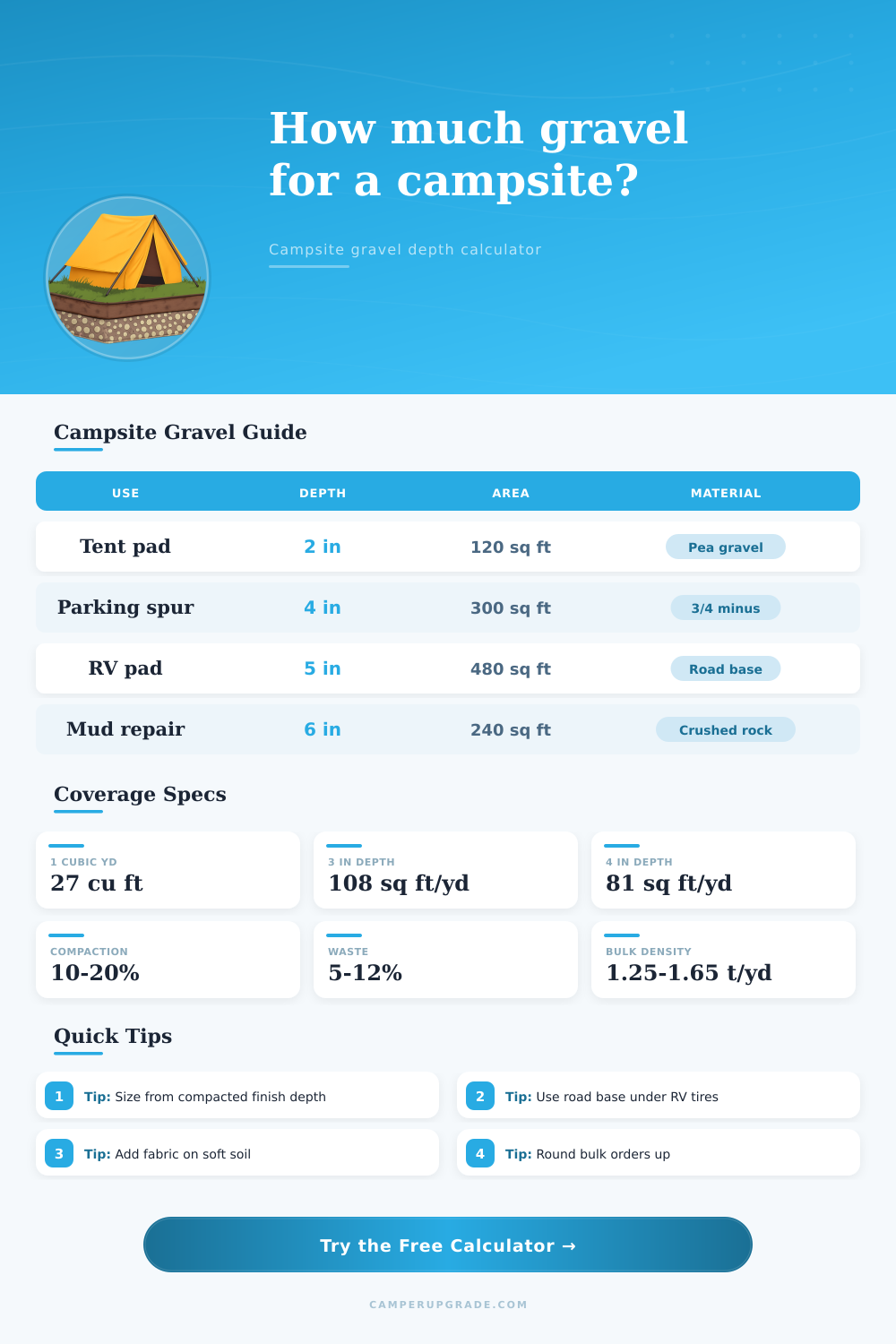
| Camping use | Typical compacted depth | Suggested material | Planning note |
|---|---|---|---|
| Tent pad, picnic area, hammock zone | 2 to 3 in | Pea gravel over firm soil, or fine crushed stone | Add fabric if weeds, mud pumping, or soft soil are likely. |
| Walkway from parking to shelter | 3 to 4 in | 3/8 in or 3/4 in minus crushed gravel | Crown or slope the path so water does not sit in the middle. |
| Car camping parking spur | 4 to 5 in | 3/4 in minus or road base | Compact in two lifts for better rut resistance. |
| RV pad, trailer site, leveling zone | 5 to 8 in | Road base, crusher run, or angular crushed gravel | Avoid loose round stone under jacks and tires unless it is just a top dressing. |
| Muddy repair over clay or organic soil | 6 to 10 in | Fabric plus angular base stone, possibly geogrid | Excavate soft material first when possible; extra gravel alone may sink. |
💡Ordering And Spreading Tips
A muddy campground mean a ruined weekend. Gravel is the answer, but most folks get it wrong, they either buy too much or not enough. There’s a great gravel calculator on this site that will do all the work for you. You just need to know what kind you want, how deep you want it, and what shape your pad will be. Knowing which numbers go in is far more valuable then knowing the equation itself.
Depth is not merely a matter of personal taste; there’s a reason for gravel depths. Gravel disperses weight and maintain water flow, preventing tent stakes and tires from sinking into ground. The ground might rut when someone step onto the leveling blocks after getting into their RV, even if it felt comfortabley under a lightweight tent on solid ground. Rather than asking for the height of a pile of gravel (which settles), the calculator ask for its finished, compacted depth. Enter a number adjusted for this settling, since stone compacts as you drive on it and wet it down.
How to Use a Gravel Calculator
The plan is more dependent off soil conditions than most realize. On well-drained, sandy ground, the subgrade support much of the load and you may be able to go shallow. Unless you layer the soil with fabric, clay or organic muck (muck) will push up mud. The calculator flags soft soil, and the fabric estimate adjust accordingly (but again), it can’t advise digging out problem areas prior to truck arrival. Dig out the worst spots before the truck come if water pools after a storm.
Numbers are not the whole story; the material you choose matter too. Crusher run or road base compacts well since the finer particle lock the bigger rocks into place. Pea gravel is nice looking, but rolls when you drive on it or roll over it with a jack. These characteristics affect how dense the tool think the material is and therefore what tonnage estimate is realistic. If your supplier quotes by the ton, then weight result is what you’ll want. If they quote you by the ton, then you’ll be wanting the weight number.
Because no real-world site is a perfect rectangle, you have to account for waste and compaction. Some stone gets lost along edges when you rake it. Then, when it rains, small particles get washed into low spots, where even more are lost. To factor that in, the calculator does so automatically, although you’ll have to determine whether your site is irregular enough to warrant rounding final order up one-half yard.
Then there’s truck access. The soft shoulder of some campsites or low-hanging branches can prevents larger delivery vehicles from reaching your site. This means you might need to order two smaller loads, which costs a few dollars more per ton. However, it saves you hours of wheelbarrow labor if the only route in are narrow.
Finally, there’s the slope. Water shouldn’t pond on the pad (that’s why there’s a slight crown/one way pitch). If there isn’t enough slope, you get puddles; if there’s too much, then your leveling blocks is not level. You can see how steep your calculated slope is for your measured width, which will give you a sense of whether it sounds about right to cook on tables and sleep on.
There are always sites where gravel will never work long-term…but it’ll make the spot work during the season if the numbers align with reality.