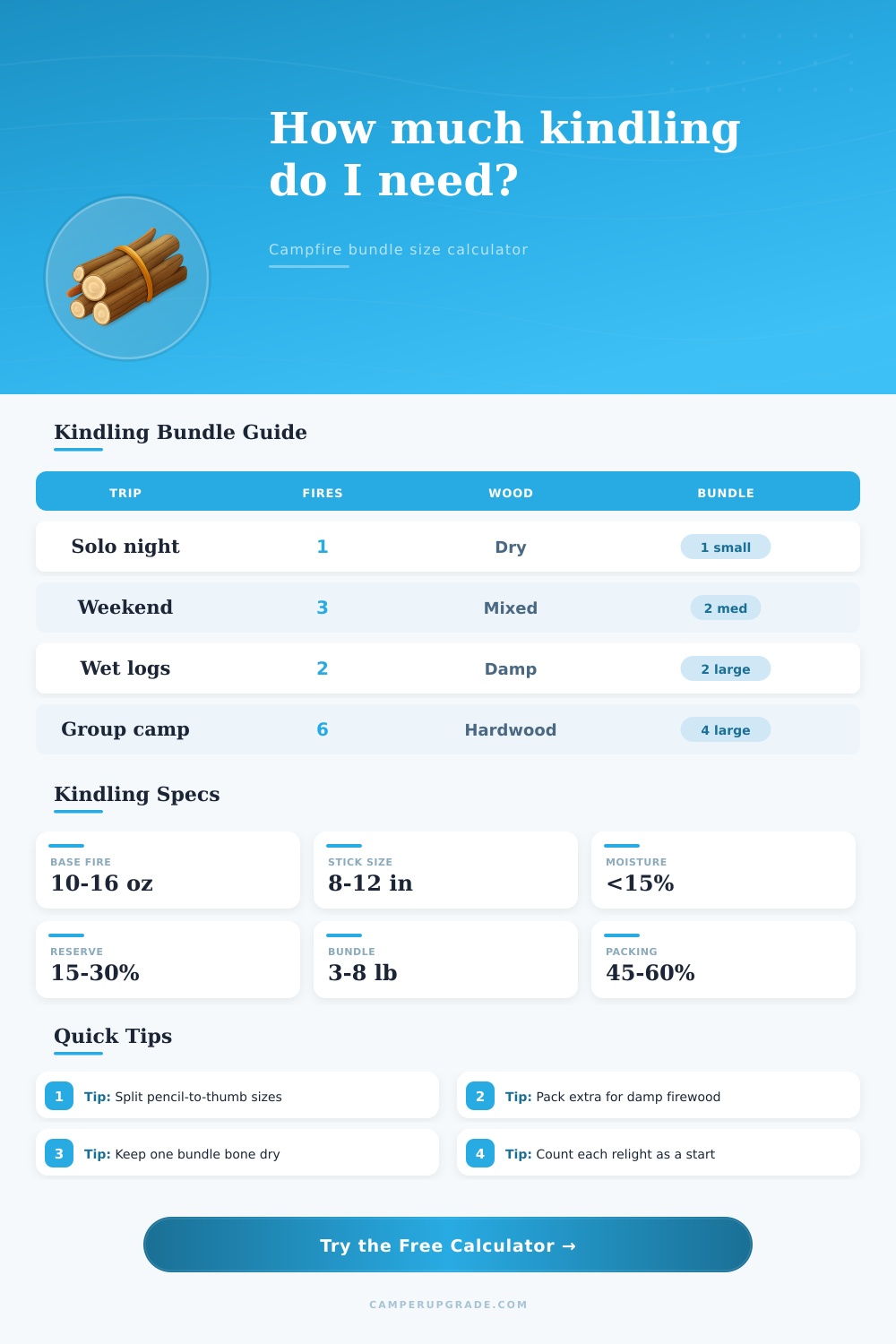
Campfire Kindling Bundle Size Calculator
Estimate dry kindling weight, stick count, bundle count, packed volume, and reserve for tent camping, RV sites, beach rings, group fires, damp logs, and cooking fires.
🏕Campfire Presets
⚙Unit System
Count every fresh lighting attempt and every full relight after the bed goes cold.
Longer fires usually need a little extra thumb-size kindling while the main fuel catches.
Used to scale ring size and how often people rebuild or relight the fire.
Only count dry, split kindling that is ready to burn.
🪵Fire Conditions
This sets the base kindling ounces needed for each successful start.
Damp or dense fuel needs more pencil-size and thumb-size sticks before logs take over.
Exposure changes how much kindling is lost before the main wood catches.
Better tinder reduces the first wave of small kindling, but not the reserve needed for relights.
Density controls stick weight and how many pieces fit in a bundle.
Reserve is added before packed bundle count is rounded up.
📦Bundle and Stick Size
Use the amount you want in one tied bundle, dry bag, crate section, or market bundle.
Packing style estimates bundle volume from the air space between sticks.
Most campfire kindling works well at 8 to 12 inches long.
A mix of pencil, finger, and thumb sizes is better than one uniform size.
Use the average split cross-section, not the widest edge of one piece.
Dry kindling is often below 15%. Damp kindling needs extra weight and burns slower.
This calculator is for campfire planning. Follow current fire restrictions, use local firewood rules, and keep kindling dry until use.
Kindling Bundle Estimate
📊Kindling Wood Density Reference
📝Base Kindling Demand Table
| Fire style | Base kindling per start | Best split sizes | Use when |
|---|---|---|---|
| Small ring or quick comfort fire | 8 oz / 0.5 lb | Pencil to finger sticks | One or two people, short evening, dry camp fuel |
| Standard campsite campfire | 13 oz / 0.8 lb | Pencil, finger, and thumb sticks | Normal fire ring with seasoned split firewood |
| Cooking fire or coal bed starter | 16 oz / 1.0 lb | Small sticks plus thumb-size bridge pieces | Building a reliable coal bed before pans or grates |
| Large social fire ring | 22 oz / 1.4 lb | More thumb-size sticks after flame is established | Group campfires, larger rings, and bigger first logs |
| Small twig stove or tiny fire pan | 3 oz / 0.2 lb | Short pencil-size pieces | Small contained flame where logs are not used |
📦Bundle Size Reference
| Bundle target | Typical weight | Approx packed volume | Planning note |
|---|---|---|---|
| Tiny tinder pouch | 0.5 to 1 lb | 0.4 to 0.9 gal | Good for twig stoves, one emergency relight, or very dry wood |
| Small camp bundle | 2 to 3 lb | 1.5 to 2.6 gal | Often enough for a dry one-night fire ring with reserve |
| Medium tied bundle | 4 to 6 lb | 3 to 5 gal | Useful default for a family weekend or RV storage bin |
| Large group bundle | 8 to 12 lb | 6 to 10 gal | Better for damp firewood, large rings, or repeated relights |
| Crate stockpile | 20 to 35 lb | 15 to 28 gal | Basecamp supply when you want all kindling in one dry tote |
🌡Condition Multipliers
| Condition | Multiplier range | Why it matters | What to pack |
|---|---|---|---|
| Kiln dry logs, firestarter, sheltered ring | 0.65 to 0.90 | Easy flame transfer from tinder to logs | Mostly pencil and finger sticks |
| Normal seasoned firewood | 1.00 to 1.15 | Standard campsite lighting conditions | Balanced pencil, finger, and thumb sticks |
| Mixed stubborn splits or breezy camp | 1.20 to 1.45 | First flame may need rebuilding | Add extra finger and thumb-size sticks |
| Damp logs, wet ground, or exposed wind | 1.50 to 1.95 | Kindling must dry surfaces before logs catch | Pack a sealed dry reserve bundle |
| Green or heavy dense camp fuel | 2.00+ | Kindling may become the real starter fuel | Use more dry softwood and firestarter |
💡Camp Kindling Tips
For successful campfires, the key is getting kindling correct. Too much, and you end up babysitting a flickering wimp. Too much, and you haul around more weight then necessary. Too little, and you ends up nursing a reluctant flame.
Not only does size matter, but so do site conditions, which determine minimum number of pieces that equals “enough.” Getting the fire started require smaller pieces, which light easier than logs. However, thin sticks burn fast; they might burn off before the thicker pieces can get lit. Thick pieces won’t catch easy, though they retain heat longer. So most folks will tote some dry stuff and hope for the best mix. Balancing those sizes and thinking about campsite conditions is the keys to a solid start.
How Much Kindling You Need
The number of pieces of kindling required increases with wind, moist wood, and party size. Wind can consumes the first layer of small sticks before larger fuel even warms up. If there is wet wood at the edges then more dry wood need to be added until wetness evaporates enough to catch flame. Larger group sizes means more fire starts, which generally results in using more kindling out of your supply. These factors don’t show up in a simple count of fires, so you have to adjust for them in order to succeed.
After answering questions about weather exposure, the condition of your wood, how many times you think you’ll start it, and what style of fire you’re planning to use, the calculator will tell you how much you need. And if your sticks is moist or you’ve got some kindling on hand already, you can account for those as well. Then there’s the reserve percent, because plans never quite line up with reality when you’re out in the field.
A bigger pile that sat in humid air all summer won’t matter as much than a smaller one full of dry stuff. And the bundle size thing is just good common sense; it impacts what you carry. When you have a pile that’s too big to handle in one go (and want some for later), it’s difficult to make sure both are kept dry. Divide it into two or three manageable bundles instead, this will help you only take what you need to fire ring while keeping the remainder safe from water.
Depending on how they’re packed, same amount of wood will fit into more or fewer sticks per bundle based off how much air they pack along with them. And lastly, it’s not about carrying as much wood as you can. It’s about bringing enough dry, properly sized stuff for all fires expected that day so there’s no waste or running out. From there, the rest of your packing choices fall into place.
You should of brought more if you dont want to run out.