Backpacking Dinner Calorie Target Calculator
Estimate a practical dinner calorie target from body size, trail load, terrain, hiking time, elevation gain, temperature, appetite buffer, and the meal weight you plan to pack.
🏕Trail Dinner Presets
📝Dinner Target Inputs
Used only for the resting calorie estimate before trail load.
The calculator uses age in the Mifflin-St Jeor resting estimate.
Body mass drives both resting energy and uphill work.
Height refines the resting calorie estimate.
Used as a cross-check against the moving-hour estimate.
Time on feet is the main hiking calorie driver.
Uphill work is calculated from body plus pack mass.
Include water and food carried during the hiking day.
Sets the walking MET value used for trail calories.
Adds a modest thermal load to the day target.
Adjusts the daily target before assigning dinner share.
Backpackers often push more calories into dinner after hiking.
Sets carb, fat, and protein split for the target dinner.
Use a smaller buffer for first-night nerves or a larger one late in a trip.
Dry weight of the meal, sides, oil, dessert, and drink mix.
Typical dinners run about 110 to 180 kcal per ounce.
This tool estimates energy targets for meal planning, not medical nutrition advice. Actual needs vary with fitness, altitude, body composition, illness, appetite, and how much you eat earlier in the day.
Backpacking Dinner Calorie Results
📊Dinner Planning Spec Grid
🍲Backpacking Dinner Target Table
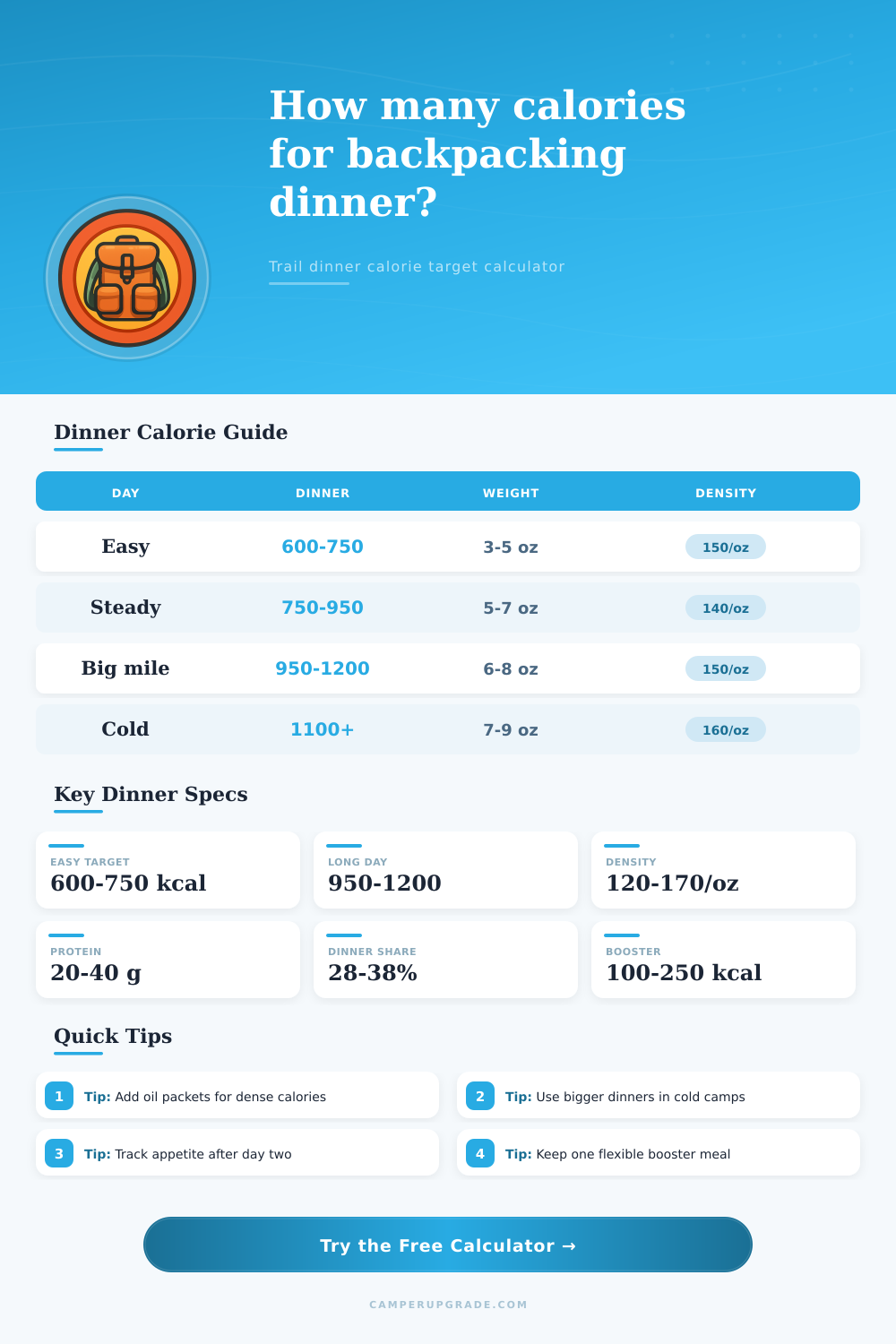
| Trail day type | Typical dinner target | Dry meal weight | Planning note |
|---|---|---|---|
| Short first night, easy approach | 500 to 750 kcal | 3.5 to 5 oz | Lower appetite is common before hiker hunger starts. |
| Steady three-season backpacking day | 750 to 950 kcal | 5 to 7 oz | Works well when breakfast and snacks are also solid. |
| High-mile thru-hike or long climb | 950 to 1,250 kcal | 6.5 to 9 oz | Dinner often carries the recovery load after a long day. |
| Cold, wet, or winter camp | 1,050 to 1,450 kcal | 7 to 10 oz | Dense fat, warm drinks, and dessert can close the gap. |
🥜Calorie Density Reference
| Dinner component | Typical kcal per oz | Typical kcal per 100 g | Best calculator use |
|---|---|---|---|
| Freeze-dried entree pouch | 115 to 150 | 405 to 529 | Use as the meal base, then add sides if short. |
| Ramen, couscous, instant rice, pasta | 105 to 125 | 370 to 441 | Good carbs, but often needs oil or protein added. |
| Olive oil, ghee, coconut oil packet | 235 to 255 | 829 to 899 | Compact calorie booster when dinner weight is capped. |
| Nut butter, nuts, seeds, hard cheese | 150 to 190 | 529 to 670 | Useful for stoveless meals and late-night calories. |
| Jerky, tuna packet, TVP, dried beans | 85 to 135 | 300 to 476 | Adds protein, usually not the densest calorie source. |
⚖Macro Style Table
| Meal style | Carb share | Fat share | Protein share |
|---|---|---|---|
| Balanced dehydrated meal | 50% | 30% | 20% |
| Carb-heavy pasta, rice, or ramen | 60% | 25% | 15% |
| Oil, nuts, cheese, and rich sauces | 38% | 47% | 15% |
| Protein-forward recovery meal | 45% | 25% | 30% |
| Stoveless wrap or soak meal | 45% | 40% | 15% |
🧮Formula And Input Reference
| Step | Formula used | Inputs that matter | Why it matters |
|---|---|---|---|
| Resting calories | Mifflin-St Jeor BMR | Weight, height, age, profile | Sets the non-hiking baseline for the day. |
| Moving calories | MET x kg x hours | Terrain intensity, moving time | Captures most of the work from hours on trail. |
| Uphill work | Mass x gravity x gain / efficiency | Body weight, pack weight, elevation gain | Long climbs can add several hundred calories. |
| Dinner target | Daily target x dinner share x buffer | Strategy, dinner share, appetite buffer | Converts the whole-day target into one meal. |
| Meal weight | Dinner kcal / kcal per ounce | Meal density and packed dinner weight | Shows whether the meal is too light or bulky. |
💡Dinner Calorie Tips
Dinner is a backpacker’s opportunity to reconnect with the work they put in during the day; and since the numbers matter more then most hikers admit, it’s important to talk about how much the math actualy matters. Snacks and breakfast do not always compensate for fuel burned during a long day on trail, making the evening meal one of (if not the) largest calorie decision of the day. It’s time to crunch some numbers when the stove comes out and the pack comes off.
How much depends on the temperature. It also depend on the type of terrain, weight of the pack, and how hard you recover. You could hike a long day on an easy trail with a light pack and be fine with a small dinner. But then, you might carry all your water up a steep climb to a dry camp and still not feel full, even though you thought you eat plenty.
Why Dinner Matters for Backpackers
The calculator above does that math for you if you input the kind of day you’re planning (hours on trail, elevation gain), the type of food you’re taking, and your body size. So it spares you having to guess at what trade-offs you’ll be making based off weather, load, and distance.
The dinner share itself is the one most folks underestimate. Often early in a trip you’ll find that your stomach hasn’t caught up with your burn yet and a small meal will be just fine. By day three or four that changes, and all of a sudden your body want more. A cold night or a bigger climb pushes the target higher because the recovery cost increases if your legs work harder then expected or if the temperature drop. Lastly, you should of adjusted the inputs that capture these shifts first.
Remember, you’re going to be lugging all of this around on your person, so meal weight/size are nearly as important as calories. You might have a dinner that seems perfect on paper but turns out unwieldy and doesn’t fit into maximum amount of food you want to carry. The calculator tells you how heavy (at the density you chose) you’ll need to get to target. Which means now the true choice become apparent: increase density by adding nuts/oil? Or do you resign yourself to a slightly heavier meal?
When you get down to chowing down on said food, the nutrient balance you adopt will make the meal feel different. Protein-fat based meals will generally be warmer during a cold night, whereas carb heavy dinners will refuels your glycogen reserves more rapidly when you’ve done a bunch of climbing. There is no single winner; however, type of recovery you need should decide whether you build a specific type of meal or choose the lightest option.
Too many people makes the mistake of treating dinner as an afterthought once the day’s mileage is done. That might work for short, easy days when weather cooperates, but it makes larger days feel tougher than necessary. When you apply just as much thought to your evening meal as you do to gear and route, the end of the day becomes as certain as the start and no longer an exercise in willpower.
The calculator gives you a target that includes not only what you’re carrying but also the meal you’re willing to carry, the weather you’re sitting in, and the day you just finished. Then use that as your starting point and tweak the following night depending on how you felt. And that’s what finally turns one calculation into a way to stay fueled without packing too much luxurius food.