Zero Day Food Calculator
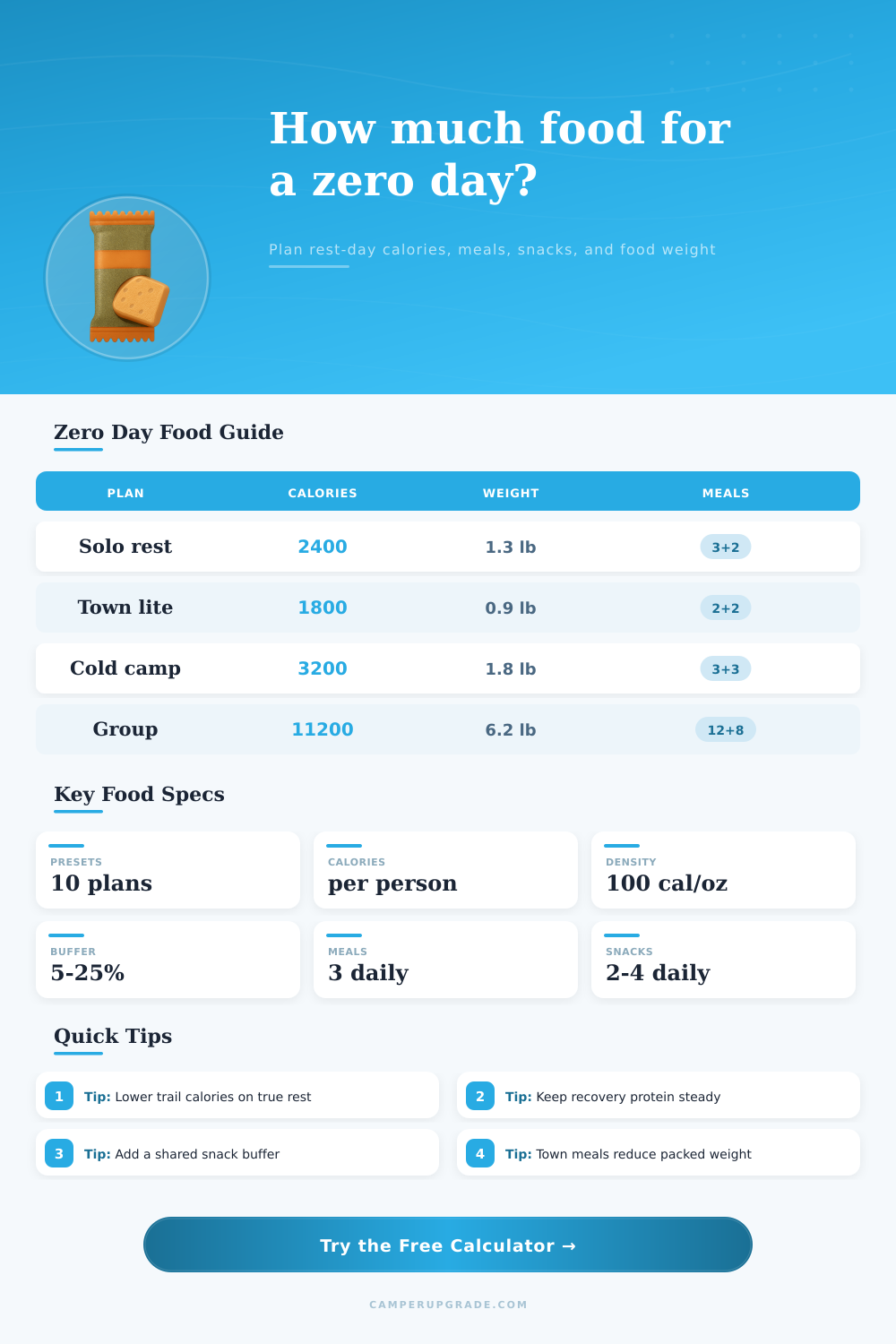
Estimate packed calories, food weight, meal counts, snack portions, recovery protein, and group buffer for a no-mileage rest day on trail or at a campsite.
⚡Zero Day Food Presets
📏Group, Calories, And Meal Inputs
📊 Zero Day Food Results
⚙Zero Day Food Spec Grid
🍚Zero Day Calorie Reference
| Zero Day Style | Use When | Trail Calorie Multiplier | Typical Food Focus |
|---|---|---|---|
| Town rest | Laundry, showers, minimal walking, one or more meals bought off trail | 0.58x to 0.68x | Breakfast, snacks, protein, and only the meals not covered in town |
| Camp rest | Waiting weather, drying gear, fishing, reading, and short water hauls | 0.68x to 0.78x | Normal camp meals plus extra warm drinks and easy snacks |
| Active nero | A short mileage day before or after the rest block | 0.78x to 0.88x | Keep walking snacks, but reduce the all-day graze amount |
| Recovery hunger | After high mileage, cold exposure, poor sleep, or several underfed days | 0.88x to 1.00x | Carbs for refill, protein for repair, and enough fat for calorie density |
🥜Food Density And Weight Table
| Food Type | Approx Cal/Oz | Approx Cal/100g | Zero Day Use |
|---|---|---|---|
| Instant oats with milk powder | 105-125 | 370-440 | Breakfast base, easy to scale for groups |
| Nut butter, nuts, and trail mix | 150-180 | 530-635 | Dense calories when packed weight is tight |
| Ramen, couscous, rice sides | 100-125 | 350-440 | Warm lunch or dinner with simple seasoning |
| Bars, cookies, drink mix | 95-140 | 335-495 | Snack blocks, morale food, and no-cook calories |
| Jerky, tuna, protein powder | 80-120 | 280-425 | Protein anchor without relying on bulky fresh food |
| Fresh fruit or town leftovers | 15-60 | 50-210 | Useful when carried briefly, heavy for remote layovers |
🥣Meal And Snack Portion Table
| Portion | Common Calories | Common Weight | Calculator Input To Adjust |
|---|---|---|---|
| Small breakfast | 450-600 cal | 4-6 oz | Average packed meal calories |
| Large camp meal | 700-1000 cal | 6-10 oz | Average packed meal calories |
| Snack block | 200-400 cal | 2-4 oz | Snack calories per snack block |
| Recovery drink | 150-350 cal | 1.5-4 oz | Protein target and snack calories |
| Shared treat | 300-800 cal | 3-8 oz | Safety and sharing buffer |
🎒Common Zero Day Scenarios
| Scenario | People And Days | Good Starting Multiplier | Planning Note |
|---|---|---|---|
| Solo tent rest after big miles | 1 person, 1 day | 0.78x plus hungry recovery | Keep dinner full-size and add an easy protein snack. |
| Hostel or town zero | 1-4 people, 0.5-1 day | 0.58x to 0.68x | Subtract planned town meals before adding buffer. |
| Basecamp with short walks | 2-6 people, 1-2 days | 0.68x to 0.78x | Group snack buffer matters more than exact meal count. |
| Storm hold in cold weather | 1-8 people, 1-3 days | 0.78x plus cold adjustment | Hot drinks and simple warm meals help appetite. |
| Paddling layover | 2-8 people, 1 day | 0.78x to 0.88x | Use a little more food if chores and portages continue. |
✅Zero Day Food Tips
The numbers are planning estimates. Adjust for personal appetite, food allergies, medical needs, altitude, current deficit, and the actual reliability of town or group meals.
Having a zero day on trail means you are living on borrowed time. You’re not moving forward, but you also aren’t sitting idle, you’re still burning some form of energy. And what did you bring for food? That is because you planned for the day you just had, instead of the one ahead. It can be hard to judge that difference.
Some people overpack their food, carrying all of their hiking fare without regard for the fact that this isn’t actualy a hiking day. Others underpack so much that they runs a deficit and then need to make up for it in town, which often means ransacking the town food supply. The real issue is how much today differ from any other day on the trail, and how that difference should changes your meal plan, your weight, and your calorie intake.
How to Plan Food for Rest Days
Those are precisely the changes captured by the calculator above. We use normal trail calories as our starting point. Then the activity profile bumps them up when we’re walking around doing short hike, water carries, or other chores. It tapers them back down if we’re basically resting. Finally, weather and recovery adjustments go on top. Big deficits and cold nights each drive hunger even when you’re not moving.
Then you must subtract your meals while in town from all that. They don’t have to be hauled in a pack. And the buffer adds a little bit more just in case since appetite always goes haywire once you quit hiking.
All these decisions matter: Not all zero days is created equal. A zero day in town with laundry and showers is not the same as a storm hold in your cold tent. The calculator lets you account for that difference without having to guess at one random number. Similarly, protein goals and food densities matters too. Even as total calories decline, we still need repair fuel to recover (hence why protein is more stable). Densities tell you how many calorie per pound you’re getting in any given food item. This is useful if you find yourself with a heavy pack due to additional layers, wet clothes, etc.
Then the meal/snack split logic divides that remaining calorie goal down into manageable chunks… No giant mass of undifferentiated food hanging off your pack! The final step is selecting exactly what goes in the pack. Reference tables on this page provide typical calorie ranges for various types of zero-days and explain how common foods translate into weights. These are handy tools to use when figuring out what goes in the pack.
The vast majority of folks mess up their buffer. Either they use it as an additional day of food, or they omit it altogether and cross their fingers nothing go wrong. In truth, your appetite will change on rest days, especially if it’s been cold or if you’ve had a few tough days. There may be little bites here and there when your group is grazing while nobody feels rushed, all this adds up and is accounted for by the buffer. More importantly, it maintains a decent safety net without mixing it into the core meal plan where you’d otherwise not know how much you’re carrying for safety vs. It is just to survive the day.
But the most important output isn’t the actual amount of calories, it’s the implication of those calories for your pack. If you end up near your typical trail weight on a real rest day then you’re packing too heavy. If it’s noticeably lighter than normal then go back through and check again how solid your assumptions were based off group caches/town meals. That keeps the math honest with those two checks.
When you get your own set of numbers dialed into this thing, the rest of the work is easy. Pack out the meals and snacks as the calculator says, stick to the protein target in your menu, and let the buffer do its thing when the day actualy arrives.