Big Three Weight Calculator
Total shelter, sleep system, and backpack weight, then compare the big three against your base weight target, category targets, body-weight guideline, and trip style.
🎒Real Shelter, Sleep, and Pack Presets
⚙Big Three Inputs
Formula logic: shelter share = (shelter main + shelter extras) x share percent. Sleep system = bag or quilt + pad + sleep extras. Pack system = empty pack + liner or accessories. Big three total = shelter share + sleep system + pack system, then buffer is applied for the planning total.
📊Big Three Spec Grid
📋Breakdown and Reference Tables
| Category | Your weight | Target weight | Status |
|---|---|---|---|
| Shelter | -- | -- | -- |
| Sleep | -- | -- | -- |
| Pack | -- | -- | -- |
| Kit preset | Shelter | Sleep | Pack |
|---|---|---|---|
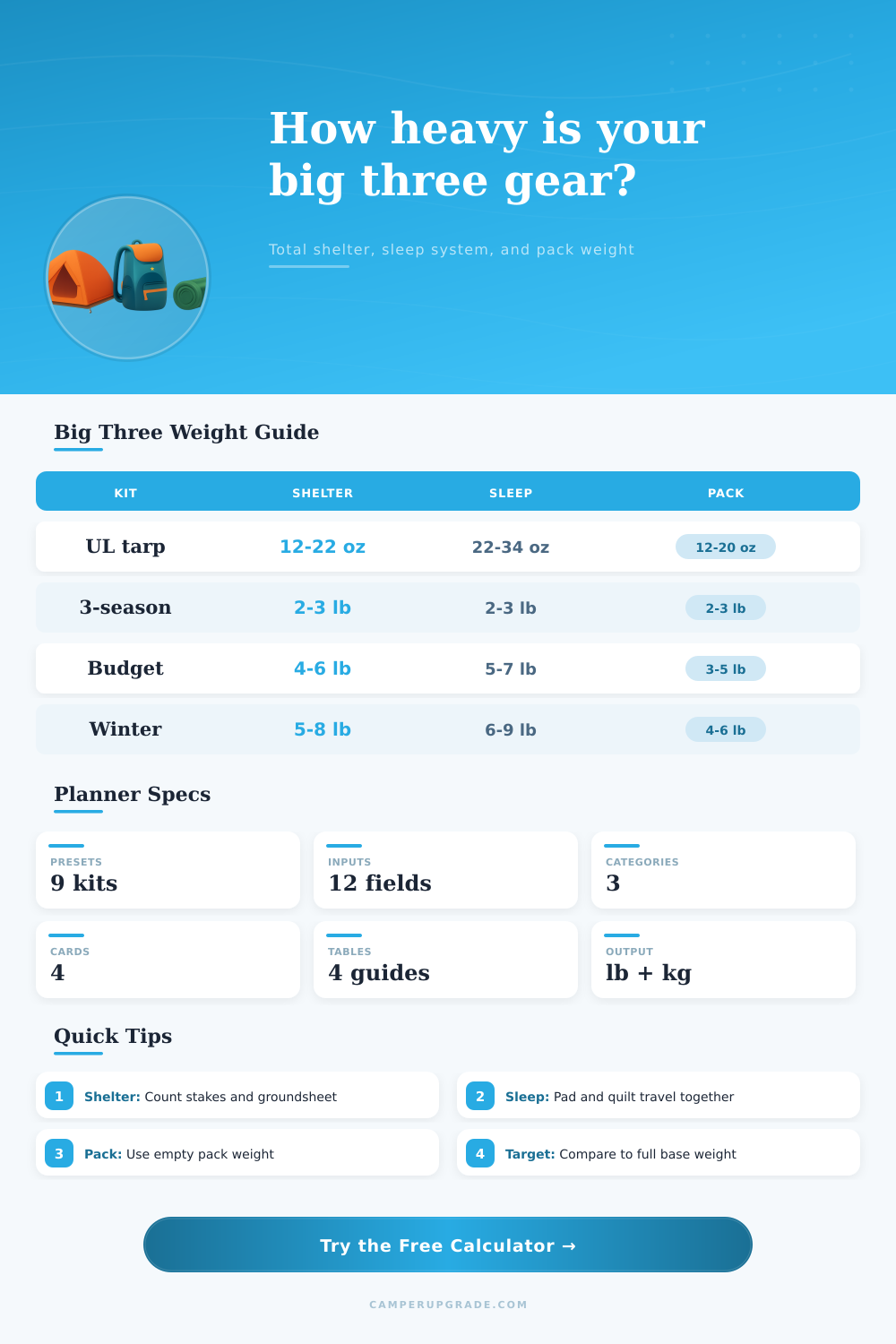
| UL tarp quilt | 0.9-1.4 lb | 2.0-2.8 lb | 0.8-1.4 lb |
| Solo 3-season tent | 2.4-3.2 lb | 2.5-3.4 lb | 2.0-3.0 lb |
| Budget synthetic | 4.0-5.5 lb | 5.0-7.0 lb | 3.0-4.5 lb |
| Winter solo | 5.0-8.0 lb | 6.0-9.0 lb | 4.0-6.0 lb |
| Base target | Big three aim | Shelter target | Use case |
|---|---|---|---|
| 8 lb | 4.4 lb | 1.7 lb | Dialed ultralight trips with compact shelter choices. |
| 12 lb | 6.6 lb | 2.5 lb | Common light backpacking setup with a solo tent. |
| 16 lb | 8.8 lb | 3.4 lb | Comfortable three-season kit with sturdy pack support. |
| 24 lb | 13.2 lb | 5.0 lb | Winter or shoulder-season insulation and stronger shelter. |
| Temperature range | Sleep weight cue | Pad cue | Planning note |
|---|---|---|---|
| 50F and warmer | Light quilt | Low R-value | Sleep can be the easiest category to trim. |
| 30F to 45F | 20F-30F quilt or bag | Insulated pad | Most three-season kits land here. |
| 10F to 25F | Warm bag or layered quilt | High R-value | Sleep target usually rises faster than pack target. |
| Below 10F | Winter bag system | Stacked pads | Do not force ultralight targets into winter conditions. |
💡Big Three Weight Tips
The big three categories of gear are the shelter, the sleep system, and the pack. These three categories is the most important factors to consider in determining if a backpacking load are manageable. Together, these three categories usually make up more than half of a persons base weight.
Additionally, each of these three categories can be calculated separately, and you can compare each of those weights to a target weight to avoid second-guessing which gear is too heavy or too light for a particular backpacking trip. To calculate the weights of the big three categories, several different inputs must be made into the calculator. For instance, the shelter weight include the weight of the tent body (or tarp), the stakes, the poles, and the groundsheets.
The Big Three Backpacking Items and Their Weights
For those who share a shelter with another backpacking trip member, the percentage of the total shelter weight that each individual must share must be entered. For the sleep system, you must enter the weight of the sleeping bag and sleeping pad (and any small accessories) separately. The weight of the sleeping bag, sleeping pad and accessories will have different weights for backpacking trips, and each of these categories serve a different purpose for the sleeping backpacker.
Finally, you must enter the weight of the sleeping backpack and any liners or pockets for that pack. Additionally, a value of the temperature and the body weight of the backpacker will be required as well. For example, if the sleeping system is too light for the temperature, the calculator will alert the backpacker.
Additionally, the body weight will allow for the calculator to determine if the shelter, sleep system and pack represent too large of a portion of the body weight. Additionally, the type of trip that will be taken will alter the targets for each of the big three categories. The output of the calculator will include a small planning buffer, as the calculator compares the weight of the shelter, sleep system and pack to the total base weight entered for the backpacker.
Additionally, each of the three categories will have rows that allow for the individual backpackers to compare the weight of those three categories to the target weights for each category. Finally, its label will represent the biggest category, which will allow each backpacker to recognize the primary reason for their high total weight for the trip. It is possible that one category will appear more heavier than the others.
For instance, it is possible that the weight of the sleeping pack may be heavier than the lightest shelter, or that the sleeping bag for a winter trip may be heavier than both the sleeping pack and shelter. In each of these cases, the reference tables may help each backpacker to determine if he gear for those individual categories is within the normal weight ranges for that type of gear. The calculator will be most helpful in altering one of the inputs to observe the changes to the total weights.
For instance, altering the ownership of the shelter to fifty percent will help each individual to see if that change can bring the total weight back to the target weight without having to alter another category. Additionally, adding small amounts of gear to a sleeping pack will not have as great of an impact on the total weight as may be expected, but it will still add to the total weight of gear that will be transported on those backpacking trips. The targets for the total base weight will only be helpful if they reflect the actual weights of gear and body weight that will be used on the backpacking trips.
For example, gear that weighs eight pounds for a summer backpacking trip may be too light for winter trips, and too little weight may be acceptable for ensuring that backpackers remains comfortable on the trips. The goal mode for the calculator will impact the recommendation that the calculator provides, but will not impact the weights of the big three categories. For example, if the goal is to be as light as possible for backpacking trips, then every ounce of weight will be eliminated, whereas if the goal is to be as comfortable as possible, then the recommendation will focus on adding warmth to the sleep system.
The weights for the big three categories will be displayed as a percentage of the total base weight of the backpacker. Additionally, each of the weights of the gear will be represented as a percentage of the total body weight of each of the backpacker as well. Each of these percentages will help each backpacker to understand how much of their total weight is represented by each of the big three categories.
By performing these types of calculations in advance for each backpacking trip, each person can gain an understanding of which gear items have the most impact upon the total weight of the backpacker. Each of these individual understandings will allow for each backpacker to recognize which gear items is the most important to have in relation to there level of comfort on the trips. Thus, while each of the calculations may be simple to complete, the math would of helped to provide clarity for each backpacker regarding how they will pack for their trip.