Firewood Seasoning Weeks Calculator
Estimate how many weeks a firewood stack needs to season by wood species, starting moisture, target moisture, split size, split length, climate, airflow, cover, stack style, and sun exposure.
🪵Firewood Seasoning Presets
⚙Wood, Moisture, Split, Climate, and Stack Inputs
⚙Firewood Seasoning Spec Grid
📋Firewood Seasoning Reference Tables
| Species | Base weeks | Drying character | Calculator factor |
|---|---|---|---|
| Pine or spruce | 14 weeks | Low density, dries quickly when split. | 0.72x |
| Douglas fir | 20 weeks | Moderate density, good airflow helps. | 0.88x |
| Cedar | 12 weeks | Light wood, fast but often lower heat. | 0.65x |
| Ash | 24 weeks | Often starts lower than some hardwoods. | 1.00x |
| Hard maple | 34 weeks | Dense hardwood with moderate drying time. | 1.25x |
| Birch | 30 weeks | Bark can hold moisture if not split. | 1.18x |
| Cherry | 28 weeks | Medium hardwood, seasons reliably in rows. | 1.12x |
| Oak | 58 weeks | Closed grain and high density slow drying. | 1.90x |
| Hickory | 46 weeks | Very dense, needs patient airflow. | 1.58x |
| Black locust | 52 weeks | Dense and durable, usually a long season. | 1.72x |
| Split thickness | Surface cue | Size factor | Typical use |
|---|---|---|---|
| 3 inches | High surface per pound | 0.78x | Quick campfire wood |
| 4 inches | Good drying balance | 0.90x | Small stove splits |
| 5 inches | Normal firewood | 1.00x | General stack |
| 6 inches | Lower exposed face | 1.15x | Dense hardwood |
| 8 inches | Slow core drying | 1.48x | Large shoulder splits |
| Stack condition | Fast choice | Slow choice | Why it matters |
|---|---|---|---|
| Airflow | Open wind | Blocked corner | Moves damp boundary air away. |
| Cover | Top only | Wrapped tarp | Rain protection should not trap sides. |
| Stack | Single row | Thrown bin | Loose rows expose more split surface. |
| Sun | Full sun | Deep shade | Warm wood releases moisture faster. |
| Moisture path | Wood example | Good setup | Slow setup |
|---|---|---|---|
| 35% to 20% | Pine | 8 to 14 weeks | 16 to 24 weeks |
| 45% to 20% | Ash or cherry | 18 to 30 weeks | 32 to 48 weeks |
| 55% to 20% | Maple or birch | 30 to 46 weeks | 48 to 70 weeks |
| 60% to 20% | Oak or locust | 52 to 78 weeks | 80+ weeks |
💡Firewood Seasoning Tips
Seasoning firewood refer to the process of removing the moisture content from the firewood logs so that they can burn efficient. If firewood isnt season properly, the firewood will contain too much moisture content. When burned, the firewood will release steam that will make it inefficient as a means of heating a house.
Seasoning firewood are a critical part of firewood preparation as the seasoning of firewood will determine whether or not the firewood will heat a house or will fail to burn good. While the type of firewood are critical in the seasoning process, how you handle the firewood after being cut from the trees is also critical. For instance, different types of firewood will hold water differntly.
How to Dry Firewood Properly
Oak firewood will hold moisture different than pine firewood. However, dense hardwood firewood will season more better than softwood firewood when split into smaller piece and stacked to allow for airflow. A calculator can be used to determine the influence of various factors on the seasoning process of firewood.
Using a calculator will help to ensure that guesswork doesnt do the seasoning of firewood. Splitting firewood into smaller piece is a factor that will impact the rate at which firewood seasons. Splitting firewood into smaller pieces will allow the moisture in the firewood to escape the wood.
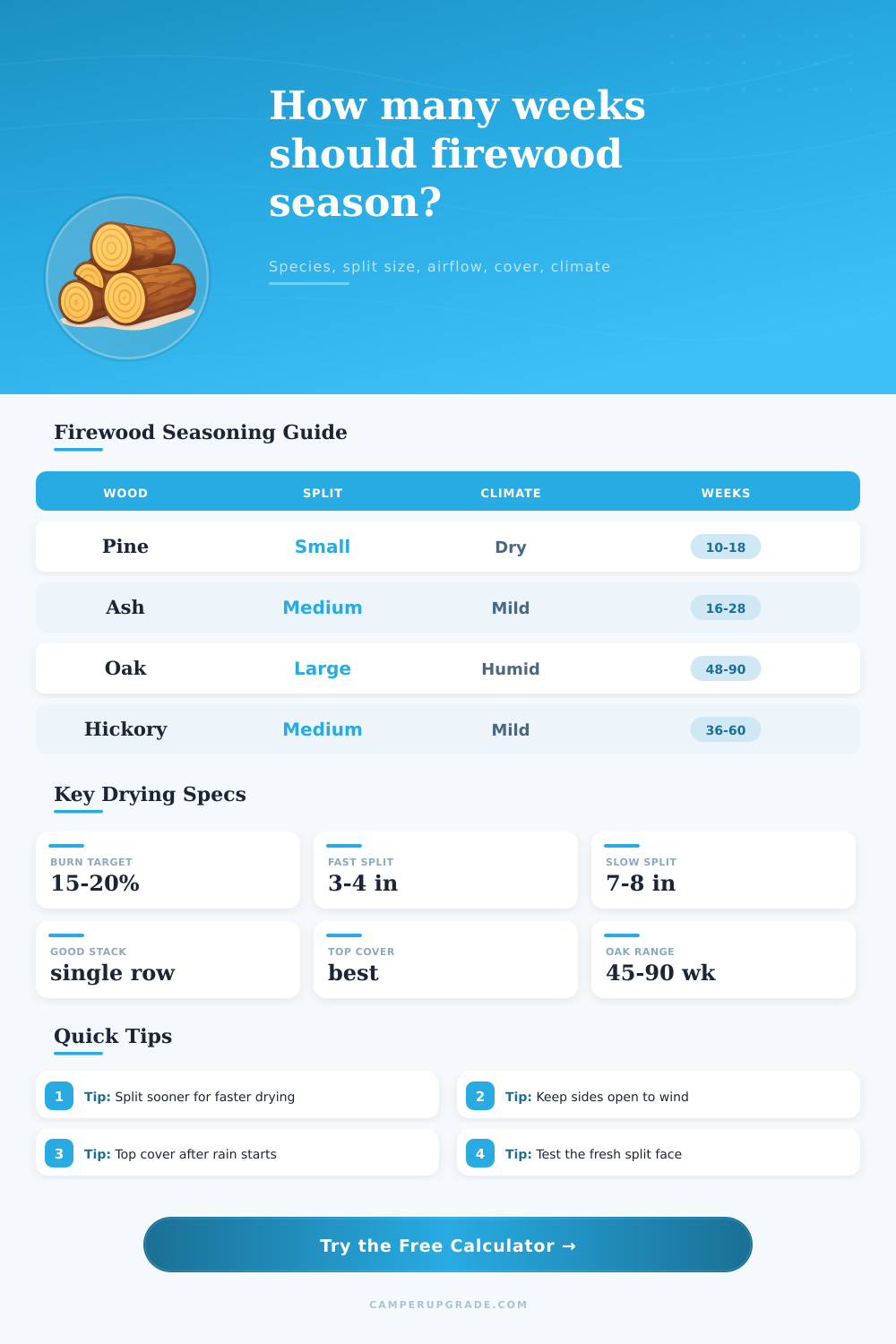
For instance, three-inch firewood splits will season faster than seven-inch splits as the moisture in three-inch splits will have a shorter distance to season out of the wood. The length of firewood is a factor that will impact the seasoning of firewood; however, the width of firewood split is a more critical factor in the seasoning process. To speed up the seasoning process of firewood, use a saw to split the firewood into smaller splits.
The climate and in what way firewood are stacked will impact the seasoning of firewood. For instance, firewood that is stacked in a way that allows it to be exposed to the wind and not shaded will season better than firewood stacked in a way that retain the humidity around the firewood. Avoid exposing firewood to rain as the presence of rain will increase the moisture content of firewood.
Additionally, cover the firewood with a cover to protect it from rain. Dont cover the sides of the firewood as this will trap moisture within the firewood. When seasoned properly, firewood will have a moisture content between 15% and 20% moisture level.
Maintaining firewood within this moisture range will allow it to release heat when burned. If the moisture levels in firewood are too high, the firewood will use the heat from the fire to boil the water within the firewood. From 40% moisture to 20% moisture, it will take many month or even more than a year to season firewood properly.
A calculator can be used to determine the impact that one variable will have on the seasoning of firewood. While you cant control the humidity in the area, you can control the way that firewood is stacked and the size of the splits in firewood. A moisture meter will help to determine the moisture content of the firewood.
This tool will provide a more accurate reading of the moisture in the firewood than estimated measurement. Place the moisture meter in the center of the firewood as the outside of the firewood may feel dry to the touch. If some piece of firewood are more moist than other pieces, separate the firewood according to moisture content.
The goal of seasoning firewood is to ensure that firewood will release more heat then the amount of heat that is require to burn the firewood.