Sleep System Total Weight Calculator
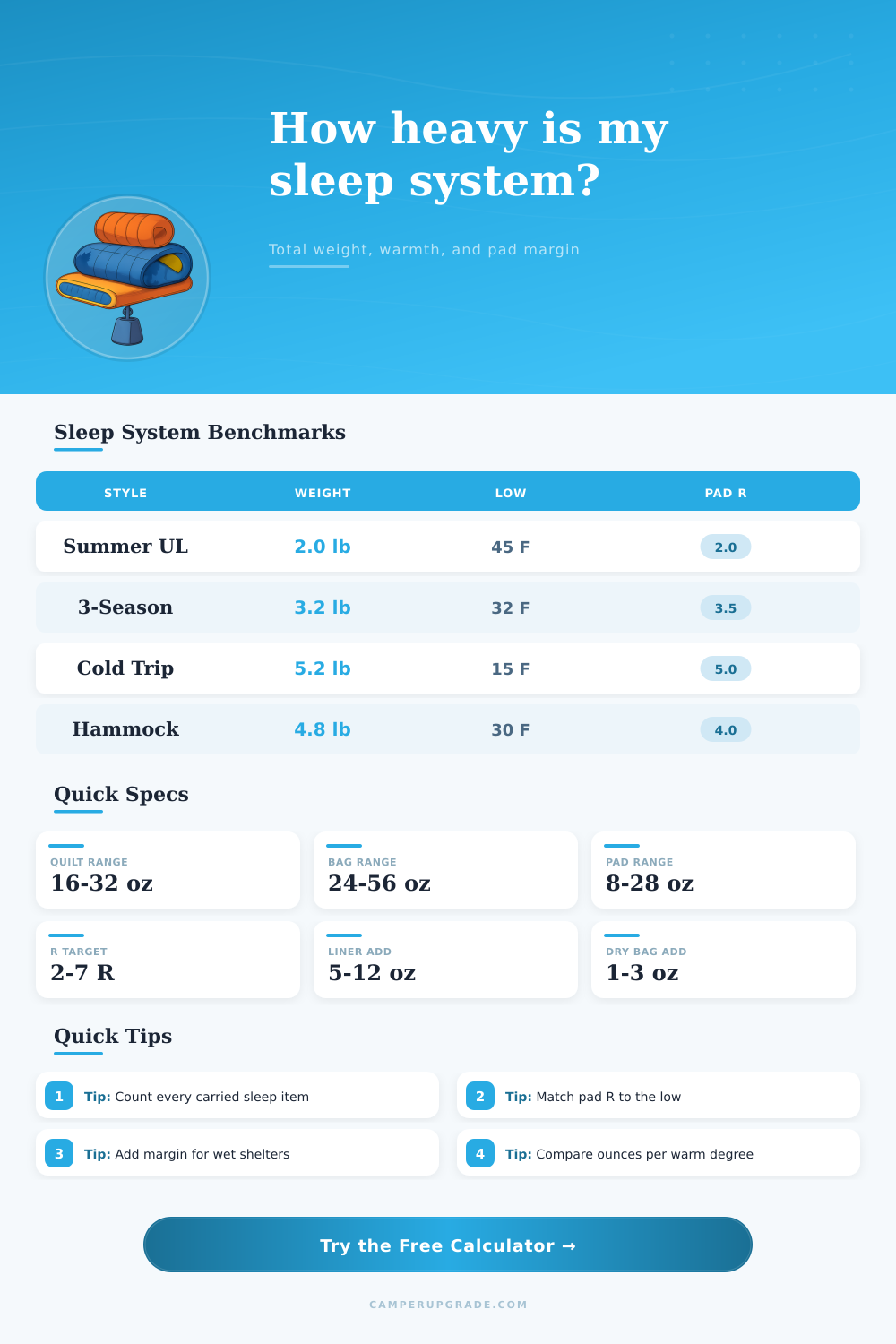
Total your carried sleep kit, check warmth margin against the forecast low, compare pad R-value to ground temperature, and see packed volume before the trip.
🛌Trail Sleep System Presets
⚙Sleep Kit Inputs
🧪Sleep System Spec Grid
📋Sleep Component Weight Table
| Component | Ultralight range | Standard range | When it climbs higher |
|---|---|---|---|
| Down quilt | 16 to 26 oz | 24 to 34 oz | Lower temperature rating, wider cut, overfill, or draft collar. |
| Down sleeping bag | 24 to 34 oz | 32 to 48 oz | Full zipper, heavier shell fabric, colder rating, or roomier shape. |
| Synthetic insulation | 26 to 42 oz | 40 to 64 oz | Cold ratings and bulky continuous-filament fills add weight quickly. |
| Inflatable sleeping pad | 8 to 17 oz | 15 to 28 oz | Wide, long, thick, rectangular, or high-R winter pads. |
| Foam or sit-pad extension | 2 to 14 oz | 10 to 18 oz | Full-length closed-cell foam or stacked winter systems. |
| Pillow and small sleep items | 1 to 5 oz | 4 to 12 oz | Inflation pump, compression straps, pillowcases, and repair kits. |
🌡Temperature and R-Value Reference
| Expected low | Suggested pad R | Useful bag rating | Planning note |
|---|---|---|---|
| 50°F / 10°C or warmer | 1.0 to 2.0 | 45 to 55°F | Warm-weather quilts can be very light if wind is controlled. |
| 40°F / 4°C | 2.0 to 3.0 | 30 to 40°F | Good three-season starting point for many backpackers. |
| 30°F / -1°C | 3.5 to 4.5 | 20 to 30°F | Cold sleepers often need extra clothing or a warmer quilt. |
| 20°F / -7°C | 4.5 to 5.5 | 10 to 20°F | Ground insulation becomes as important as loft. |
| 10°F / -12°C or colder | 5.5 to 7.0+ | 0 to 10°F | Stacked pads and moisture management matter more. |
| Sleep style | Weight profile | Strength | Watch point |
|---|---|---|---|
| Quilt on pad | Lowest weight | Excellent warmth per ounce | Needs good pad attachment and draft control. |
| Mummy bag | Moderate | Reliable draft protection | Hood and zipper add weight over quilts. |
| Hammock quilts | Moderate to high | Very comfortable off ground | Underquilt weight replaces pad weight. |
| Foam pad system | Bulky but durable | No puncture risk | Often lower R-value unless stacked. |
| Cot or car-camp pad | High | High comfort and support | Not suited to pack weight limits. |
| Accessory | Typical add | Best fit | Calculator effect |
|---|---|---|---|
| Silk liner | 4 to 6 oz | Cleanliness and slight warmth | Adds about 3°F usable margin. |
| Fleece liner | 10 to 18 oz | Car camping or cold huts | Warm but heavy per degree gained. |
| Vapor barrier | 3 to 8 oz | Extended cold trips | Helps protect loft from moisture. |
| Bivy sack | 5 to 16 oz | Tarp splash and wind control | Improves exposure penalty but adds condensation risk. |
| Dry bag | 1 to 3 oz | Wet routes and packrafting | Protects loft but counts in total weight. |
🗺Preset Sleep System Examples
| Preset | Typical use | Key weight driver | Warmth check |
|---|---|---|---|
| AT humid summer quilt | Warm Appalachian shelters and tent sites | Light quilt, moderate pad, dry sleep socks | Moisture margin matters more than deep cold. |
| PCT desert shoulder | Cool dry nights with long water carries | Quilt plus compact insulated pad | Cold dawns can punish an under-rated pad. |
| CDT alpine frost | High passes, wind, and remote camps | Warmer quilt, higher R pad, sleep layers | Keep at least several degrees of safety margin. |
| PNW wet forest | Condensation and wet shelter fabric | Synthetic margin and waterproof storage | Wet loft loss can erase a small margin. |
| Hammock underquilt | Forest routes with off-ground sleeping | Underquilt replaces pad but adds suspension | Bottom insulation gaps create cold spots. |
💡Sleep System Weight Tips
Sleep comfort varies with metabolism, fatigue, nutrition, wind, site selection, humidity, and pad fit. Use this calculator as a planning check, then compare it with field notes from recent nights.
A sleep system total weight calculator is an tool that will assist you in planning the weight and warmth of your sleeping gear. This tool is important because the weight of the sleeping system do not necessarily indicate the warmth you will feel in your body while sleeping. While many may think that a system that is rated as lightweight is the best system for sleeping on the trail, these systems may not retain enough warmth if the weather change while you are sleeping.
The sleep system total weight calculator will take a close look at the various factor that impact your total weight system to provide you with an accurate calculation of the total system weight. The first of the factors that the sleep system total weight calculator will take a close look at is the type of insulation that your sleeping system use. Down insulation and synthetic insulation are both different in how they react to moisture in the air.
How to Use the Sleep System Total Weight Calculator
For example, a sleeping quilt provide warmth for the sleeper when the air is dry. However, if there is condensation within the shelter in which you are sleeping, the quilt may lose it’s warmth. The sleep system total weight calculator will account for this by adjusting for the type of insulation and the type of shelter that you will use while sleeping.
Another of the factors that the sleep system total weight calculator considers is the sleeper profile for the person who will be sleeping on the trail. Each person has a different sleeper profile due to the fact that each person has a different metabolism and fatigue level. For example, a person that naturally sleep warm may be comfortable with a sleeping system with a specific R-value.
However, a person that sleeps cold may feel cold within the same sleeping system. The sleep system total weight calculator allows for each person to choose their sleeper profile as warm, average, or cold. Choosing the correct sleeper profile will ensure that the system can provide enough warmth for the sleeper.
Choosing an average sleeper profile for those who typically sleep cold will lead to the individual feeling cold while sleeping on the trail. Another of the factors that you will enter into the sleep system total weight calculator is the R-value for the sleeping pad that will be used while sleeping. This sleeping pad will help individuals to retain their body heat by preventing the heat from their body on the ground.
As such, many people pay close attention to the warmth of their sleeping bag. However, individuals can easily forget the importance of the sleeping pad and the way in which it can retain body heat. The sleep system total weight calculator will calculate the target R-value that is required by entering the sleeping system temperature and the type of shelter that will be used while sleeping.
For example, if the shelter that will be used is a tarp or a single wall tent, the calculator will require a higher sleeping pad R-value to account for the loss of body heat through the shelter. The sleep system total weight calculator will also take into consideration the various accessories that will be used in sleeping. These accessories include sleep clothes, sleep liners, sleeping bags, and repair item for the sleeping system.
While these items may seem light, they can significantly add to the total weight of the sleep system that is carried into the wild. The sleep system total weight calculator will account for the weight of these accessories so that an individual knows the true total weight of the sleep system that they will be utilizing on the trail. Failure to include accessories in the calculation will result in an inaccurate calculation of the total weight that will be used while sleeping on the trail.
Another of the results that the sleep system total weight calculator will provide is the warmth margin. The warmth margin will provide information to you as to the difference in temperature between the sleep system temperature and the weather temperature that is to be experienced. A positive number will indicate that your sleep system is rated to provide warmth for temperatures that are warmer than the weather temperature that is to be experienced.
However, a negative number will indicate that the sleep system is warm for temperatures that are warmer than that which will be experienced on the trail. A negative warmth margin indicates that you will feel cold while sleeping on the trail. Additionally, the sleep system total weight calculator will also calculate whether the sleeping pad R-value is sufficient for sleeping on the trail.
A low sleeping pad R-value will allow for the sleeper to lose heat to the ground which will make them feel cold while sleeping on the trail. While the sleep system total weight calculator can account for the various factors of the sleep system, it cannot account for each and every variable that may change while on the trail. For example, the wind on the trail, where you will sleep, and the amount of food that you have eat will all play a factor in how warm you will feel while sleeping on the trail.
While using the sleep system total weight calculator, you will create a plan to account for each of the variables of sleep gear. However, while on the trail you can refer to the reference tables to determine how much weight and R-values different sleeping systems have compared to the weather temperatures that will be experienced on the trail. After completing your sleeping system total weight calculator prior to departure on the trail you can also run the sleep system total weight calculator again following your trip to determine if your planning was accurate.
By comparing your planned total weight to your actual total weight on the trail, you can determine how your sleep system performed in the various sleeping conditions on the trail.