Wood Stove Burn Rate Calculator
Estimate how many pounds of wood your stove burns per hour, how long a load should last, usable heat delivered, and the practical refuel window for a camp cabin, tiny RV stove, wall tent, or shoulder-season basecamp.
📌Real stove presets
🔥Burn setup inputs
💡Live burn notes
📈Burn rate results
🧭Burn model spec grid
🪵Wood fuel reference
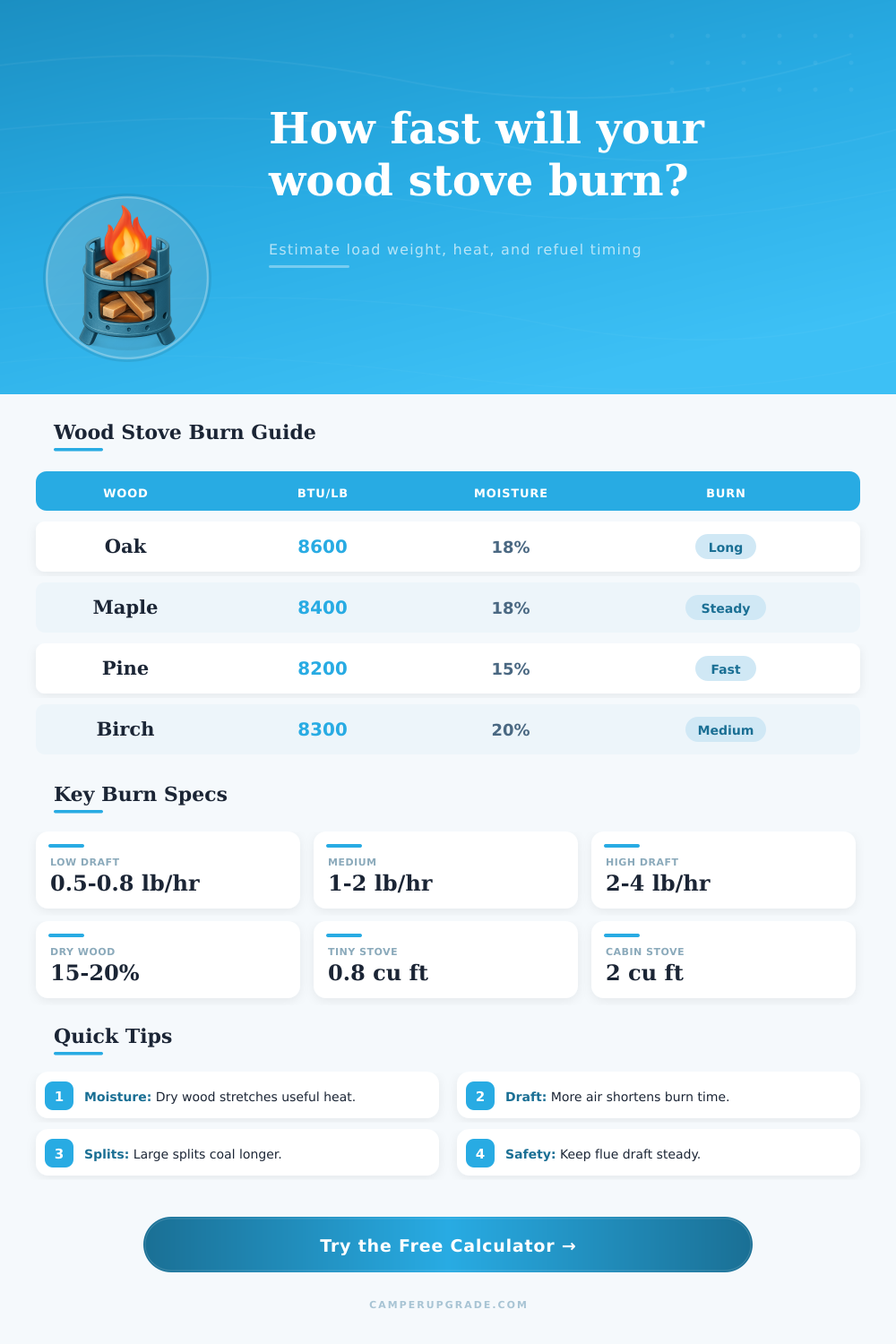
| Wood species | Dry BTU/lb | Coaling index | Typical behavior |
|---|
🌬Air setting reference
| Air setting | Output pace | Burn time effect | Best use |
|---|
🏠Stove size table
| Firebox size | Common setting | Usual load | Typical burn window |
|---|
💧Moisture impact table
| Moisture | Heat penalty | Flame response | Planning note |
|---|
🏕Practical stove tips
Firebox volume tells you capacity, but load weight tells you energy. Weigh one normal armload once, then use that number for future overnight and cooking-fire planning.
A calculator can estimate burn time, but chimney draft, stove design, and wood moisture decide whether a low setting burns cleanly. Keep visible smoke and creosote risk in mind.
Managing a camp cabin stove or a tent stove require an understanding of the interaction between wood, air, and heat. If a stove tend to run too hot, it will waste wood and make the room too warm. If a stove tends to run too cool, it will struggle to provide enough heat, and it will have to be reloaded more often to provide the same amount of heat.
Therefore, understanding how a stove uses both wood and air can help an individual to manage the heat that is present in there space. The size of the firebox of a stove will determine how much wood can be added to that stove at one time. Small cabin stove may only have a firebox that can take half a cubic foot of wood.
Use a Stove Calculator to Find Burn Time and Refuel Time
Medium stoves, however, can hold up to two cubic feet of wood. The size of the firebox will allow an individual to calculate how much wood will allow the stove to run for how many hour. To calculate this, the individual will have to enter the volume of the firebox and the weight of the wood that the individual will load into the stove.
Another variable that will impact the burn of the wood is the moisture content of the wood. Wood that has a moisture content of fifteen percent will produce less heat than dry wood. If the moisture content is twenty-five percent or higher, the wood will burn more slow.
The calculator can account for the wood moisture content to show the hours that the stove will run based off the moisture content of the wood. Air settings will impact the rate at which the wood burns within the stove. Using a low air setting will allow the wood to burn more slow.
Using a high air setting will allow the wood to burn at a faster rate. The calculator can account for both of these air settings, along with the heat loss of the cabin or tent. The calculator will show an individual if the stove can provide enough heat for the spaces that they are using.
The size of the wood split that are used in the stove will impact the length of time that the stove runs. Using large wood splits will provide longer burning rate for the stove. Additionally, the depth of the coal bed will affect the stoves burn time.
Using deep coal bed allow for the carry over heat that increases the burn time of the stove. These two factor can explain the different burn times between two adult-sized sofa using the same stove and same type of wood. The stove calculator will show the burn rate of the stove, the number of hours that it will last, the amount of heat that it will deliver after losses, and the refuel window for the stove.
The refuel window is the time during which an individual should be adding more wood to the stove. This will allow an individual to prepare their next load of wood to the stove. Several other variable enter into the stove burn time.
These other variables include the changes in the amount of wind that is hitting the stove, the movement of people in the cabin with respect to the doors, and the insulation of the cabin. The stove calculator assumes that the cabin temperature and chimney draft will remain steady. However, if either of these variable change, the air setting should be adjusted.
If the air setting is changed, it is possible that the stove will have to be reloaded with wood earlier than the calculator indicate. Following a specific habit will allow an individual to better manage and understand the burn rate of their stove. An individual should weigh one armload of wood, measure its moisture content, and input these value into the stove calculator.
After repeating this process several times, the individual will know whether the stove burns wood faster or slower than the stove calculator. From this information, an individual can add or subtract time from the calculable burn time of their stove. By following this habit, an individual can better utilize the stove calculator to assist them in burning their stoves wood.