Drybag Volume Calculator
Estimate drybag liters, recommended bag sizes, unused volume, and buoyancy from gear dimensions, clothing bulk, food volume, roll-top closure loss, compression, water activity, bag count, and reserve.
🎒Drybag Load Presets
⚙Drybag Volume Inputs
📊Drybag Spec Grid
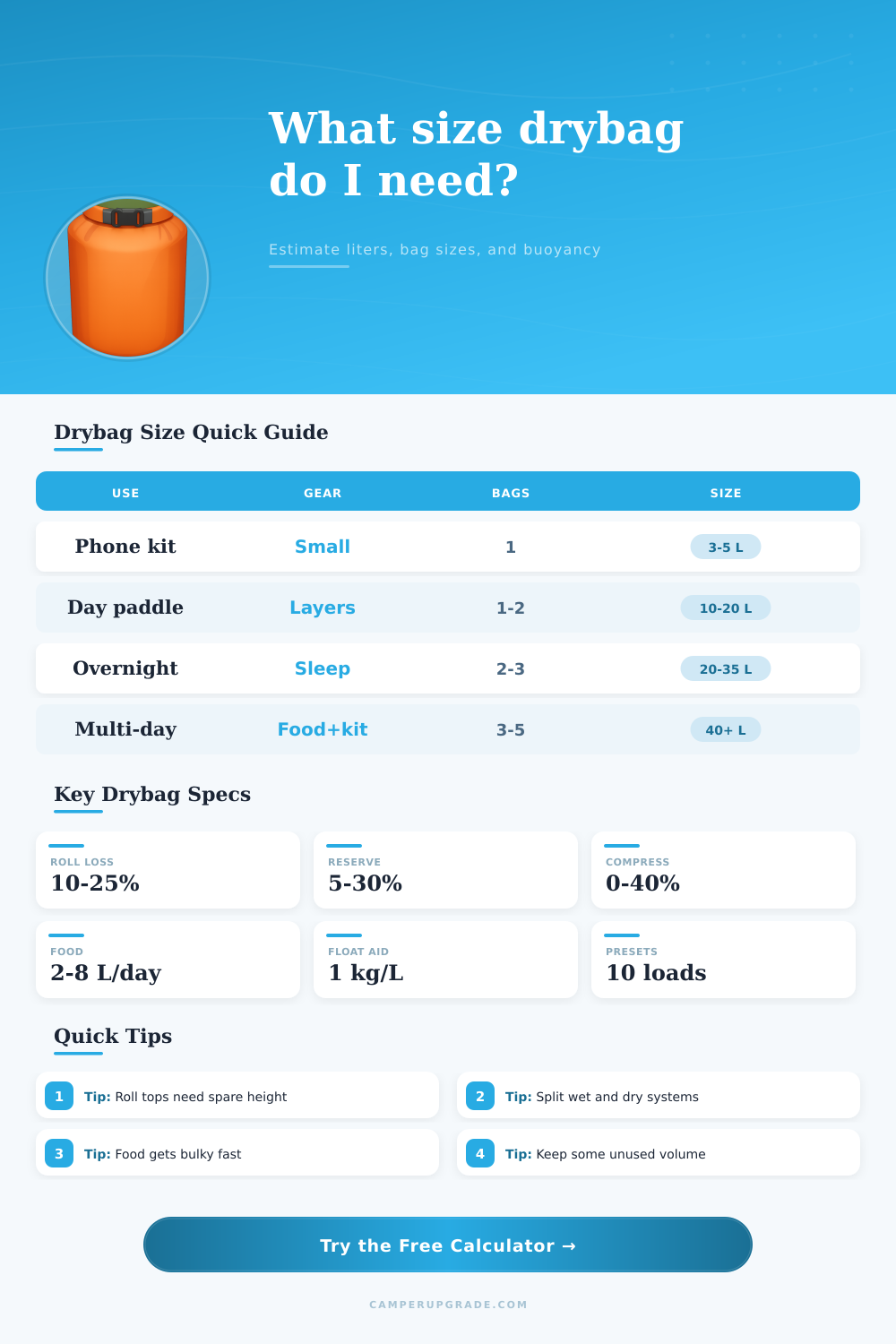
💼Recommended Drybag Classes
Micro drybag
1-5 LBest for phones, maps, first aid, batteries, and pocket items.
Day drybag
8-15 LGood for rain layers, lunch, spare socks, and compact paddling kits.
Overnight bag
20-35 LCommon size for clothing, quilts, sleeping bags, or food splits.
River duffle
40-80 LUse for multi-day rafting, bulky winter layers, or large group loads.
📋Drybag Volume Reference Tables
| Listed Size | Usable After 15% | Usable After 25% | Common Load |
|---|---|---|---|
| 3 L | 2.6 L | 2.3 L | Phone, keys, wallet, small med kit. |
| 5 L | 4.3 L | 3.8 L | Electronics, gloves, snacks, compact shell. |
| 10 L | 8.5 L | 7.5 L | Day hike clothing or light paddle kit. |
| 20 L | 17.0 L | 15.0 L | Warm layers, food, or small sleep kit. |
| 35 L | 29.8 L | 26.3 L | Sleeping bag, clothing, or overnight load. |
| 55 L | 46.8 L | 41.3 L | Large duffle-style river or canoe load. |
| Gear Category | Compact | Typical | Bulky |
|---|---|---|---|
| Rain shell and pants | 1.5 L | 3 L | 5 L |
| Fleece or light puffy | 2 L | 4 L | 7 L |
| Sleeping bag or quilt | 6 L | 12 L | 24 L |
| Food per person day | 2 L | 3.5 L | 6 L |
| Winter clothing set | 10 L | 18 L | 30 L |
| Camera wrap and soft items | 4 L | 8 L | 14 L |
| Water Activity | Closure Reserve | Bag Strategy | Notes |
|---|---|---|---|
| Camp rain packing | Low | Few bags | Mostly splash and condensation protection. |
| Wet hike crossing | Moderate | Split essentials | Keep insulation separate from food and tools. |
| Kayak or canoe | Moderate | Medium bags | Fit bags through hatches or between thwarts. |
| Packraft overnight | High | Many small bags | Trim matters and bow bags need shape control. |
| Rafting splash zone | High | Duffle plus splits | Leave closure room for fast rigging checks. |
| Swim tow | Very high | Conservative | Drybags are not life jackets or guaranteed float bags. |
| Bag Count | Best Use | Tradeoff | Example Sizes |
|---|---|---|---|
| 1 bag | Simple day kit | All items share one closure | 10 L or 20 L |
| 2 bags | Wet/dry split | Balanced for most day paddles | 10 L + 20 L |
| 3 bags | Overnight organization | More closures to manage | 5 L + 20 L + 20 L |
| 4-5 bags | Multi-day river load | Easier trim and access | 10 L, 20 L, 35 L mix |
| 6+ bags | Group or expedition set | Labeling becomes important | Small splits plus duffle |
Listed drybag capacity is not the same as usable packed capacity after the roll top is closed. This calculator estimates planning volume, not waterproof performance.
💡Drybag Packing Tips
When you are packing for your paddling trip, you have to determine how much space you will need for your gear. The amounts of space that you will need for your gear will depend upon the item that you will have to carry, the amount of water that may touch your gear, and the number of waterproof bags that you will use to carry your gear. Many individual will find that they has too much gear for their waterproof bag or that they have too much space for the gear that they will bring on their paddling trip once they are on the water.
Other than the volume that the gear that you will bring on your paddling trip will take up, you also must account for the amount of volume that will be lost due to the rolling of your waterproof bags. Additionally, you must account for the amount of reserve space that you will need for any extra gear that you might want to bring on your trip. Finally, you must also account for any extra space that you need for rain or wave.
How to Choose the Right Size Waterproof Bags for a Paddling Trip
The gear that will go into an waterproof bag may appear to be the correct amount for that bag yet not allow for three rolls of the bag. Gear that will fit into a waterproof bag for a calm lake may not allow for the same amount of access to the gear when you moves the gear on a river. While you must consider the dimensions of each of the items of gear that you will bring on your trip, you must also convert those dimensions into liters.
Additionally, you must also consider whether the gear that you will bring is compressible or non-compressible. Gear items like clothing are compressible, while food is non-compressible. The total amount of liters that your gear will take up will change depending upon the type of gear that you select to bring on your trip.
A calculator can make it easy for you to calculate the number of liters that each item of gear will take up and to adjust for the compressibility of that gear. The number of waterproof bags that you will use will affect the weight that you will have to distribute on your boat and the ability to separate your wet gear from your dry gear. In addition, you may also want to use several waterproof bag to improve the trim of your boat.
However, if you use several waterproof bags you will have to make more roll-top closure to ensure that your boat stays watertight. For these two examples, you can use a calculator to compare using one large waterproof bag versus several medium sized waterproof bags. Additionally, the level of activity in which you will be participating with the water will impact how much reserve space you will need for your gear.
If you will be on flat water with very little splashing, you will need less reserve space than if you are on a river trip that will last for several day. Your paddling trip on the river will require you to frequently handle each of the waterproof bags. You will also have to access each of the waterproof bags to check the seal on each bag when you are in the water.
If you dont have enough reserve space in your waterproof bags you may have to force the roll-top closure of your waterproof bags. However, if you have enough reserve space you should of not had to strain your waterproof bags when you roll them to create a watertight vessel. Another consideration in waterproof bags is how much unused volume they will have.
If you have too little unused volume you will not have the breathing room to accommodate for unexpected situation for your gear. However, if you have too much unused volume you will be adding extra weight to your boat that you dont need to carry. You will want to have enough space to allow yourself to comfortabley roll your waterproof bags yet not so much that any empty space of your waterproof bags shift within the boat.
Once you have determined the correct size of waterproof bags for your needs your gear will be accommodated within each waterproof bag. When you are calculating how much space you will require for each of the waterproof bags that you will use on your paddling trip, consider each of the factor discussed above. By doing so you can ensure that your gear will be accommodated within your waterproof bag.