Climbing Pack Weight Calculator
Total the rope, rack, draws, harness, helmet, shoes, water, layers, approach kit, food, and pack weight for a climbing day. Compare category split, load per pitch, and approach-only load share.
🧗Climbing Day Presets
⚙Pack Inputs
🎒Rack and Spec Grid
📊Reference Tables
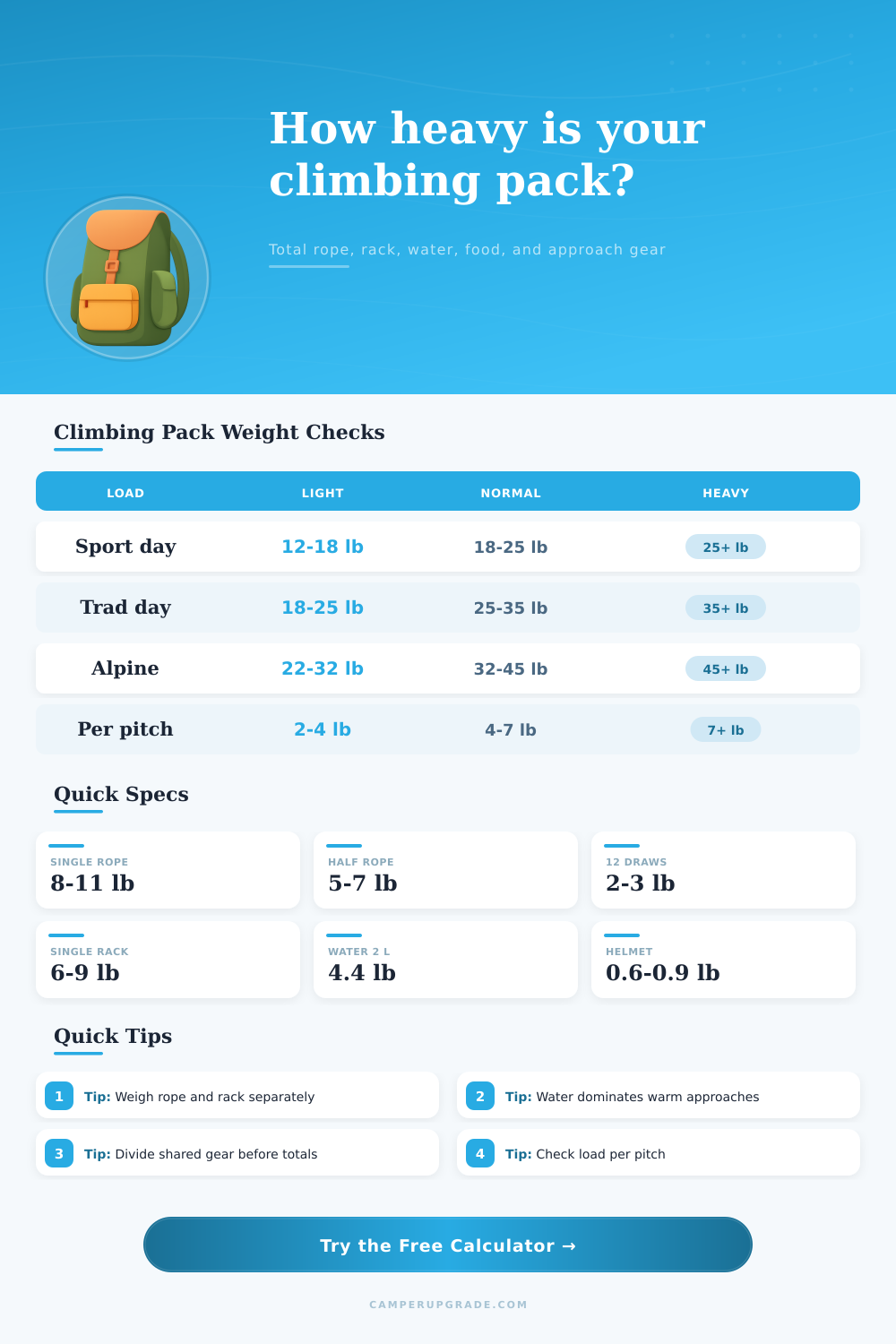
| Climbing Day | Common Total | Typical Drivers | Watch Point |
|---|---|---|---|
| Half-day sport | 12-18 lb | Rope, 10 draws, water | Shared rope can change everything |
| Full sport crag | 18-25 lb | More water, food, extra layers | Warm approaches push water higher |
| Single rack trad | 22-32 lb | Rope, cams, nuts, alpine draws | Rack biners add real weight |
| Double rack trad | 30-42 lb | Extra cams, slings, water | Split rack by pitch plan |
| Alpine rock day | 28-45 lb | Approach kit, layers, emergency gear | Approach load share rises fast |
| Item | Light | Typical | Heavy |
|---|---|---|---|
| 60-70 m single rope | 7.5 lb | 9.5 lb | 11.5 lb |
| Half rope pair | 10 lb | 12 lb | 14 lb |
| 12 quickdraws | 1.8 lb | 2.5 lb | 3.3 lb |
| Single cam set | 3.5 lb | 5 lb | 6.5 lb |
| Nuts and small gear | 0.8 lb | 1.4 lb | 2.2 lb |
| Preset | Rope | Rack and Draws | Water/Food | Approach and Pack |
|---|---|---|---|---|
| Half-Day Sport | 9.0 lb single | 2.2 lb draws | 3.3 lb | 3.6 lb |
| Full-Day Sport | 9.6 lb single | 2.8 lb draws | 6.1 lb | 5.0 lb |
| Single Rack Trad | 9.8 lb single | 10.5 lb rack/draws | 6.0 lb | 5.8 lb |
| Alpine Rock | 11.8 lb half pair | 8.8 lb light rack | 7.7 lb | 10.0 lb |
| Desert Tower | 10.5 lb rope | 15.2 lb double rack | 9.4 lb | 8.0 lb |
💡Climbing Pack Tips
Weight management is another important part of climbing, as the weight that a climber carry will affect the distance that a climber can climb and the rate at which a climber can ascend the route. Additionally, the weight that a climber carries will also impact how exhausted that individual feel after that climbing day. Therefore, climbers must consider the weight of they climbing equipment.
The weight calculator allow climbers to separate their equipment into categories to calculate the weight of each category. For instance, climbers can input the weight of their climbing rope, their rack, and there draws. Each of these categories will have separate input due to the way that the weight of the rope and the rack impact the total weight that a climber carries.
Plan Your Climbing Pack Weight
Additionally, both water and food will have their own separate category because as a climber consume their water and food, their total weight of these two categories will decrease. However, their weight of the rack will remain the same throughout the climbing day. Finally, categories will also be made for the layers that a climber will wear and the gear that they will leave at the base of the climb.
For example, a climber must decide whether they will wear their layer and leave their approach gear at the base of the climb, or they will leave their layers at the base and wear their approach gear. The output of this calculator is used to make important decision for the climbers. For instance, the total weight will provide a number to the climber of their total weight, but the weight per pitch will allow them to determine if that total weight is a reasonable weight to carry for the given route.
Additionally, the approach share percentage will allow a climber to understand the weight of the hike to the climbing area. Many climbers will underestimate the weight that water will add to the total weight of their climbing gear. A liter of water will not feel heavy to a climber when they are standing at the car with their backpack on.
However, the weight of the water will remain within you pack for every single pitch and every single rappel. The calculator indicates the weight of the water by including the weight of the water in its own category. Furthermore, the weight of the water is not included in the total weight of the pack.
The same is true of the shared gear; when two climbers will share a rack of climbing gear and a rope, the calculator allow for the weight of each of the shared items to be calculated separately. It would of been best to not calculate the average weight of the shared gear as this will not provide the total weight of the gear that each person will have to carry on the climb. The reference tables are provided for the user to determine the weight of the climbing load without having to memorize the weights of the different categories of climbing loads.
The reference tables indicate the weights of sport climbing days, trad climbing days, and alpine objectives. These reference tables will allow the user to understand if their calculated weight is normally for climbing or if it is too heavy. Furthermore, the presets allow the climber to begin to plan their trip without having to begin with the weight of zero.
The final weight that is calculated should not be considered the total weight that a backpacker will have for the day. As the climber drink from their water bottle, the weight of the water will decrease from the total weight of the pack. In addition, the weight of the sleeping layer may decrease as the climber leave it at the sleeping base.
Thus, the weight will change throughout the climbing day. However, the calculator will provide the backpacker with the starting weight of the pack so that they can plan for the potential decrease in the weight of the pack. By using the pack weight calculator, individuals will begin to notice pattern in their climbing load.
Use this tool as often as needed to determine which item make their climbing load the heaviest. For some individuals, the weight of the rack may be a problem, while others may struggle with the weight of their approach shoes. By recognizing these pattern, individuals can make changes to their gear so that they are not carrying any unnecesary weight for climbing.
While the goal is not to have the lightest possible pack, it is important for every climber to have a knowledge of the weight of their climbing gear so that it may support their climbing day.