Sweat Rate Calculator
Estimate sweat rate, fluid deficit, replacement target, and body weight loss from weigh-in data, fluids, urine, clothing retention, weather, and intensity.
Hydration estimate
| Sweat rate | Field meaning | Replacement focus | Planning note |
|---|---|---|---|
| Under 0.5 L/hr | Low sweat loss | Small regular sips | Cool weather or easy pace |
| 0.5-1.0 L/hr | Moderate loss | Routine bottle plan | Common hiking and riding range |
| 1.0-1.5 L/hr | Heavy sweat loss | Carry extra fluid | Heat, climbs, or high effort |
| 1.5-2.0 L/hr | Very heavy loss | Replace and cool actively | Hard to match for long periods |
| Over 2.0 L/hr | Extreme loss | Shorten exposure | Retest and consider heat risk |
| Condition | Temperature | Humidity | Hydration effect |
|---|---|---|---|
| Cool dry | Under 60°F / 16°C | Under 40% | Thirst may lag behind loss |
| Mild | 60-75°F / 16-24°C | 40-60% | Baseline test conditions |
| Warm | 76-85°F / 24-29°C | 50-70% | Sweat rate often climbs |
| Hot humid | 86-95°F / 30-35°C | Over 60% | Cooling is less efficient |
| Severe heat | Over 95°F / 35°C | Any high RH | Reduce duration or intensity |
| Activity | Typical duration | Common rate | Testing note |
|---|---|---|---|
| Cool hike | 1-3 hr | 0.3-0.7 L/hr | Use pack weight consistently |
| Summer backpack | 2-6 hr | 0.7-1.4 L/hr | Retest on long climbs |
| Trail run | 45-150 min | 0.8-1.8 L/hr | Use same kit and pace |
| Road cycling | 1-4 hr | 0.6-1.5 L/hr | Include bottles actually finished |
| Paddling | 1-5 hr | 0.4-1.1 L/hr | Sun and wind can hide sweat |
| Camp work | 30-180 min | 0.4-1.2 L/hr | Separate work from rest breaks |
| Target | Best use | What it means | Caution |
|---|---|---|---|
| 70% | Short outdoor sessions | Accepts modest deficit | Monitor weight loss percent |
| 80% | Most hikes and rides | Balances carry weight and deficit | Adjust for heat stress |
| 90% | Long or hot outings | Closer to replacement | Plan sodium and stomach tolerance |
| 100% | Recovery estimate | Full measured fluid loss | Avoid forcing excess fluid quickly |
A person may not recognize that a person’s strategy for maintaining hydration is failing until the person begin to experience symptom like headaches or physical heaviness in the legs. Each of these symptoms may be the result of the persons high sweat rate. A persons sweat rate is the amount of fluid that leave the body through the process of sweating while performing some activity.
An individual can calculate their rate by determining the amount of fluid that leave their body through sweating relative to the amount of fluid that they consumes during that activity. Once an individual understands their bodys sweat rate, they can make better decisions regarding their hydration plan. To determine an individuals sweat rate, an individual must perform a specific test.
How to Measure Your Sweat Rate
Using a scale, an individual must determine their body weight prior to beginning to perform their activity, then reweigh themselves after the activity is complete. The difference in weight is the amount of fluid that has left the body through sweating. To the weight of that fluid, add the amount of fluid consumed by the individual during the activity, and then subtract any fluid that the individual release in their urine during that activity.
Divide that number by the amount of hours that the individual performed the activity to determine the individuals sweat rate. The calculator that is provided will mathematically calculate this value for the individual; however, the individual must make sure that their entered values are accurate. For instance, if the individual is sweating and their clothing gets wet, that fluid do not evaporate from the body; if they do not account for this fluid, their calculated sweat rate will be incorrect.
Similarly, if the individual releases fluid in their urine during the activity, they must account for that fluid; otherwise, they will calculate a higher rate of fluid loss then their body experienced. Thirst is commonly thought to be an accurate means of determining when an individual should begin to drink fluids. However, this sense is not always a reliable one.
An individuals thirst may not become active until after an individual has experienced some fluid loss; this is true during longer activities, especially in hot and humid climates. Instead, using the calculated sweat rate for an individual allow them to establish a planning number for their fluid needs; this is more reliable than attempting to use the bodys sensation of thirst. The table that is provided on this page includes different ranges of sweat rates.
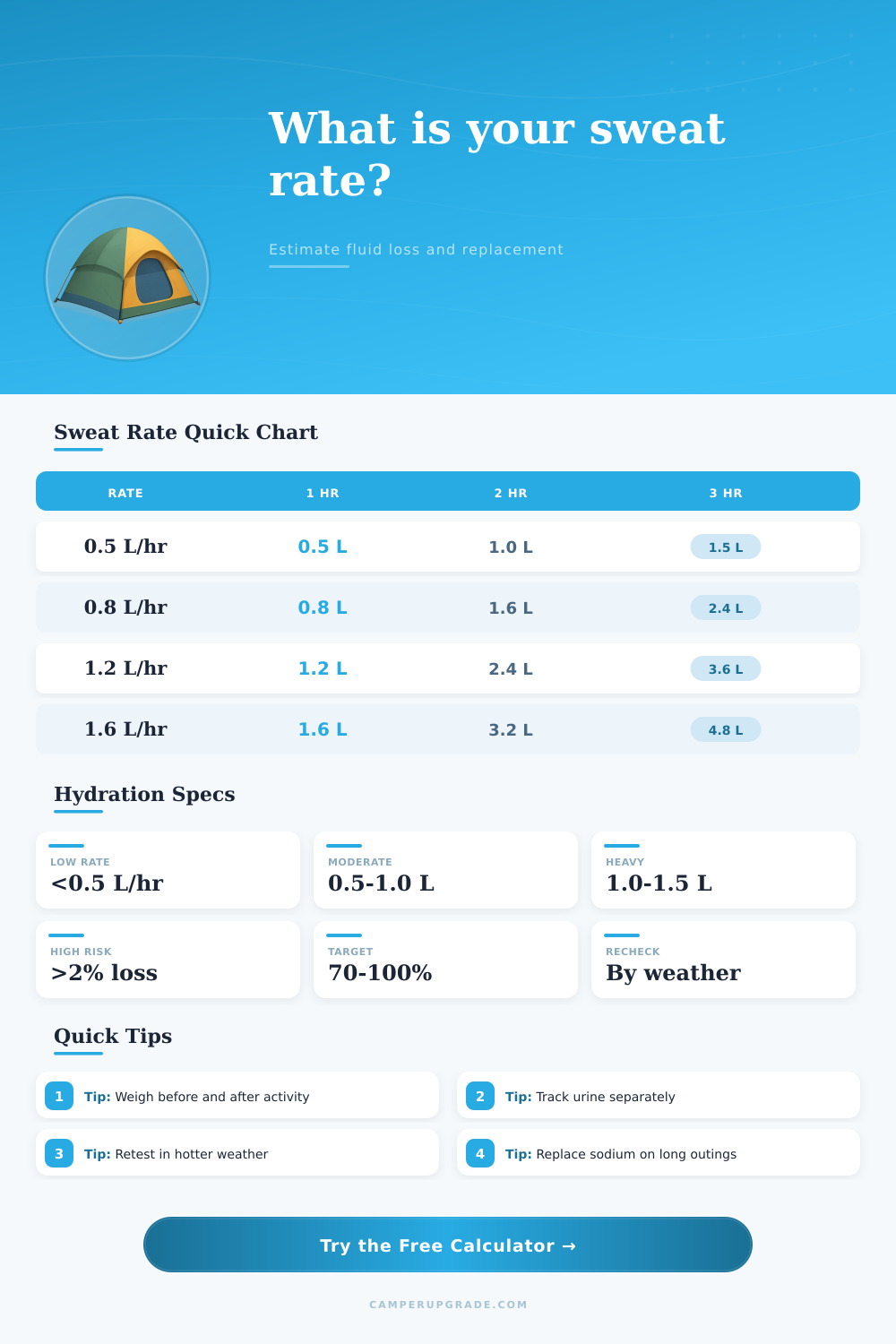
A sweat loss rate of under 0.5 liter of fluid per hour is categorized as light loss. A sweat loss rate of over 2.0 liters of fluid per hour is categorized as extreme loss. When an individual experiences extreme loss of fluid, it becomes more difficult for that individual to drink fluids at the same rate as that individual is losing them.
An adjustment to that individuals activity may be required if the body experience extreme loss of fluid. An individual can use the tool to choose a target for the amount of fluid that they would like to drink. For instance, an individual might target 100% of the fluid that they lost during the activity.
However, the recommendation is that the majority of individuals aim for only 80% of the fluid that they lost during the activity. By losing a small amount of fluid, an individual can avoid feeling uncomfortable in their stomach when drinking fluids during strenuous activities. The volume of fluid that would be required to reach this goal is displayed in the tool; an individual can use this value to determine if the amount of fluid indicated is realistic based off the terrain of the activity and the fluid carrying capacity of their body.
Weather impact an individuals sweat rate. The same activity can result in different rates of fluid loss if the weather changes. High humidity rates will cause the body to begin to produce more fluid to assist in the cooling of the body.
Dry climates, however, have the ability to hide the loss of fluid from the body since the fluid evaporates rapid from the body. Thus, the tool asks for information regarding the humidity and the temperature of the environment during the activity. The combination of these two factors will determine if the weather is mild, warm, or hot.
An individual should re-test their sweat rate if the weather changes; a rate calculated at 60 degrees will differ from one calculated at 85 degrees. The intensity with which that individual performs their activity will also impact their rate of sweating. An individual that performs harder efforts will lose more fluid from their body then an individual that performs less intense efforts.
Thus, an individual can select an intensity level for an activity; the same route may produce different rates for endurance and race efforts. Some of the most common mistakes made by individuals when calculating their sweat rate is inconsistent performance of the test itself. For instance, individuals should ensure that they weigh themselves on the same scale each time.
An individual should also weigh themselves at the same time after each activity. An individual should account for the fluid that is contained in any clothing that gets wet during the activity. For instance, if an individual weighs themselves while wearing a wet shirt, the weight that is measured may not accurately reflect an individuals loss of fluid.
Thus, the individual should ensure that their calculation is performed in a consistent manner each time. Losing more than 2% of an individuals body weight result in a decline in their ability to perform the activity and regulate their body temperature. The calculator automatically calculates this percentage.
An individual that calculates a percentage loss of 3% or more of their body weight should adjust their plan for fluid intake. Such an adjustment may include modifying the length of that activity. The value of calculating an individuals sweat rate can only be recognized after the individual has performed a variety of tests.
An individual can begin to recognize the range of an individuals rate for different types of activities. For instance, individuals may find that their sweat rate on the trails during the summer months is higher than their rate in the winter. Individual may find that the rate at which they lose fluid while on a trekking trip is higher than on a trip that includes only flat areas.
These different rates can inform an individual of their ability to plan their activities and to adjust the effort that they may need to produce. Thus, the overall goal of calculating an individuals sweat rate is to allow that individual to make informed decisions about their bodys fluid losses, their fluid replacement, and their plans for the activity in question.