Boat Fuel Range Calculator
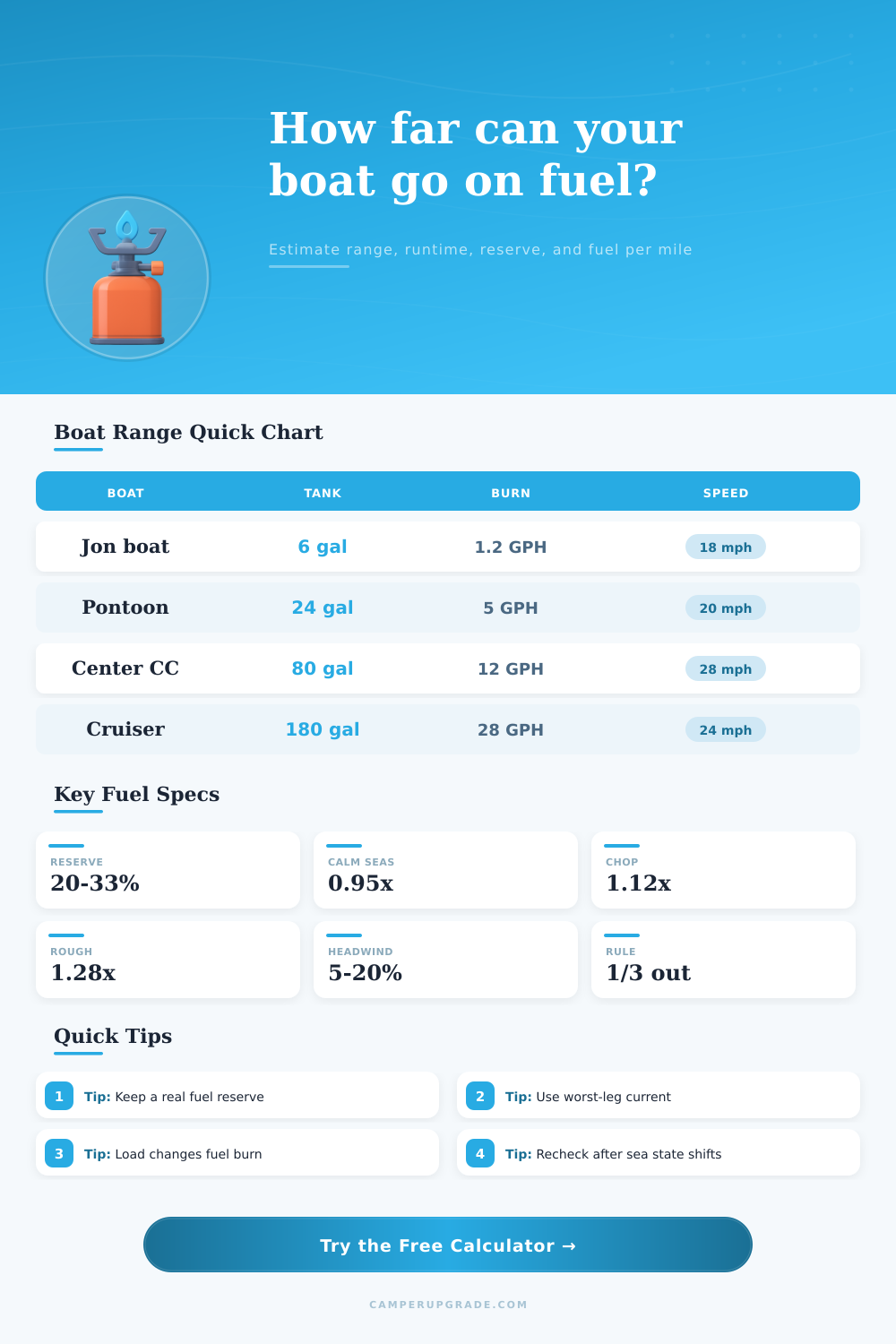
Estimate range miles, runtime, safe out-and-back distance, and fuel per mile from tank size, fuel burn, cruising speed, reserve, current, wind, load, sea state, and motor efficiency.
Boat fuel range estimate
| Boat type | Typical tank | Cruise burn | Cruise speed |
|---|---|---|---|
| Jon boat / tiller skiff | 3-12 gal | 0.6-2.5 GPH | 12-25 mph |
| Bass or flats boat | 25-50 gal | 6-14 GPH | 30-50 mph |
| Pontoon | 18-36 gal | 3-8 GPH | 15-25 mph |
| Center console | 60-160 gal | 9-28 GPH | 24-38 mph |
| Wake boat | 35-60 gal | 8-18 GPH | 18-28 mph |
| Express cruiser | 120-300 gal | 20-55 GPH | 20-32 mph |
| Condition | Burn factor | Speed factor | Planning note |
|---|---|---|---|
| Glassy / protected | 0.95x | 1.03x | Efficient trimmed cruise |
| Calm open water | 1.00x | 1.00x | Baseline logbook run |
| Light chop | 1.12x | 0.95x | Small throttle corrections |
| Moderate chop | 1.20x | 0.88x | More trim and steering loss |
| Rough water | 1.28x | 0.78x | Shorten the planned leg |
| Heavy slog | 1.45x | 0.62x | Delay or reroute if possible |
| Reserve style | Reserve fuel | Trip fuel | Best use |
|---|---|---|---|
| Light inland | 15-20% | 80-85% | Short protected hops |
| Normal cruise | 20-25% | 75-80% | Known water and weather |
| Rule of thirds | 33% | 67% | One third out, one back, one spare |
| Offshore cautious | 40-50% | 50-60% | Weather, current, or remote legs |
| Setup | Usable fuel | Adjusted MPG | One-way leg |
|---|---|---|---|
| 6 gal skiff, 25% reserve | 4.5 gal | 12 mpg | 27 mi |
| 24 gal pontoon, 25% reserve | 18 gal | 4 mpg | 36 mi |
| 80 gal center console, 33% reserve | 54 gal | 2 mpg | 54 mi |
| 180 gal cruiser, 33% reserve | 121 gal | 0.8 mpg | 48 mi |
Planning a boat trip require determining how far the boat can travel before it must turn around. A boat owner may have an idea of how much fuel the boat use when on a trip. However, various factor will impact the fuel consumption of the boat, such as the wind, the load on the boat, and the water currents.
A fuel range tool can calculate these variables into a single number for the boater to use to plan the boats trip. This tool will not replace the owner’s judgment. However, it can present the boater with a number that it can use as a planning tool for the boat’s journeys.
Use a Fuel Range Tool to Plan a Safe Boat Trip
To use a fuel range tool, a boater must enter several input into the tool prior to leaving the dock. The capacity of the fuel tank is one variable. However, the more important variable is the usable fuel, which consider the amount of fuel that is left in the tank for reserve fuel.
The cruise burn rate of the boat is another variable. However, several factors can impact the cruise burn rate, making it challenging to determine. For instance, if the boat has a clean hull and is trimmed proper, it can burn fuel at a slower rate than if the prop is fouled or it is carrying extra passengers.
The fuel range tool allow for these variables to be entered to present a more realistic estimate of the fuel burn rate of the boat. Another factor to consider when using a fuel range tool is the sea state. The sea state of the water is a variable that is not included in the engine data sheet of the boat.
If the water is choppy, the boater will have to correct the throttle several times during the boat’s journey. These changes to the throttle will increase the consumption of the fuel of the boat over time. Additionally, if the water is rough and the boat has to fight against the water while moving forward, the boat will burn fuel at a higher rate.
If the boat can travel at 28 mph in calm waters, in rough waters the boat may only go 23 mph. The fuel range tool is adjusted to reflect these impact on the fuel burn and the speed of the boat. Another factor that impacts the boat is the current.
Similar to the impact of the sea state on the fuel consumption of the boat, the impact of the current has a similar impact on the fuel consumption of the boat. However, the current will impact the ground speed of the boat instead of the fuel burn rate of the boat. If the boat encounters a head current of one knot, the range of the boat may be reduced by ten or fifteen percent.
In the fuel range tool, the boater enters the current from the worst part of the boat’s journey. This will present a more accurate and safer estimate of the range of the boat to the point at which it must turn around. The fuel range tool will not calculate the tide of the area in which the boat is traveling.
However, it will calculate the impact of the tide on the boat’s range and fuel consumption. Another consideration when planning the boat’s journey is the reserve fuel. Twenty percent of the fuel may seem like a good reserve for the boat.
However, it may not be enough fuel in the event that the boat is traveling offshore or if the weather change. The rule of thirds for fuel consumption is one way that boat owners can plan for these scenarios. This rule states that one third of the boat’s fuel can be used to travel out from the dock, another third of the fuel can be used to travel back to the dock, and the remaining third of the fuel can be used as a reserve fuel.
Fuel range tools allow a boater to choose the reserve style of fuel for the boat. The fuel range tool will calculate the required amount of fuel for the trip in advance. The load of the boat is another factor that can increase the fuel burn rate.
A heavier load on the boat can cause the boat to use more fuel. For instance, if a boat is loaded with extra items, such as coolers, tubes, and additional passengers, the additional weight will increase the fuel burn rate by ten or fifteen percent. The load of the boat can also cause the boat to hit each chop of the water more heavy.
The fuel range tool will account for these variables to allow the boater to input the load of the boat. The impact of the wind on the boat is another factor that can increase the fuel consumption. Similar to the impact of the load of the boat, the tool handles the impact of the wind similarly within the fuel range tool.
Headwinds will force the bow of the boat to work against the wind and the water. A percentage can be entered into the fuel range tool for the impact of the headwind. This will prevent the boat owner from assuming that the boat’s fuel efficiency will be the same if the boat travels in different direction.
A common percentage for the headwind input into the fuel range tool is eight or ten percent. The most important output from a fuel range tool is the length of the safe one-way leg of the boat. This will calculate the length of the journey for the boat before the fuel left in the boat is that of a reserve fuel.
Another important output from a fuel range tool is the runtime of the boat. The runtime feature of the fuel range tool will calculate how many hours that the boat will run on the fuel that is in the tank. Many boat captain use the runtime of the boat as their main unit of measurement for the length of their journey.
The length of the safe one-way leg of the boat and the runtime of the boat must match the length of the journey that the boat owner plans for it to be manageable. Boaters may make some mistake when using a fuel range tool. One of the most common is using the fuel efficiency number from a brochure for the boat.
These numbers are different than the actual fuel consumption of the boat at its cruise RPM with a normal load. Another mistake is the entry of calm water condition into the fuel range tool when the weather is expected to be rough. Finally, the reserve fuel percentage entered into the fuel range tool may not be adjusted according to the distance that the boat will travel from the point of assistance.
Using a fuel range tool can help a boater to treat the fuel as a budget for the boat. The fuel range tool allows a boater to see the impact of the sea state and the load of the boat on the range of the boat’s journey. By entering the variables into the fuel range tool, the boater creates a margin of error that includes the conditions of the journey that the boater did not measure in advance.
Through creating such a margin of error, the fuel range tool for the boat ensures that there is a safe means of returning to the boat owner or dock.