Altitude Acclimatization Calculator
Estimate sleeping-altitude gain, ascent risk, extra nights, and oxygen pressure for treks, hut routes, ski trips, and high passes.
Acclimatization estimate
| Band | Elevation | Planning meaning | Calculator treatment |
|---|---|---|---|
| Moderate altitude | 5,000-8,000 ft / 1,500-2,400 m | Performance may dip, illness less common | Low base risk unless ascent is abrupt |
| High altitude | 8,000-11,500 ft / 2,400-3,500 m | Symptoms become more likely | Prior exposure and symptoms matter |
| Very high altitude | 11,500-18,000 ft / 3,500-5,500 m | Acclimatization days are central | Strong base risk and extra-night bias |
| Extreme altitude | Above 18,000 ft / 5,500 m | Specialized expedition planning | Highest risk score floor |
| Sleeping elevation zone | Typical daily gain target | Rest-day cue | What to watch |
|---|---|---|---|
| Below 8,000 ft / 2,400 m | Route dependent | Usually comfort-based | Fast drives from sea level |
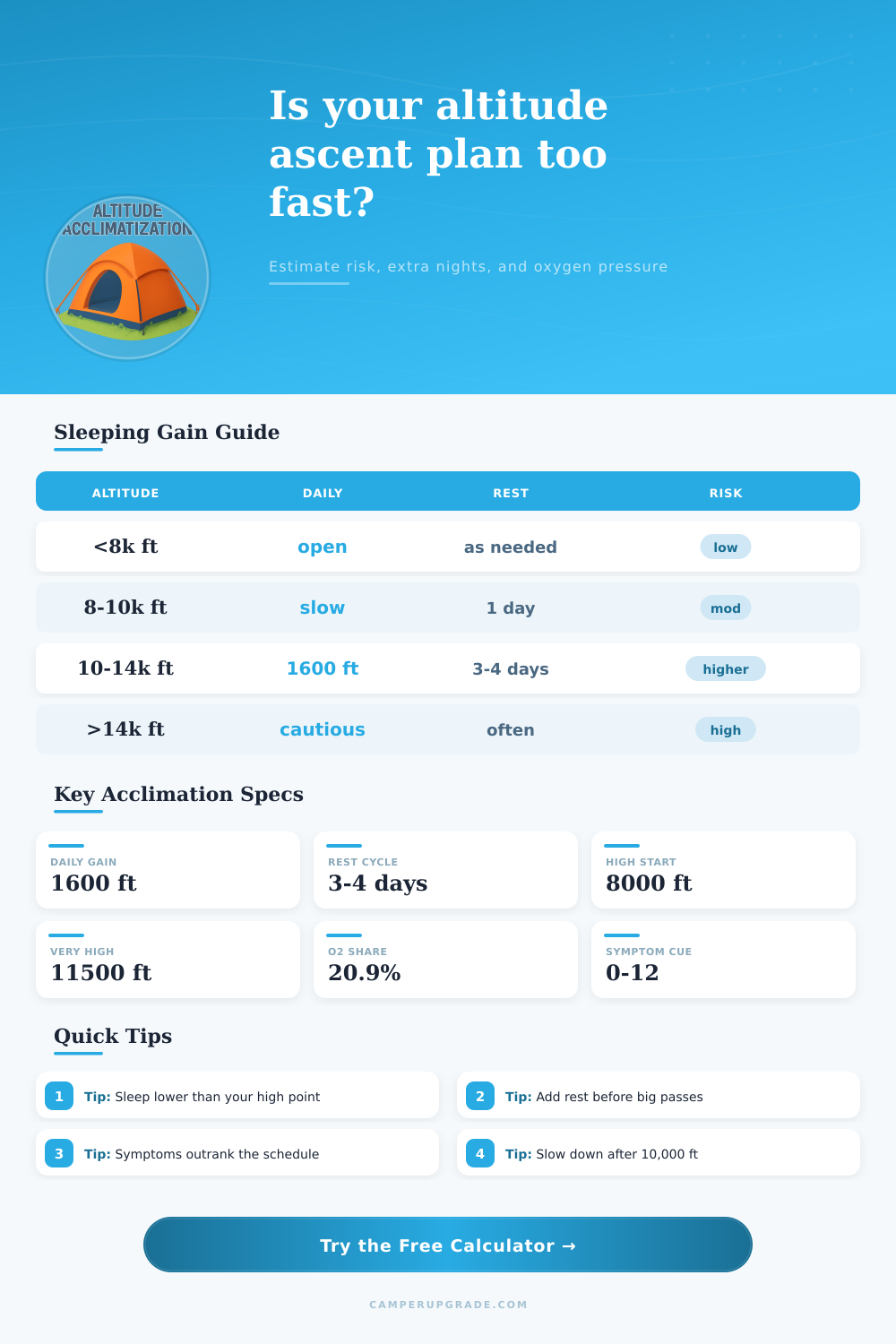
| 8,000-10,000 ft / 2,400-3,000 m | Moderate gains are usually tolerated | Add time if symptoms appear | Headache plus poor sleep |
| Above 10,000 ft / 3,000 m | About 1,600 ft / 500 m per day | Every 3-4 days or each 3,300 ft / 1,000 m | Persistent or worsening symptoms |
| Above 14,000 ft / 4,300 m | Smaller gains often feel better | Build in buffer nights | Coordination, breathing, cough |
| Sleeping elevation | Barometric pressure | Oxygen partial pressure | Sea-level pressure share |
|---|---|---|---|
| 5,000 ft / 1,524 m | 84.3 kPa | 17.7 kPa | 83% |
| 8,000 ft / 2,438 m | 75.3 kPa | 15.8 kPa | 74% |
| 10,000 ft / 3,048 m | 69.7 kPa | 14.6 kPa | 69% |
| 14,000 ft / 4,267 m | 59.5 kPa | 12.5 kPa | 59% |
| 18,000 ft / 5,486 m | 50.6 kPa | 10.6 kPa | 50% |
| Profile | Example use | Risk bias | Practical interpretation |
|---|---|---|---|
| Climb high, sleep lower | Training hike from a lodge | Lower | Daytime high point matters less than sleep camp |
| Steady sleeping gain | Classic hut or trek itinerary | Neutral | Compare every sleeping step to the daily guide |
| Rapid drive or lift access | Sea level to ski town | Higher | Little staged exposure before the first night |
| High pass between camps | Trail pass then lower camp | Moderate | Hard effort can still raise symptoms |
Altitude acclimatization is a process that the body undergo to adjust to the decreased levels of oxygen at high elevations. Altitude acclimatization is necessary to prevent altitude sickness. When you travel to high elevations, the air contains less oxygen for the body to use.
Hence, planning the sleeping elevations is crucial when traveling to these area. The altitude acclimatization calculator will calculate the risk of developing altitude sickness. This tool will use your sleeping elevations to calculate the risk.
Plan your sleep heights to avoid altitude sickness
The altitude acclimatization calculator will focus on your sleeping elevations as this is more important for the body than the highest elevation that you will reach during the day. While sleeping, the body builds new red cell and widens its capillaries. These processes are essential as they allow the body to increase the oxygen supply to the bodys cells.
Sleeping at elevations that increases too quickly for the body will inhibit the body from creating these red cells. Insufficient creation of red cells will result in altitude sickness symptom. The first major threshold for altitude sickness symptoms is at eight thousand feet.
Below this elevation, individuals will feel mild fatigue. However, once an individual rise above eight thousand feet, the partial pressure of oxygen will drop, and these symptom will appear. The altitude acclimatization calculator will increase the risk score for these symptoms if the sleeping elevations cross the eight thousand foot mark.
This is due to the bodys inability to compensate for the lowered oxygen levels without careful planning. The sleeping gain daily is a critical element for the body to adjust. Sleeping gain daily is the number of feet that the sleeping elevations will increase each sleeping night.
Sleeping elevations may increase by a thousand feet each sleeping night. However, the body requires time to adjust the chemistry of the bodys cells. At sleeping elevations above ten thousand feet, the daily sleeping gain should not be more than six hundred feet.
This sleeping gain should be the maximum limit for individuals sleeping above these elevations. The altitude acclimatization calculator will compare the sleeping gain that is planned to the current sleeping elevations. It will indicate if there is enough rest days for the body to adjust to these elevations.
Prior exposure to high elevations will also affect an individual’s risk score. This exposure is the number of nights that an individual has sleep at high elevations. An individual who has slept at elevations of nine thousand feet for three nights will have more exposure than an individual who just arrive at these elevations from sea level.
Hence, an individual with high exposure to high elevations will have a lower risk score for developing symptoms of altitude sickness. The altitude acclimatization calculator will allow the individual to choose from four different exposure levels. These levels will ensure the risk score reflects the starting point of the individual.
An individual’s exertion while ascending to the highest point of their trek will also affect their risk score for altitude sickness. High exertion while ascending to the summit will increase the symptoms of altitude sickness. This exertion will compress the exertion load that the body will experience during the trek.
The altitude acclimatization calculator will not be able to monitor the individual’s hydration and symptoms. The individual will be able to input the hydration level and the symptom score that they current experience. However, the calculator will not be able to monitor their physical symptoms.
Should an individual develop a headache that does not go away in their sleeping period, they should descend to a lower elevation. This is the only response that is responsible for an individual with altitude sickness. The altitude acclimatization calculator may show high risks for developing the symptoms, however, it cannot feel the individual’s pulse or measure their breathing rate.
The reference tables will show the different altitude bands and the percentage of oxygen that is available for an individual to breathe at these elevations. These percentages will allow an individual to understand the percentage of oxygen that they are used to breathing. When this percentage drop to below seventy percent, an individual may experience difficulty in recovering from any physical exertion that they may have performed during the day.
This is due to the lack of oxygen that the body can use during these period. The route that the individual will take to the high elevations will play a role in their ability to acclimatize to these elevations. This route can be of two types; steady or rapid.
If an individual takes a rapid route into the high elevation, it takes away from the body’s ability to adapt to these elevations. The altitude acclimatization calculator can adjust the risk score if the route that the individual plans for themselves is of the rapid type as the body cannot adapt to the altitude while within a vehicle. A high mountain pass between two lower elevations may be considered of exertion during the daytime.
This exertion can be considered an amount of strain on the bodys physical strength. The output from the altitude acclimatization calculator should not be ignored or adhered to as the only option for the individual traveling to high elevations. However, the output from this calculator can be used as a means of starting a conversation regarding the trek that an individual plans for themselves.
For instance, if an individual plans for themselves a risk score that is of moderate risk, they may have to adjust their trek accordingly. However, a moderate risk score does not ensure the individual will not develop any symptoms. For risk scores that is high, the individual must descend to a lower elevation or remain at their current sleeping camp for one additional night.
The weather and physical condition of the individuals travel partner are two variables that the altitude acclimatization calculator will not be able to see or monitor for the individual. The weather may require an individual to take an additional rest day to rest and allow their body to adapt. The physical condition of an individual’s travel partner may require that they take time to rest for them as they may feel ill from the altitude.
Additionally, these symptoms may worsen with time. These symptoms must always be prioritized over the risk score for altitude sickness. While the altitude acclimatization calculator will help an individual to understand the risks of their trek, it will never be able to replace the physical feeling that an individual will feel while traveling to high elevations.