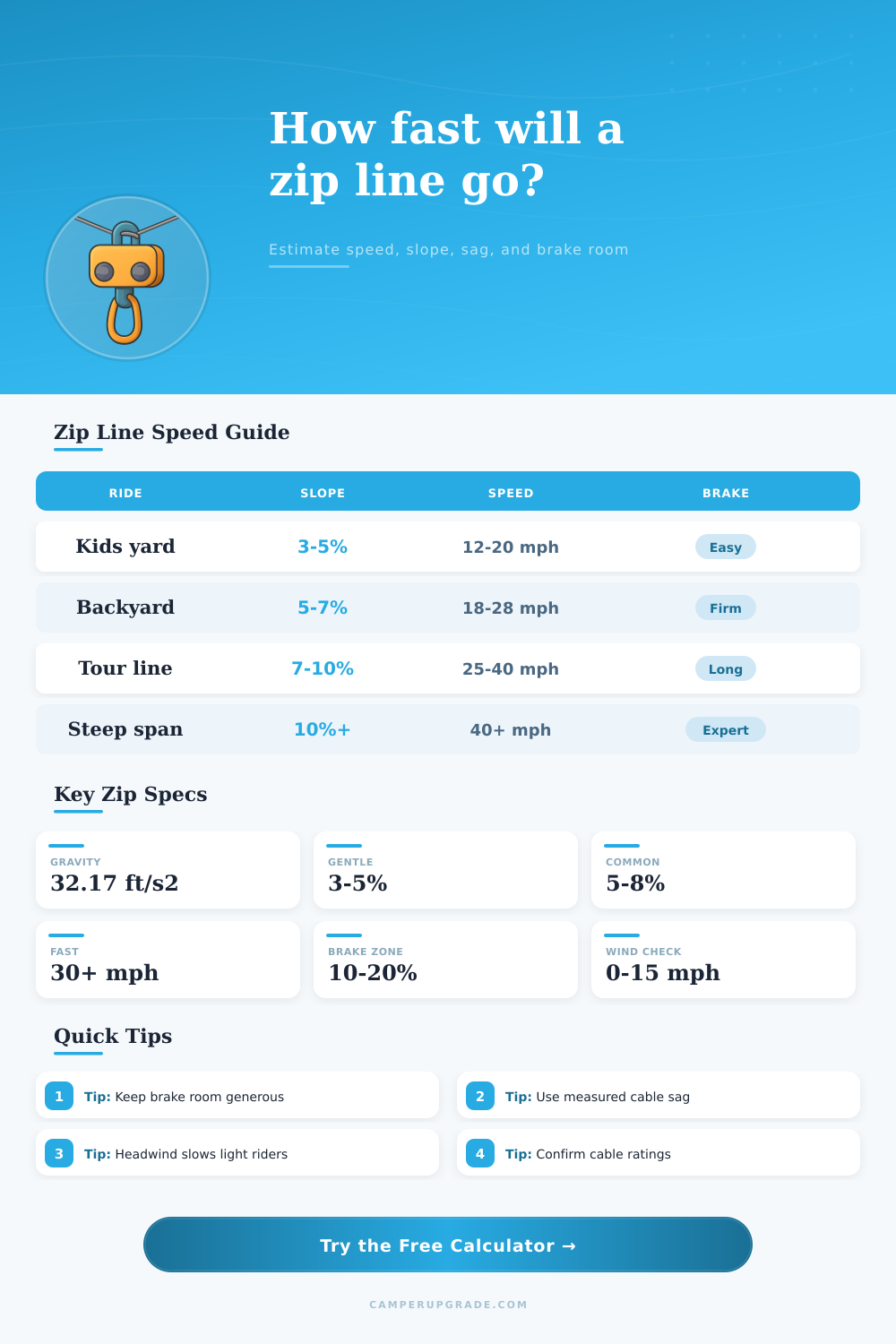
Zip Line Speed Calculator
Estimate peak speed, arrival speed, cable slope, friction loss, wind effect, sag allowance, brake-zone demand, and a practical speed band for backyard and adventure-course zip line spans.
| Span drop | 150 ft span | 300 ft span | 600 ft span | Ride feel |
|---|---|---|---|---|
| 4% slope | 13-18 mph | 17-24 mph | 22-30 mph | Gentle start |
| 6% slope | 18-25 mph | 24-33 mph | 30-42 mph | Common ride |
| 8% slope | 22-31 mph | 30-41 mph | 38-52 mph | Fast approach |
| 10% slope | 25-36 mph | 35-48 mph | 44-60 mph | Advanced line |
| Average slope | Drop per 100 ft | Cable angle | Typical use | Watch item |
|---|---|---|---|---|
| 3% | 3 ft | 1.7 deg | Kids and yard tests | May stop early |
| 5% | 5 ft | 2.9 deg | Backyard line | Brake setup |
| 7% | 7 ft | 4.0 deg | Recreation span | Landing speed |
| 10% | 10 ft | 5.7 deg | Fast tour style | Brake length |
| Wind along line | Light rider | Average rider | Heavy rider | Planning note |
|---|---|---|---|---|
| 10 mph headwind | -4 to -7 mph | -3 to -5 mph | -2 to -4 mph | Retest speed |
| 5 mph headwind | -2 to -4 mph | -1 to -3 mph | -1 to -2 mph | May help braking |
| Calm air | Base result | Base result | Base result | Best baseline |
| 5 mph tailwind | +1 to +3 mph | +1 to +2 mph | +1 mph | Longer stop |
| Cable diameter | Typical range | Common use | Speed note | Spec check |
|---|---|---|---|---|
| 1/4 in | Short spans | Small yard kits | Light trolley | Use kit limit |
| 5/16 in | Yard to long yard | Common recreation | Good trolley fit | Verify clamps |
| 3/8 in | Longer spans | Heavier setups | Stable ride | Anchor rating |
| 1/2 in | Course spans | Commercial style | High mass cable | Engineer review |
When planning a zip line, one must consider at what speeds the rider will arrive at an end of the zip line. The designer must design the zip line in a way that allows for the rider to stop safe at the end of the zip line. If the speed at which the rider travels on the zip line is too great for the brake zone at the end of the zip line, the brake zone wont be able to handle the rider.
Alternatively, if the speed at which the rider travel on the zip line is too low, the zip line will move too slow. Thus, one must make specific measurements to ensure that the zip line will allow for both excitement and control of the zip line. Two measurements creates the basic shape of the zip line: the span and the vertical drop of the zip line.
How to Design a Safe Zip Line
The span is the horizontal distance of the zip line; however, this distance does not have a direct effect upon the speed at which the rider will travel on the zip line. The vertical drop is the change in elevation of the zip line from one end to the other. Gravity use the vertical drop to create the speed of the rider on the zip line.
Thus, the greater the vertical drop of the zip line, the more greater the speed of that zip line. Additionally, small changes to either the span or the vertical drop will have great effects upon the speed of that zip line. Another factor that affects the speed of the rider is the cable sag of the zip line.
The cable sag is the measure of the bending of the zip lines cable downwards due to the weight of the rider. This downward bend of the cable will decrease the vertical drop of the zip line and, thus, the speed at which the rider travels on that zip line. Additionally, the sag of the zip line will change the clearance of the zip line; it may move the zip line closer to other obstacle or paths.
Thus, one must measure the cable sag while the zip line is under load from the rider to provide an accurate measurement of that distance. The weight of the rider will also have an effect upon the speed at which that rider travel on the zip line. Heavier riders will have more momentum than lighter riders.
Thus, the heavier the rider, the more likely that the rider will be able to maintain his or her speed despite the effect of friction or wind upon the rider. Conversely, the lighter the rider, the less momentum that the rider will have, and the more likely that the rider will lose speed. Thus, because riders may vary in weight, the designer must include the weight of the rider in the calculations when building the zip line.
Another factor that will affect the speed of the rider is the friction between the trolley that the rider utilizes and the surface of the cable. If the trolley is clean and the cable is smooth, there will be less friction between these two objects; less friction means that the rider will maintain his or her speed. Conversely, if the cable is not smooth or the trolley experiences high friction, the speed of the rider will be lessen.
Thus, the effect of friction will have an impact upon the speed at which the rider will arrive at the end of the zip line. Additionally, this effect on speed will change the amount of brake distance that is required for the rider to travel. Wind will also change the speed of the rider during the ride on the zip line.
If the wind is traveling in the same direction as the rider is moving on the zip line, the wind will increase the speed of the rider; this increase in the riders speed will increase the distance that the brake zone must absorb that speed. If, however, the wind is moving in the opposite direction of the riders movement on the zip line, the speed of the rider will decrease. Additionally, changes in wind speed will more affect the speed of riders that are lighter in weight.
Thus, the designer must account for the wind in the building of the zip line; calculations can help to ensure that the zip line can handle changes in wind speed. The brake zone is the area in which the rider must come to a stop on the zip line. The designer must build the length of the brake zone based off the speed at which the rider will arrive at the end of the zip line.
Thus, if the speed of the rider is fast, a long brake zone is required. Alternatively, if the brake zone is short in length, then the designer must lower the speed at which the rider travels on the zip line or the rider will need to reach the end of the zip line with more force. Thus, ensuring that a long enough brake zone exists will allow the rider to reach the end of the zip line in a gently manner; this gentle descent is one of the benefits of incorporating a brake zone into the zip line.
Therefore, the designer must compare the length of the brake zone with the length of the zip line to ensure that the design of the zip line will be safe for the riders. The tables that are included in the zip line design provide information regarding the effect of slope, span, and wind on different types of zip lines. These tables provide context for the types of zip lines that are common in different locations.
However, the designer should not use the information within those tables as a replacement for the calculations that must be performed to determine the specifics of each zip line. Instead, the tables can help to show the designer the typical measurements for each variable; the designer should use these values as a means of determining if the measurements that are calculated for that specific zip line are within the normal range. Additionally, the tables may change in the real world due to different variables, such as if the cable were to become wet or if the temperature of the air changed.
For instance, if the cable becomes wet, the friction between the trolley and the cable may change; the same change in temperature may change the tension of the cable. These variables are not accounted for in the table measurements. Thus, to account for these variables, many zip line designers utilize a weighted dummy to test the brakedistance of the zip line prior to the use of that zip line by the public.
One of the most common mistake with zip lines is treating the calculation that is performed as the final calculation to be performed. The parameters under which the initial calculation was created may not be met when the zip line is in use; the designer must perform the calculations again to ensure that the various variables will still allow for the rider to arrive at the end of the zip line at a safe and comfortable rate. Thus, one must make additional calculations of the effect of variables like cable sag and friction prior to the construction of the zip line.
Finally, the process of planning a zip line includes the determination of the vertical drop that will be available for the zip line to drop, and the length of the brake zone that is available to slow the riders upon their arrival at the end of the zip line. Once these measurements are determined with the calculator, the designer can focus upon ensuring that the zip line is safe and comfortable for the riders who will use it. You should of checked the math first.
Actualy, most people dont realize how much wind matters. It can be a lot more than you think. This process is more difficult than it looks, and making sure you dont make a mistake is vital.