Base Layer Calculator
Estimate base layer weight, warmth, fabric choice, drying margin, and packed clothing weight from temperature, wind, activity, sweat rate, fabric, fit, trip duration, and outer-layer protection.
🏕Base Layer Presets
⚙Temperature, Activity, Sweat, Wind, and Fabric Inputs
This tool estimates base-layer selection for camping and trail planning. Match it with your insulation, shell, weather forecast, and personal cold tolerance.
📐Formula Cards
Wind exposure, shell protection, and moisture exposure adjust the air temperature into a layer-planning temperature.
Activity heat subtracts from warmth need, while stop-and-go travel adds a break-cooling buffer.
Sweat tendency, fabric drying speed, fit, and trip length create a dry-margin score.
Fabric grams per square meter are scaled by body size, coverage, and fabric density adjustment.
🧵Material and Spec Grid
📊Insulation and Fabric Reference Tables
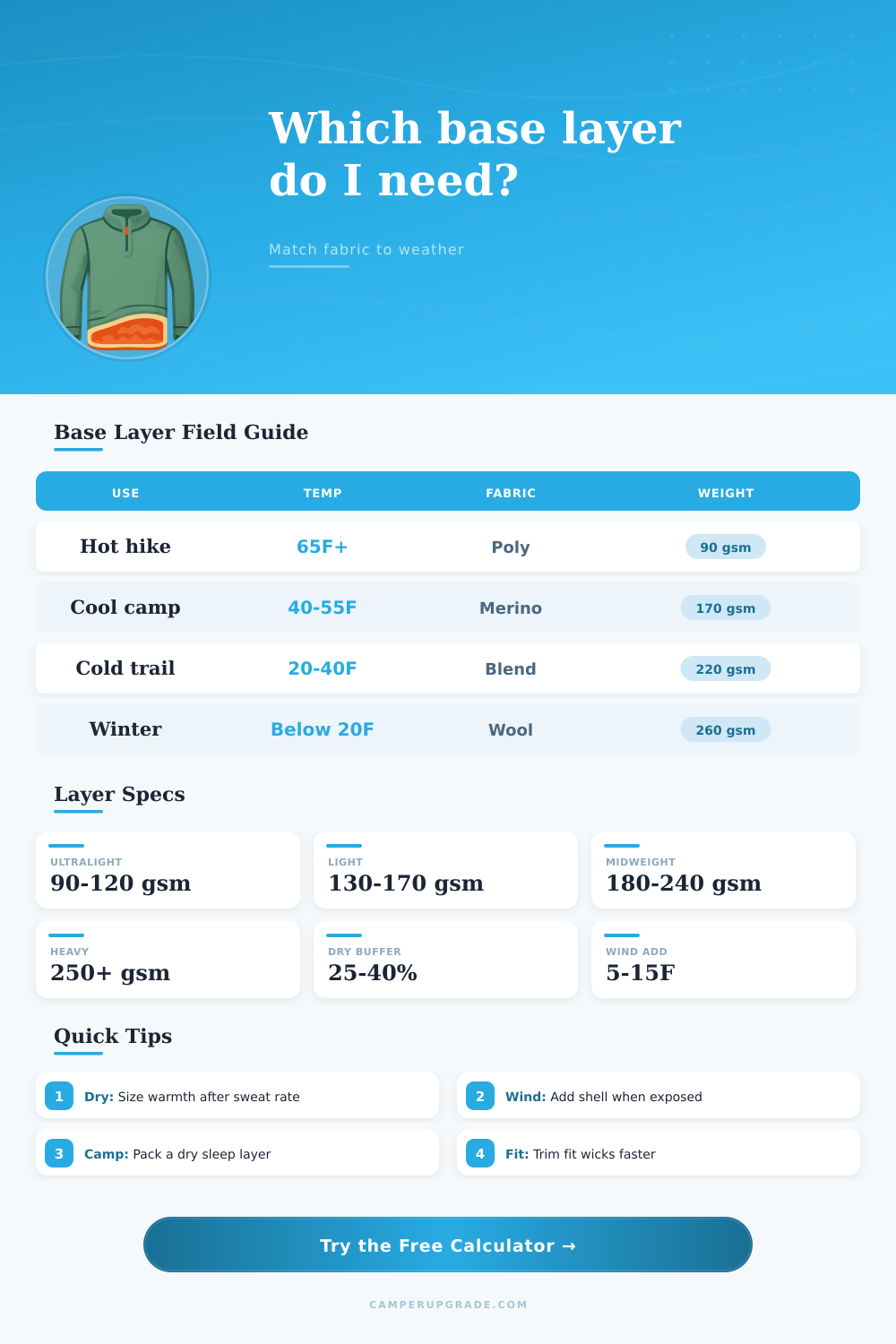
| Layer class | Fabric weight | Approx clo | Best use |
|---|---|---|---|
| Silkweight | 70-100 gsm | 0.03-0.06 | Hot hikes |
| Ultralight | 90-120 gsm | 0.04-0.08 | Warm trail |
| Light | 130-170 gsm | 0.07-0.12 | Cool active |
| Midweight | 180-240 gsm | 0.11-0.20 | Cold hiking |
| Heavy | 250-320 gsm | 0.18-0.30 | Still camp |
| Fabric | Drying | Odor | Warm wet feel |
|---|---|---|---|
| Polyester | Fast | Low | Medium |
| Merino wool | Moderate | High | High |
| Wool blend | Good | Good | Good |
| Polypropylene | Very fast | Low | Medium |
| Silkweight | Fast | Medium | Low |
| Effective temp | Moving hard | Steady hike | Mostly still |
|---|---|---|---|
| 60F plus | 70-100 gsm | 90-120 gsm | 120-150 gsm |
| 45-60F | 90-130 gsm | 130-170 gsm | 170-210 gsm |
| 30-45F | 120-170 gsm | 170-220 gsm | 220-260 gsm |
| 15-30F | 150-210 gsm | 210-260 gsm | 260-320 gsm |
| Below 15F | 180-240 gsm | 240-300 gsm | 300+ gsm |
| Condition | Risk sign | Layer move | Backup |
|---|---|---|---|
| High sweat climb | Wet chest | Lighter base | Dry top |
| Windy ridge | Chill through knit | Add shell | Gloves |
| Damp forest | Slow drying | Synthetic blend | Sleep set |
| Static camp | Cooling legs | Heavier bottom | Puffy pants |
| Long trip | Odor buildup | Merino blend | Spare socks |
💡Calculation Tips
Selecting an base layer requires a balance of four factor: temperature, wind, moisture, and activity. Many people makes the mistake of only considering the factor of temperature when selecting a base layer. However, the base layer must also manage moisture and wind to ensure that a person feel comfortable in their layer.
A base layer is worn next to the skin and is used to manage the heat and moisture that a person’s body produce. If the base layer is too thin for the activity that a person will be doing, then the person will feel cold. If, on the other hand, the base layer is too thick for the temperature of the environment that a person will be in, then the person may feel cold because their base layer will be wet with sweat that their body produces during the activity they perform.
How to Choose a Base Layer
Temperature is one of the primary factor to consider when selecting a base layer. Temperature determine the amount of heat that a person loses to their environment. The warmer that the temperature is of the environment, the more heat that the body lose.
Therefore, the baseline for temperature is the coldest temperature that a person will experience. Wind is another of the primary factor to consider when selecting a base layer. Wind can remove the warm air from the space between the skin and the base layer.
The faster that the wind moves, the colder that the effective temperature of the environment will feel. If this effective temperature is too cold for the base layer that a person is wearing, they may need a thicker base layer or a garment with a wind resistant outer shell. A wind-resistant outer shell will prevent wind from affecting the body.
As a result, the amount of warmth that a person need from their base layer will decrease. Activity level is a secondary factor to consider when choosing a base layer. The activity level of a person will affect the amount of body heat that they produce.
If a person is active, like while climbing or hiking, they will produce a significant amount of body heat. This body heat will make a thick base layer uncomfortable to the person when they is active. If the person becomes inactive, they will no longer be producing body heat and will feel colder.
Moisture is another important factor to consider when choosing a base layer. When a person is active, they will produce sweat. The base layer will absorb this sweat.
If the base layer becomes wet, it will no longer be able to perform its primary function of insulating the body from heat loss. A wet base layer will make a person feel cold. One must consider how quickly the base layer fabric will dry to avoid feeling cold from excessive sweating while wearing the base layer.
Some fabrics is known to handle moisture and odor better than others. For instance, merino wool fabrics are known to handle body odor very well, as well as retain warmth when wet. However, merino wool isnt the same as polyester.
Polyester is a fabric that dries quick and weighs very little. However, polyester feels clammy against the skin if a person is not moving. Base layers are sometimes made of a blend of fabrics to take advantage of the benefits of each of those fabrics.
For example, a blend of wool and polyester might work well for some people. The fabric from which a person makes a base layer should be chosen based off the length of the persons trip. A fabric that is appropriate for a single day outing might not be appropriate for a trip that lasts for many days.
The fit of the base layer is another factor to consider. If the base layer is to fit tightly against the skin, it will help the layer to move moisture away from the skin. However, if the base layer is too tight, the wind may be able to pass through the fabric.
Therefore, one should consider the fit of the base layer so that it can manage both moisture and wind. The length of a persons trip will influence the number of base layers that they should carry. For short trip, a person might only need to carry one base layer.
However, for long trip, it is possible that a person might need to carry multiple base layer. Many outdoor adventurers carry a light base layer that is worn during periods of active movement, but also carry a heavy base layer to wear while sleeping in the outdoors. Carrying a dedicated sleep layer allow a person to stay dry while sleeping.
If a persons base layer stays dry while they sleep, it will provide better insulation for the body while sleeping. When choosing a base layer, a person should consider each of the four factor that influence the function of base layers. Temperature should not be the only factor that a person considers when selecting a base layer.
In addition to temperature, a person should also consider factors like wind, activity, and moisture to ensure that the base layer will perform the function of keeping their body at a comfortabley temperature. By considering all of the factor discussed in this introduction to base layers, a person can select a base layer that will perform correctly during both periods of movement and rest.