Camping Coffee Water Ratio Calculator
Calculate coffee grounds, water to pack, finished servings, brew concentration, kettle volume, and camp-friendly scoop counts for pour over, French press, moka pot, percolator, AeroPress, cowboy coffee, and cold brew.
🏕Camp Coffee Presets
⚙Coffee Ratio Inputs
This calculator uses Specialty Coffee Association style mass ratios as a baseline, standard water conversions of 29.5735 g per US fl oz, method-specific absorption, and practical camping water buffers.
📊Brew Method Specs
Pour Over Cone
1:15 to 1:17Medium grind, clean cup, 2.0 g/g absorption, works well for solo and two-mug camp mornings.
French Press
1:14 to 1:16Coarse grind, full body, 2.4 g/g absorption, easy for two to four mugs at a picnic table.
Camp Percolator
1:14 to 1:16Medium-coarse grind, rolling brew cycle, 2.2 g/g absorption, practical for groups and enamel pots.
RV Drip Maker
1:16 to 1:18Medium grind, basket filter, 2.0 g/g absorption, predictable when the reservoir markings are reliable.
Moka Pot
1:8 to 1:11Fine grind, concentrated output, low serving size, best planned by water chamber volume.
AeroPress Style
1:10 to 1:15Medium-fine grind, compact kit, short brew time, strong cup can be diluted after pressing.
Cowboy Coffee
1:13 to 1:15Coarse grind, pot brewed, higher sediment, make enough headroom for settling and pouring.
Cold Brew
1:6 to 1:9Coarse grind, concentrate strength, long steep, dilute with water when serving from the cooler.
⚖Quick Ratio Grid
📋Coffee-Water Reference Tables
| Ratio | Taste | 10 oz Mug | 12 oz Mug |
|---|---|---|---|
| 1:18 | Light | 16 g coffee | 20 g coffee |
| 1:17 | Mild | 17 g coffee | 21 g coffee |
| 1:16 | Classic | 18 g coffee | 22 g coffee |
| 1:15 | Camp balanced | 20 g coffee | 24 g coffee |
| 1:14 | Bold | 21 g coffee | 25 g coffee |
| 1:13 | Strong | 23 g coffee | 27 g coffee |
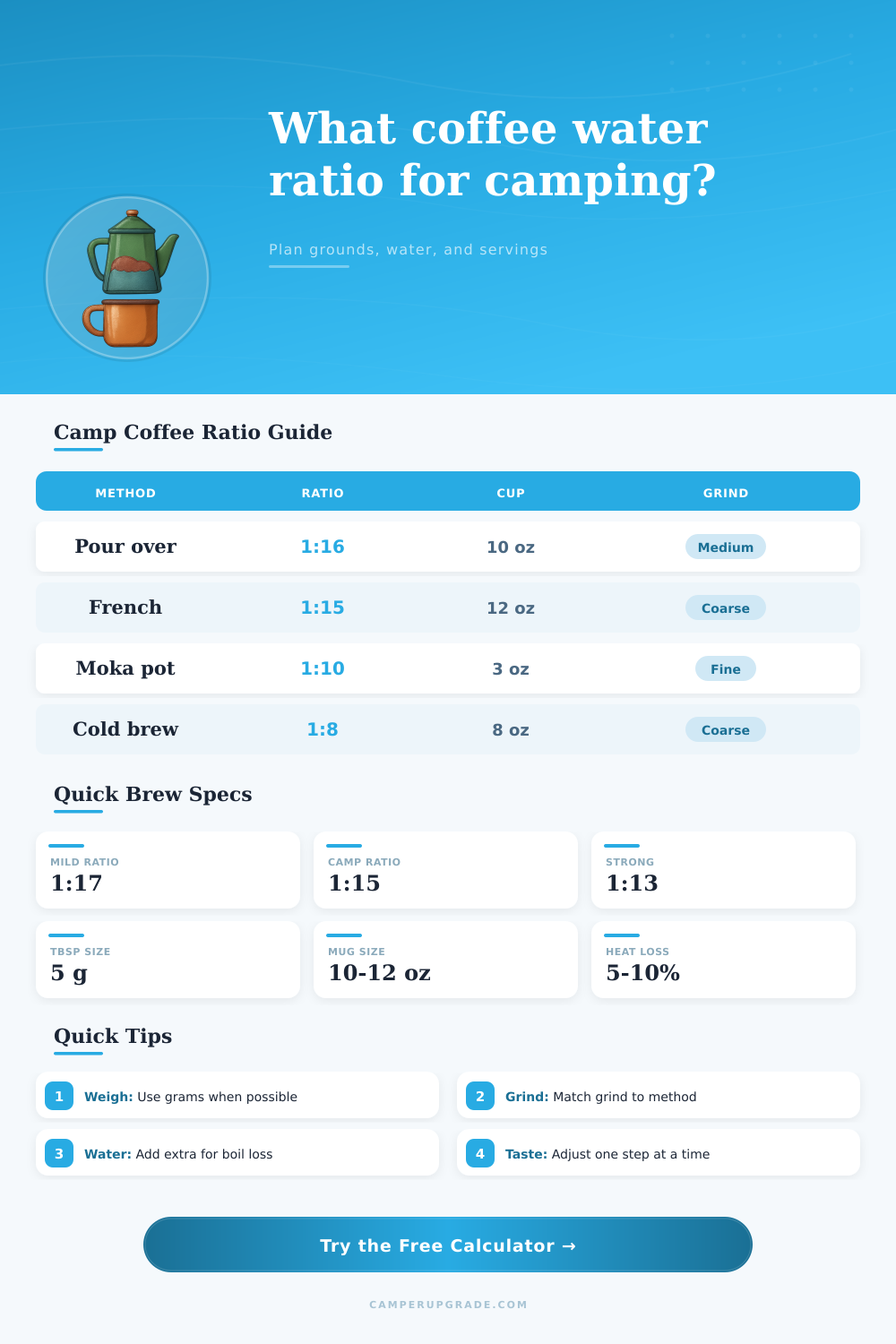
| Method | Start Ratio | Grind | Contact Time |
|---|---|---|---|
| Pour over | 1:16 | Medium | 2.5-4 min |
| French press | 1:15 | Coarse | 4 min |
| Percolator | 1:15 | Med-coarse | 6-8 min |
| RV drip | 1:17 | Medium | Machine |
| Moka pot | 1:10 | Fine | Stovetop |
| AeroPress | 1:12 | Med-fine | 1-2 min |
| Cowboy pot | 1:14 | Coarse | 4-5 min |
| Cold brew | 1:8 | Coarse | 12-18 hr |
| Servings | 10 oz at 1:16 | 10 oz at 1:15 | 10 oz at 1:14 |
|---|---|---|---|
| 1 mug | 18 g | 20 g | 21 g |
| 2 mugs | 37 g | 39 g | 42 g |
| 4 mugs | 74 g | 79 g | 84 g |
| 6 mugs | 111 g | 118 g | 127 g |
| 8 mugs | 148 g | 158 g | 169 g |
| 12 mugs | 222 g | 237 g | 254 g |
| Measure | Approx Coffee | Best Use | Field Note |
|---|---|---|---|
| 1 level tbsp | 5 g | Fine control | Count many |
| 1 rounded tbsp | 7 g | Camp mugs | Common scoop |
| 1 coffee scoop | 10 g | Fast dosing | Mark handle |
| 1/4 cup grounds | 20-24 g | Group pots | Grind varies |
| 1 oz by weight | 28.35 g | Scale packs | Precise bag |
| 100 ml water | 100 g | Metric bottle | Easy math |
💡Camp Coffee Ratio Tips
Making coffee while camping are difficult when people dont understand the relationship between coffee grounds and water. In the kitchen, you have much resources to assist in making your coffee. However, in the wilderness, you must take care of your coffee grounds and water.
Most of the time, camping coffee is either too weak or too strong because people use the wrong ratio of coffee grounds to water. The ratio is the measure of how much water to use for every gram of coffee grounds. For coffee to be balanced, people typically use a 1:15 ratio of coffee grounds to water.
How to Make Coffee While Camping
If the coffee grounds and water ratio is 1:12, the coffee will be heavy and strong. A ratio of 1:18 will produce coffee that is light and thin. The ratio will change depending on the brewing method for coffee.
Coffee grounds will absorb water while brewing coffee. The water that coffee grounds absorb will reduce the amount of coffee you can drink. If you pour water over coffee grounds, the coffee will hold some of that water.
Therefore, the coffee grounds will not pour the water that is held into your cup of coffee. For instance, if you use 10 ounce of water to brew your coffee, the coffee grounds may absorb 2 ounce of water. Thus, you will only have 8 ounces of coffee to drink.
In addition to water absorption by coffee grounds, you must also account for the water that evaporates as steam when boiling water for coffee. If you do not account for the water that coffee grounds will absorb and lost as steam, you will not have enough coffee to fills your mug. The brewing method you use will change the grind size of the coffee grounds that you use and the timing of the brewing process.
Coffee grounds should be medium ground for use in a pour-over method. A French press brewing method should use coarse ground coffee grounds to avoid extracting too much flavor from the coffee grounds. Coffee grounds should be fine ground for use in an Moka pot brewing method since a Moka pot creates pressure to brew the coffee.
You brew cowboy coffee by boiling coffee grounds in a pot. Cowboy coffee brewing method require coffee grounds to be ground to a coarse consistency so that the coffee grounds will settle at the bottom of the pot. The grind size of coffee grounds will change the surface area of the coffee grounds in contact with water while brewing coffee.
When camping for multiple days, plan your coffee brewing logistics in advance. Determine how many cup of coffee you will need each day while camping. Always pack extra coffee grounds in case of accidents.
It is better to have extra coffee grounds than not enough coffee grounds for your trip. You can calculate coffee grounds and water in advance to determine the ratio of the two brewing ingredients. Additionally, using a calculator will help you avoid having to perform the math while camping.
Weighing coffee grounds in advance and packing them in bags for each day while camping will ensure that there is no guesswork in measuring the coffee grounds for brewing coffee. Using a tablespoon to measure coffee grounds when camping isnt precise because the weight of a tablespoon of coffee grounds can change depending on the type of roast and the coarseness of the coffee grounds. Therefore, if you do not have a scale, use a consistent scoop to measure coffee grounds.
Use a scoop to measure tablespoon quantities of coffee grounds at home to find the weight of a scoop of coffee grounds. This weight will become a baseline measurement of the coffee grounds you will use when camping. Using a baseline measurement ensures that there will be consistency in the coffee grounds you brew.
Consistency of coffee grounds is important when brewing coffee for a group of people. If you use any brewing apparatus like an AeroPress or a drip coffee machine, the physics of brewing coffee are the same. If you understand the way coffee grounds absorb water and the importance of using the proper ratio of coffee grounds to water, you will be able to brew coffee while camping with accuracy.