50 1 Fuel Mix Calculator
Measure two-stroke oil for 50:1 fuel mix, alternate ratios, partial tank top-offs, marked bottles, US cans, metric cans, and fresh gasoline volumes.
🛢50:1 Fuel Mix Presets
⚙Fuel Mix Inputs
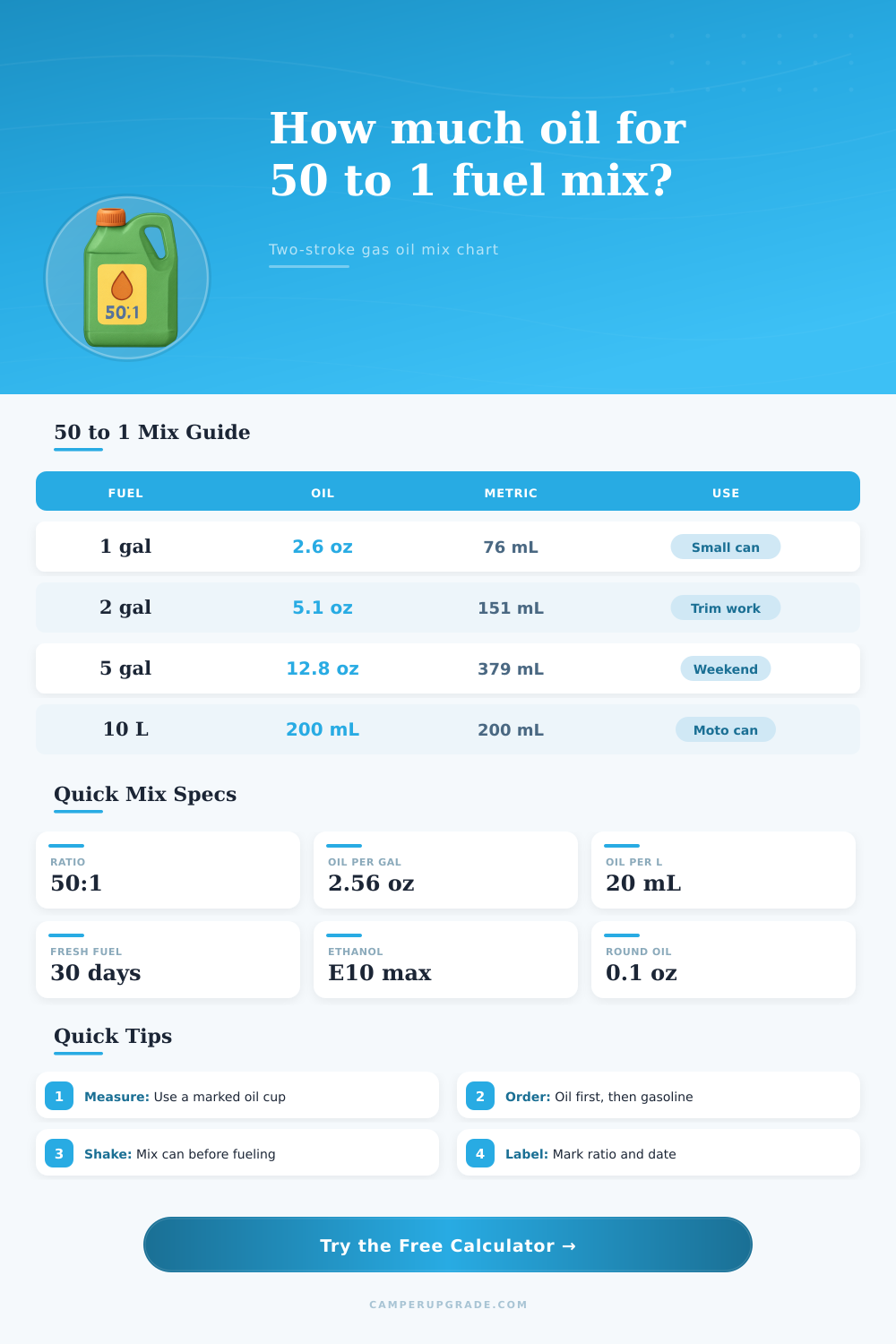
Core formula: oil volume = gasoline volume divided by ratio. For 50:1, 1 US gallon uses 128 / 50 = 2.56 fl oz oil, and 1 liter uses 1000 / 50 = 20 mL oil.
🧪Fuel and Oil Spec Comparison Grid
50:1 Mix Ratio
2%Oil is 1 part for every 50 parts gasoline by volume; common for modern saws, trimmers, blowers, scooters, and many small two-stroke engines.
JASO FD Oil
AirHigh-detergency low-smoke oil for many air-cooled tools. Use it when the manual calls for JASO FD, ISO-L-EGD, or equivalent.
TC-W3 Oil
WaterOutboard oil for water-cooled two-stroke motors. It is not always the right substitute for hot air-cooled chainsaws or trimmers.
Gasoline Base
E0-E10Ethanol-free fuel stores better. E10 is common and usable in many tools; E15 should only be used when the equipment approves it.
📏Fast 50:1 Mix Reference
📋Fuel Mix Reference Tables
| Gasoline | 50:1 Oil | 40:1 Oil | 32:1 Oil |
|---|---|---|---|
| 0.5 gal | 1.28 fl oz | 1.60 fl oz | 2.00 fl oz |
| 1 gal | 2.56 fl oz | 3.20 fl oz | 4.00 fl oz |
| 2 gal | 5.12 fl oz | 6.40 fl oz | 8.00 fl oz |
| 2.5 gal | 6.40 fl oz | 8.00 fl oz | 10.00 fl oz |
| 5 gal | 12.80 fl oz | 16.00 fl oz | 20.00 fl oz |
| Gasoline | 50:1 Oil | 40:1 Oil | 25:1 Oil |
|---|---|---|---|
| 1 L | 20 mL | 25 mL | 40 mL |
| 2 L | 40 mL | 50 mL | 80 mL |
| 3 L | 60 mL | 75 mL | 120 mL |
| 5 L | 100 mL | 125 mL | 200 mL |
| 10 L | 200 mL | 250 mL | 400 mL |
| Ratio | Oil Percent | Per Gallon | Typical Use |
|---|---|---|---|
| 100:1 | 1.0% | 1.28 fl oz | Special oil only |
| 50:1 | 2.0% | 2.56 fl oz | Modern tools |
| 40:1 | 2.5% | 3.20 fl oz | Older tools |
| 32:1 | 3.1% | 4.00 fl oz | Break-in use |
| 25:1 | 4.0% | 5.12 fl oz | Legacy engines |
| Measure | Volume | 50:1 Fuel | Best For |
|---|---|---|---|
| 1 fl oz | 29.6 mL | 0.39 gal | Small top-off |
| 2.6 fl oz | 76.9 mL | 1.02 gal | 1 gal can |
| 3.2 fl oz | 94.6 mL | 1.25 gal | 40:1 bottle |
| 6.4 fl oz | 189 mL | 2.50 gal | Mid-size can |
| 12.8 fl oz | 379 mL | 5.00 gal | 5 gal can |
💡Mixing Accuracy Tips
Two-stroke engine require the use of a specific mixture of gasoline and oil to function correct. The mixture has to be precise because the two-stroke engine will fail if the mixture isnt correct. Two-stroke engines dont have a dedicated oil reservoir.
Additionally, two-stroke engines do not have an oil pump. Due to these deficiency, the oil has to be suspended within the gasoline fuel so that the engine’s crankshafts and cylinders can be lubricated. Too little oil will cause the metal part of the engine to create too much heat.
How to Mix Gas and Oil for Two-Stroke Engines
This heat can lead to the piston welding itself to the cylinder. Too much oil will create cloudy exhaust and foul spark plugs. This will also reduce the power that the engine can outputs.
The ideal ratio for most moddern two-stroke engines is 50:1. This means that one part of oil should be mixed with fifty parts of gasoline. It is difficult for most people to calculating the amount of oil needed for the gasoline that is to be used.
In such a case, using a calculator will allow people to correctly calculate how much oil to mix with gasoline. This calculator takes into account the volume of gasoline the user is adding to the engine. Using the calculator will also allow people to avoid making mistake when adding oil to the gasoline fuel container.
For some of the older model of two-stroke engines, a different ratio of oil and gasoline must be used. In these case, people must ensure that the oil to gasoline ratio match the specifications of the engine. The type of oil that people use in the two-stroke engines can also impact the functioning of the engine.
Some oils are created for engines with water cooling system while others are created for engines with air cooling system. Air cooling engine heat up to very high temperature. In such cases, the oil used in these engines must contain high detergency so that it does not break down when the engine is cooling.
Using oil that is created for water cooling system in an air-cooled engine will work against the function of the engine. Using the correct type of oil will ensure that the two-stroke engine maintain the proper level of lubrication. Another important factor regarding two-stroke engines is the type of gasoline that is used.
Much of the gasoline available today contains ethanol. Ethanol has the ability to attract moisture in the air. When gasoline and oil mix, moisture will cause the gasoline and oil to separate within the fuel container.
Using gasoline with too much moisture can damage the carburetor of the engine. To avoid this problem, use ethanol-free gasoline or high quality alkylate fuel for two-stroke engines. Additionally, if you are going to store gasoline for more than one month, add a fuel stabilizer to the gasoline container.
When mixing oil and gasoline for two-stroke engines, the order in which you add the two liquid to the fuel container is important. Adding gasoline to the container first followed by adding oil will not allow the oil and gasoline to mix well within the container. Add oil to the fuel container first.
Add half of the gasoline to the container with the oil. Shake the fuel container vigorous. Add the remaining half of the gasoline to the container and shake the container again.
Shaking the fuel container allows for the oil and gasoline to become emulsified so that they can be even mixed. Finally, you should take care when adding fresh gasoline to a fuel container that already contains some of the mixed gasoline and oil. Adding gasoline to a container that already contains gasoline and oil without calculating the proper ratio can thin out the oil concentration within the gasoline.
To avoid this problem, calculate the total volume of gasoline and oil that will be contained within the container so that the resulting mixture will maintain the proper 50:1 ratio. Maintaining the correct ratio of gasoline and oil will ensure that your two-stroke engine will start reliable and last for a long time.