
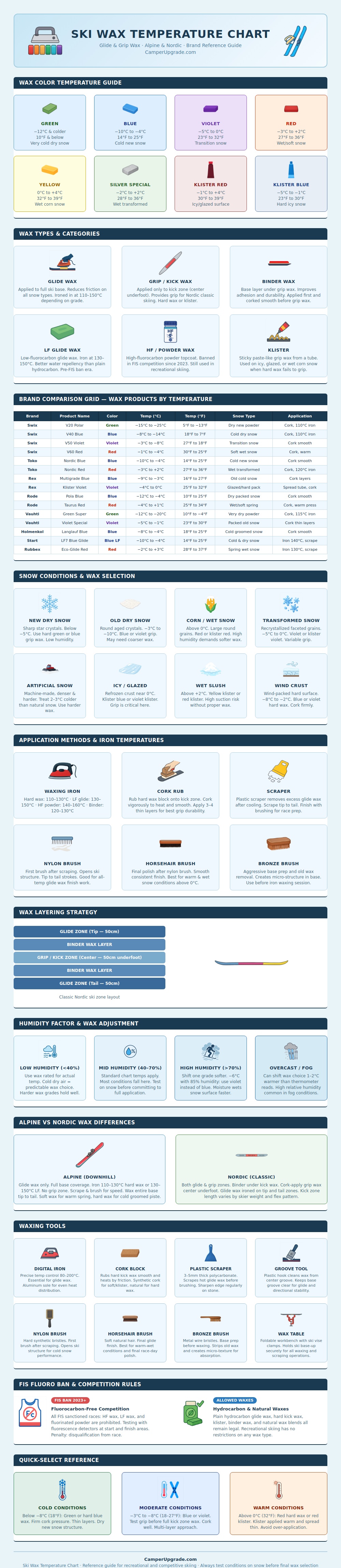
Ski wax are a substance that is applied to the base of a ski to control the friction between the ski and the snow. Ski wax is important for skiing because the snow condition will vary depending on the temperature of the snow and the moisture content of the air. If the individual applies the wrong kind of wax to the skis, the individual will either not have sufficient grip to move forward on the ski or will experience significant drag while skiing.
Therefore, it is necessary for an individual to understand the types of snow and how each type require a specific kind of ski wax for the skis to function correct. Depending on the type of snow that is present on the ski area, there will be different types of ski wax that will work best on the skis. For ski areas with cold and dry air, the snow will contain sharp crystal that require the use of hard ski wax to provide the ski with sufficient grip on the snow.
How to Choose and Use Ski Wax
For ski areas with temperatures close to 0 degrees C, the snow may contain ice or be slushy, which require the use of softer ski wax. Glide wax is used for coating the base of the ski because glide wax will repel moisture on the ski and reduce the drag between the ski and the snow. Nordic classic skier use a specific method to apply ski wax for these skis.
The individual will first apply a binder to the ski and then apply grip wax to the kick zone of the ski. Additionally, ski wax comes in different color to help the skier select the correct wax for the snow conditions. For very cold ski areas, green ski wax is used.
For ski areas with crisp snow in the mornings, blue ski wax is used. Violet, red, and yellow ski wax is used for warmer ski areas. The humidity in the air can also impact the type of snow that is on the ski areas.
The humidity in the air can change the properties of the snow even at a constant snow temperature. If the ski area has low humidity, it is below 40%, then the temperature will be accurate for the ski wax to be used. However, if the humidity is above 70%, there will be moisture in the air that soften the snow at the ski area so a softer ski wax should be used that is one color warmer in the ski wax color code.
If the ski area experiences fog or overcast condition, then the temperature of the area might be felt differently than that of the thermometer display. In this case, the skier can test the ski wax on a small portion of the ski before the individual applies the wax to the kick zone of the ski. To apply ski wax properly, the individual will use specific tool to apply the ski wax.
A cork tool can rub grip wax into the base of the ski to ensure the wax penetrates the polyethylene material of the ski. Several thin layer of grip wax should be applied to the ski so that the wax will last longer when skiing. To apply glide wax, a hot iron of the appropriate temperature is used so as to not burn the ski wax.
After the individual has applied the glide wax with the iron, the excess wax must be scraped off the ski with a sharp scraper tool. After scraping the ski, the skier should brush the ski with a bronze brush followed by a horsehair brush to polish the ski. If a sharp scraper is not used, the base of the ski may be gouged.
If a digital iron is not used to apply the glide wax, the glide wax might be overheated. Alpine and Nordic classic skiers will use ski wax in different ways. Alpine skiers will apply glide wax to the skis for the entire ski base since there is no kick zone for alpine skiers to have grip on the ski.
Nordic classic skiers will apply glide wax on the tips and tails of the skis, as well as bind and grip wax on the center of the ski. The center of the ski is the kick zone so the grip wax will be applied to this area of the ski according to the body weight and flex of the skis. The application of ski wax to the ski will be applied in a specific order because if the application of ski wax is applied in the wrong order, the skis will not function correct on ski areas during the skiing process.
Different brand of ski wax use the color code to determine the correct ski wax for specific types of snow. For example, green wax is used for powder at some ski area. Some brands use red wax for glazed crust.
For icy conditions on the ski areas, klister is used. Klister is a sticky substance that is applied to the ski in zigzag pattern so that it adheres to the ski. Klister is useful for skiing on refrozen crust on the ski areas.
Additionally, ski racing organization have banned the use of fluorocarbons so only hydrocarbons, plain waxes, klisters, and binders can be used on skis for skiing competition. To prepare the ski properly, the individual should follow a few step. First, the individual should clean the ski base with a proper ski base cleaner since any debris on the ski will inhibit the penetration of the ski wax into the ski base.
Too much ski wax should not be applied since too much wax will increase the drag between the ski and the snow. The ski wax should be tested on a short distance of skiing to test whether it is the correct wax for the snow conditions at the ski area. Additionally, if ski wax is to be tested on the ski, it should be done regularly to ensure that the ski wax matches the snow on the ski area and the skis will perform as required of them.
Youll find that many people dont realize how much the snow can change throughout the day, and its alot more complicated than just picking a color. One should of checked the weather more carefully before they started. Using teh wrong wax could leads to problems.
When youre out there, your going to want the right gear. People often thinks that more wax is better but that isnt true. The skier must follow the instructions or they might recieve a bad result.
Many people find the process to be a bit more difficult then they expected.