Water Intake Calculator
Estimate a daily hydration target from body weight, activity, heat, altitude, and bottle size.
💧Hydration Presets
⚙Daily Hydration Inputs
📊Hydration Spec Grid
📘Reference Tables
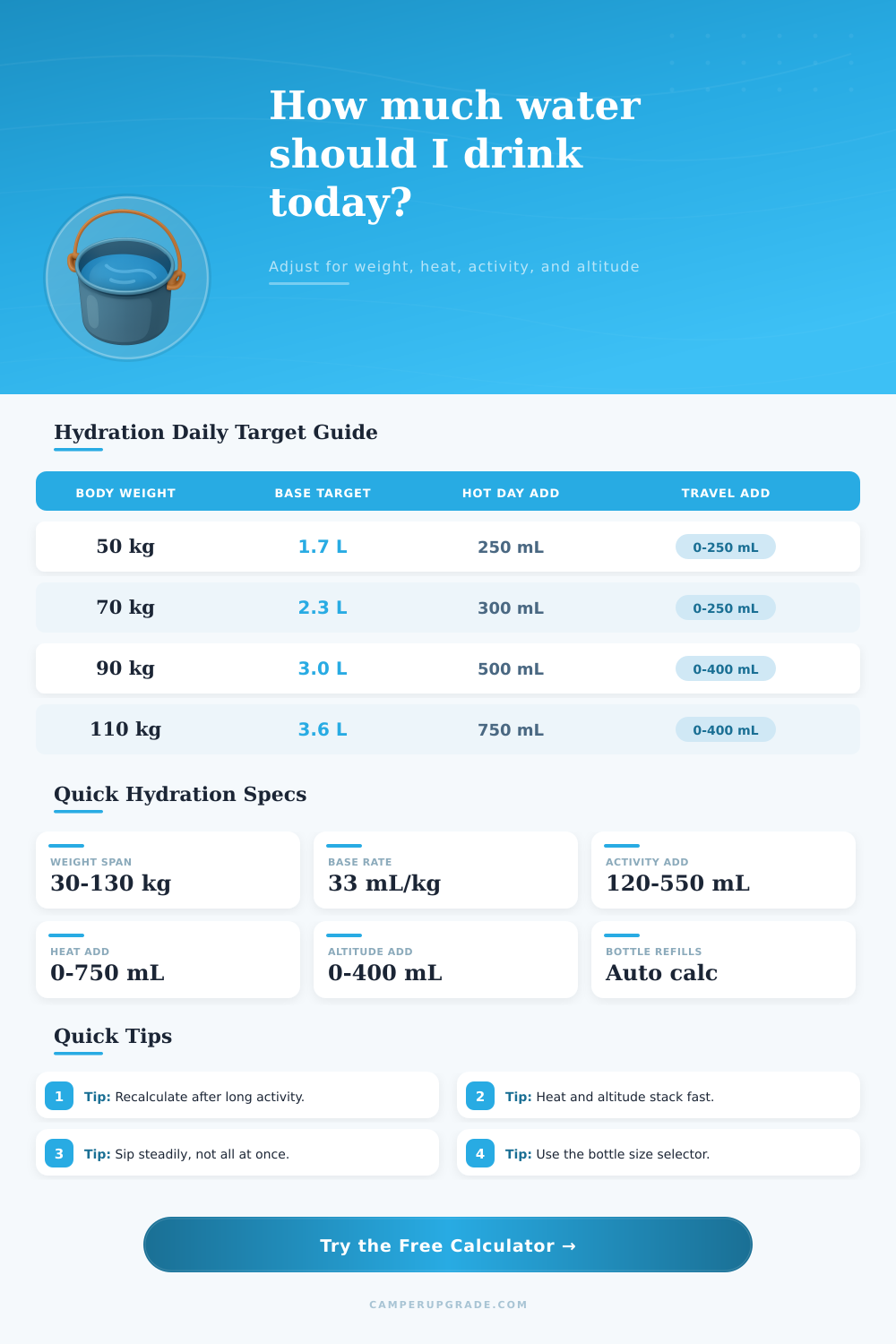
| Body Weight | Base Fluid Target | Metric | Imperial |
|---|---|---|---|
| 50 kg | 1.65 L | 1650 mL | 56 oz |
| 70 kg | 2.31 L | 2310 mL | 78 oz |
| 90 kg | 2.97 L | 2970 mL | 101 oz |
| 110 kg | 3.63 L | 3630 mL | 123 oz |
| Activity Level | 30 Min Add-On | 60 Min Add-On | Best Use |
|---|---|---|---|
| Rest | 0 mL | 0 mL | Desk, drive, or relax |
| Light | 120 mL | 240 mL | Walking and chores |
| Moderate | 250 mL | 500 mL | Hikes and mixed work |
| Heavy | 400 mL | 800 mL | Long, sweaty sessions |
| Condition | Trigger Range | Extra Water | Notes |
|---|---|---|---|
| Cool / dry | < 30% RH | 150 mL | Respiratory loss rises |
| Warm | 18-24 °C | 100 mL | Small bump only |
| Hot | 24-30 °C | 300 mL | More sweat loss |
| High altitude | > 2500 m | 250 mL | Dryer breathing air |
| Container | Volume | Refills for 3 L | Practical Note |
|---|---|---|---|
| 330 mL bottle | 11 oz | 9.1 | Small sips only |
| 500 mL bottle | 17 oz | 6.0 | Easy travel size |
| 32 oz bottle | 946 mL | 3.2 | Common daily bottle |
| 3 L bladder | 101 oz | 1.0 | All-day carry |
Hydration is a necessary processes for the human body, and dehydration can lead to symptoms such as headaches, dry mouths, and fatigue. Dehydration is the state in which the human body dont have enough fluid to perform its bodily functions correct. Fluid loss occur through the bodys sweat, breath, and urine output.
To prevent dehydration, a human being must determine the amount of water that they needs to drink based on their body weight and activity level. A specific amount is more effective in managing dehydration then general advice for drinking water because the general advice does not account for the individual need of the human body. An average person can calculate their baseline water intake by multiply their weight in kilograms by 33 milliliters.
How Much Water to Drink and How to Avoid Dehydration
For instance, a human that weigh 75 kilograms needs to consume at least 2,475 milliliters of water to satisfy their baseline needs. If that same human engage in physical activity, their water needs will increase as the body will lose fluids through the process of sweating. The muscle require fluids for both performance and fuel for the bodys movements.
To account for the fluid loss through physical activity, the human body must drink extra water. A persons environment also play a significant role in there water needs. Hotter temperatures will require more water intake for the body to compensate for the fluids lost through sweating.
Low humidity levels will require more water intake for the body to lose fluid through breathing. At high altitude, the thin air will require the body to breathe heavy to extract the oxygen needed to perform physical tasks, leading to a higher loss of water through breathing. Both salt and caffeine can also affect a human bodys water needs.
Salt will cause the body to take in more water to balance the salt in the bodys cell. Caffeine will increase the bodys urination frequency to flush the coffee out of the body. A persons activity level will significantly determine the amount of extra water that they needs to drink.
A human body at rest only require the baseline amount of water. For activities that require a moderate level of exertion, such as yard work, a person must drink additional water. For individuals performing heavy or extreme physical activity, such as endurance sports training, a person will lose alot of fluid and will require even more water intake to replace the body fluids that pour out of the body.
A person should of not drink all of the fluid they need at once. Instead, they should drink water at regular interval throughout the day. For example, a person can drink 16 hours of water in 2-ounce amount every hour.
Many people do not hydrate proper because they only drink water when they feel thirsty. Thirst is not a reliable way to indicate when a person need water because it can be up to two hour behind the actual need for water. Instead, a person should use a proactive method of water intake to ensure that a person does not ever feel thirsty because of dehydration.
One way to determine if a person is properly hydrated is to check the color of their urine. If the color of the urine is a pale yellow, the human is properly hydrated. If the color of the urine is a dark yellow color, the person needs to drink more water.
Consuming more watery foods can also help increase the water content in the body. Certain condition will require individuals to consume significantly more water. Lactating women require more water because their body produce more milk.
Individuals that consume alcohol require more water because it will suppress the bodys thirst signal. In these conditions, a person must be careful not to consume excessive amount of plain water because it will dilute the electrolytes that the body use to perform its bodily functions. In conclusion, a person must match their water intake to the amount of fluid that their body lose.
A persons fluid needs come from their body weight, physical activities, environmental temperatures, humidity, and altitude. By calculating the amount of water that a person needs and drinking water over a period of time, that person can avoid dehydration symptoms.