Helmet Size Calculator
Convert head circumference into a helmet size recommendation with fit preference, head shape, category allowances, and liner setup.
🏕️Fit Presets
⚙Helmet Sizing Inputs
📊Sizing Spec Grid
📘Helmet Size Reference Tables
| Adult Size | Head Circumference (cm) | Head Circumference (in) | Common Label |
|---|---|---|---|
| XXS | 50.0-52.0 | 19.7-20.5 | Extra extra small |
| XS | 52.0-54.0 | 20.5-21.3 | Extra small |
| S | 54.0-56.0 | 21.3-22.0 | Small |
| M | 56.0-58.0 | 22.0-22.8 | Medium |
| L | 58.0-60.0 | 22.8-23.6 | Large |
| XL | 60.0-62.0 | 23.6-24.4 | Extra large |
| XXL | 62.0-64.0 | 24.4-25.2 | Double extra large |
| XXXL | 64.0-66.0 | 25.2-26.0 | Triple extra large |
| Youth Size | Head Circumference (cm) | Head Circumference (in) | Use Case |
|---|---|---|---|
| YS | 48.0-50.0 | 18.9-19.7 | Early youth fit |
| YM | 50.0-52.0 | 19.7-20.5 | General youth fit |
| YL | 52.0-54.0 | 20.5-21.3 | Older youth fit |
| YXL | 54.0-56.0 | 21.3-22.0 | Bridge to adult S |
| Helmet Category | Baseline Feel | Typical Margin | Fit Priority |
|---|---|---|---|
| Road Bike | Firm crown hold | +/-0.45 cm | No roll under shake test |
| Mountain Bike | Stable with retention | +/-0.55 cm | Rear cradle support |
| Motorcycle Full Face | Cheek pressure expected | +/-0.30 cm | No forehead hotspot |
| Motorcycle Modular | Slightly comfort biased | +/-0.35 cm | Seal and jaw closure |
| Climbing | Centered shell balance | +/-0.50 cm | Vertical strap geometry |
| Ski or Snowboard | Layer friendly fit | +/-0.60 cm | Goggle and ear alignment |
| Skate | Low profile shell | +/-0.50 cm | Forehead coverage depth |
| Equestrian | Even contact ring | +/-0.45 cm | Occipital lock at trot |
| Head Shape | Pressure Tendency | Shell Match | Adjustment Strategy |
|---|---|---|---|
| Round | Side pressure risk | Round or neutral shell | Favor round profile pads |
| Neutral Oval | Balanced pressure | Most shell designs | Use baseline chart value |
| Long Oval | Forehead and rear pressure | Long oval shell | Avoid short-round shell |
| Unknown Shape | Mixed hotspots | Try two shell profiles | Keep best 10 minute fit |
When a person is purchasing a helmet, there are several factors that they need to consider in order to ensure that the helmet will effectivly protect there heads when in use. A helmet that is too large will slide on the head during use, and a helmet that is too small may cause physical pain to the wearer. Each helmet manufacturer provide helmet categories for different types of activities, but each must appropriately fit the head of the wearer.
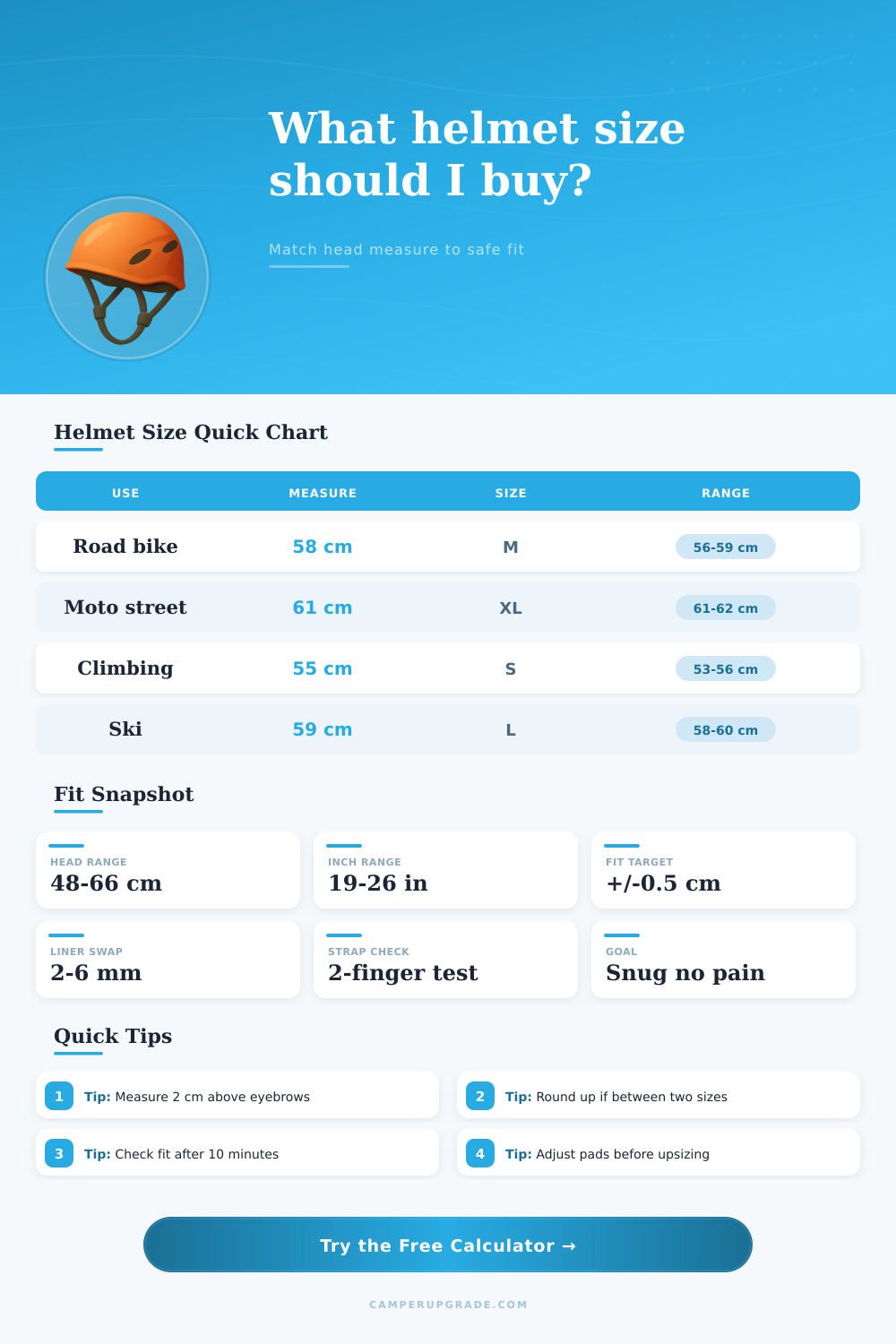
Therefore, there are several factor that a person should of consider before purchasing a helmet. One of the first factors to consider is the size of the wearers head. To determine head circumference, a person should use a soft tape measure to measure the circumference of the head two centimeters above the eyebrows, and ensure that the tape measure is even with the ears.
How to Choose and Fit a Helmet
A person should take the measurement three times, and the largest measurement is selected. The largest size is chosen for a helmet because a helmet that is too small will be dangerous to wear; the size should provide an even baseline measurement for the size of the wearers head. Beyond circumference, the shape of the wearers head is another factor.
Individuals with long oval heads may experience pressure points on the forehead or back of the head if wearing helmets made for round heads. Those with round heads may experience pressure on the sidewalls of helmets made for even head shapes. Additionally, the thickness of the wearers hair will impact helmet size; thick hair or braid will take up more space than individuals with light hair.
Finally, the thickness of the helmets liners is another factor; helmets with thick liners will take up more space within the helmet itself. The specific activity that the individual intends to perform with the helmet will determine the category of helmet that they should purchase. For instance, helmets for road biking will be more snug than those for mountain biking.
Helmets for skiing or snowboarding will include space for a beanie or headwear, as they are designed to accommodate layers of clothing. Finally, motorcycle helmets must be fitted to distribute pressure on the cheeks of the wearer, but not create pressure or hotspots on the forehead. Helmets will use centimeters to describe sizes, as the majority of helmet manufacturers use the metric system for their products.
Helmet sizes for adults range from 50 centimeters to 66 centimeters, or sizes XXS to XXXL. Additionally, there should be two fingers under the chin strap for even pressure on the head. The helmet should also not move when the wearer shakes their head; if the helmet moves within the head when shaking the head, the helmet is too large for the wearer.
Finally, the wearer should wear the helmet for ten minutes to ensure that it dont cause any physical pain to the head; helmets require a ten-minute break in period to even allow for the wearer to properly adjust into the helmet. Some of the most common mistakes with helmet sizes include selecting a helmet sized medium or large for the wearer based off the size of the wearers head. Another common mistake is to rely upon online reviews to determine the size of helmets for the wearers head and body; these reviews do not account for the specifics of each individuals head or hair.
Additionally, some wearers may neglect the thickness of helmet liners; changing helmet liners will often fix helmet fit issues for the wearer. Finally, the safety of a helmet depends upon the way that the helmet is fitted to the wearers head; a helmet that is not appropriately fitted may fail to protect the wearer. Therefore, wearers should consider each of these factors to ensure that the helmet is appropriately fitted for the wearers head.