Anchor Rode Length Calculator
Estimate rode length, chain-to-rope split, and swing radius from depth, tide, and holding conditions.
⚙Units
🚤Quick Anchoring Presets
📏Depth, Boat, And Rode Inputs
📊Anchor Rode Snapshot Grid
📘Reference Tables
| Scope Ratio | Best For | Holding Margin | Rode Per 10 ft Depth* |
|---|---|---|---|
| 3:1 | Lunch stop | Low | 30 ft |
| 4:1 | Short day anchor | Low-medium | 40 ft |
| 5:1 | Fair weather | Medium | 50 ft |
| 7:1 | Overnight | High | 70 ft |
| 8:1 | Windy night | Higher | 80 ft |
| 10:1 | Heavy weather | Maximum | 100 ft |
| Depth + Bow Height | 7:1 Rode | 8:1 Rode | 10:1 Rode |
|---|---|---|---|
| 12 ft | 84 ft | 96 ft | 120 ft |
| 18 ft | 126 ft | 144 ft | 180 ft |
| 24 ft | 168 ft | 192 ft | 240 ft |
| 30 ft | 210 ft | 240 ft | 300 ft |
| 40 ft | 280 ft | 320 ft | 400 ft |
| Boat LOA | Typical Chain Lead | Typical Total Rode | Notes |
|---|---|---|---|
| 20-26 ft | 20-40 ft | 150-200 ft | Coastal day use |
| 27-34 ft | 40-80 ft | 200-300 ft | Mixed overnight |
| 35-45 ft | 60-120 ft | 250-400 ft | Cruising margin |
| 46-60 ft | 120-200 ft | 400-600 ft | Extended stays |
| Bottom Type | Factor | Scope Effect | Holding Behavior |
|---|---|---|---|
| Clean sand | 1.00 | Baseline | Reliable set |
| Soft mud | 1.04 | Slightly higher | Good but variable |
| Grass patches | 1.14 | Higher | Anchor can skate |
| Shell/gravel | 1.20 | High | Hard initial bite |
| Rock/foul | 1.28 | Very high | Set uncertainty |
An anchor rode is chain, rope or a mix of them that connects the ship to its anchor. It is made up of long pieces of chain, rope or their combination that ties the anchor to the boat. Chain resists wear well, but it weighs a lot, so it is hard to lift and store.
Rope is lighter and flexible.
Anchor Rode Basics and How to Use It
The rope part of the anchor rode usually is made from nylon three-strand, 12-strand or double-braid line. You choose nylon because of its stretch. Nylon line attached to the chain end stretches and softens the pull between boat and anchor.
Even so nylon breaks down because of UV light. If the rode sits on deck in strong sun, it will degrade quickly. Good anchor line made from synthetic material does not rot.
Ideally the rode combines chain and rope for any anchor system. The chain goes near the anchor. This way the rope part does not rub against the seabed.
Unless the sailing area has only sand and mud bottoms, the part of the rode on the ocean floor must be chain. Many boaters reduce the chain amount for less weight
The anchor rode must be strong against scraping of seabed and of the boat roller, deck pipes and chocks. It must keep the pull on the anchor shank horizontal to increase the anchor’s holding power. Heavy long chain holds the anchor shank parallel to the bottom so the flukes dig in during the ship move.
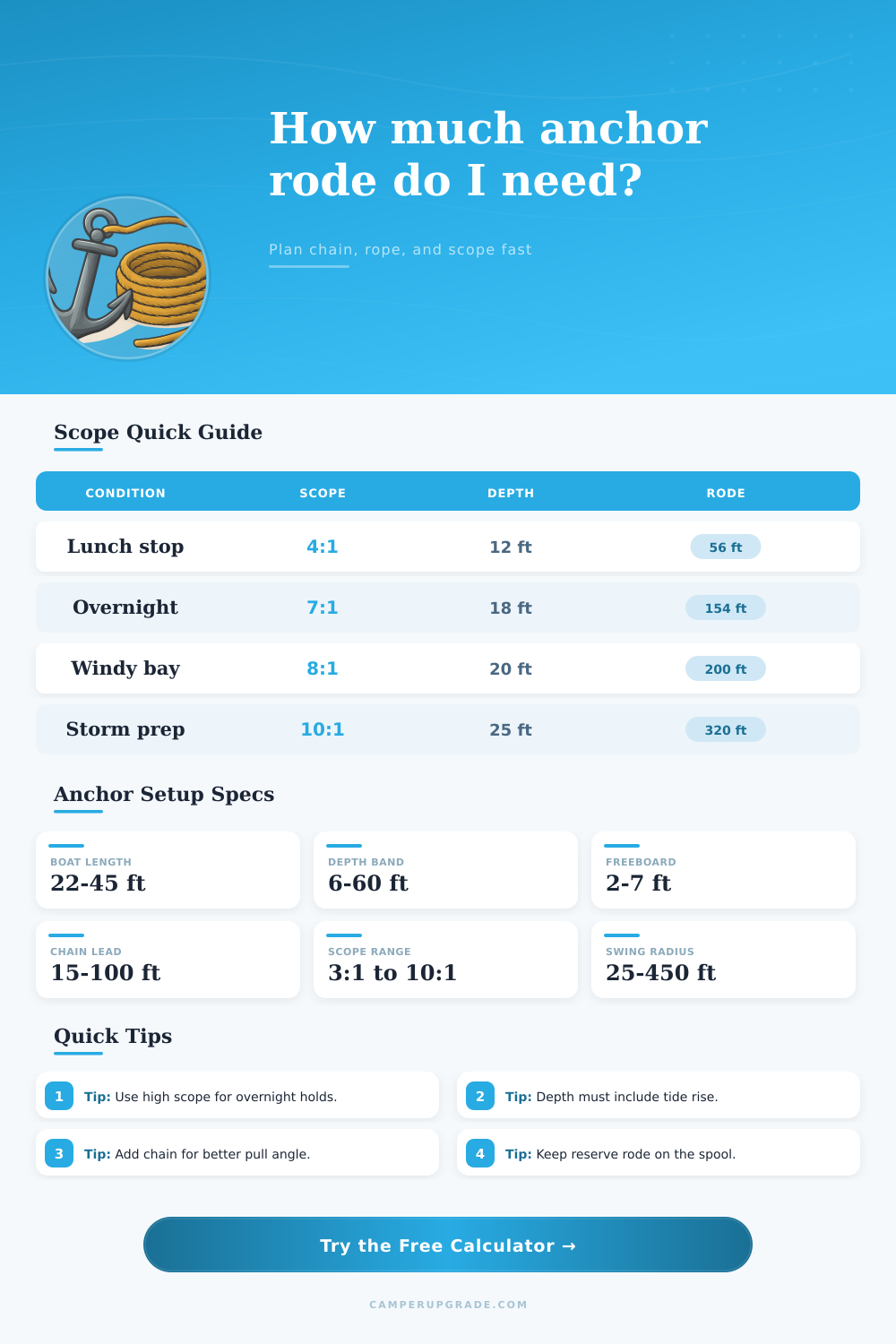
You commonly advise a 7:1 ratio so for every foot of water depth use seven feet of rode. In 10 feet deep water requires 70 feet of line. For short picnic stops about five times the depth works.
For usual anchoring you use 7 times the depth, for storms 10 times.
Mark the rode helps you know how much line is going out. Some boaters put colored plastic tape strips in the anchor line for distance marks. Others paint at 25-foot intervals with colors red, white, blue, yellow and repeat so each yellow mark shows 100 feet.
Good anchor rode is soft and flexible, and anchor rodes come in many mixes of different ropes and chains