Safe Backpack Weight Calculator
Estimate a safer carry limit from body weight, terrain, elevation, climate, and your planned pack contents.
🎒Quick Hiking Presets
⚙Load Safety Inputs
📊Load Safety Comparison Grid
📘Reference Tables
| Conditioning Level | Base Limit (% BW) | Recommended Use | Caution |
|---|---|---|---|
| Beginner | 18% | Short to moderate hikes | Build gradually |
| Regular hiker | 22% | Typical day or weekend | Watch long descents |
| Trained packer | 26% | Multi-day carry | Adjust in heat |
| High conditioning | 30% | Advanced objectives | Use fit-specific checks |
| Terrain Class | Multiplier | Load Effect | Typical Profile |
|---|---|---|---|
| Easy trail | 1.00x | No reduction | Maintained paths |
| Rolling hills | 0.93x | Light reduction | Frequent small climbs |
| Steep mountain | 0.86x | Moderate reduction | Long sustained gain |
| Technical terrain | 0.78x | Strong reduction | Scramble and unstable footwork |
| Consumable | Typical Amount | Weight Impact | Planning Note |
|---|---|---|---|
| Water | 1.5-3.0 L/day | 1.5-3.0 kg | Refill points reduce start load |
| Food | 0.6-0.9 kg/day | Linear by days | Calorie-dense food saves weight |
| Fuel | 0.1-0.3 kg/day | Moderate | Cold trips need more fuel |
| Emergency extras | 0.2-0.8 kg | Static add-on | Keep essential but compact |
| Buffer Status | Result Band | Interpretation | Suggested Action |
|---|---|---|---|
| Green | 5%+ below limit | Comfortable reserve | Maintain current setup |
| Yellow | 0-5% below limit | Near threshold | Trim non-essentials |
| Orange | 0-8% above limit | Likely fatigue rise | Reduce water or dense gear |
| Red | 8%+ above limit | High overload risk | Repack before departure |
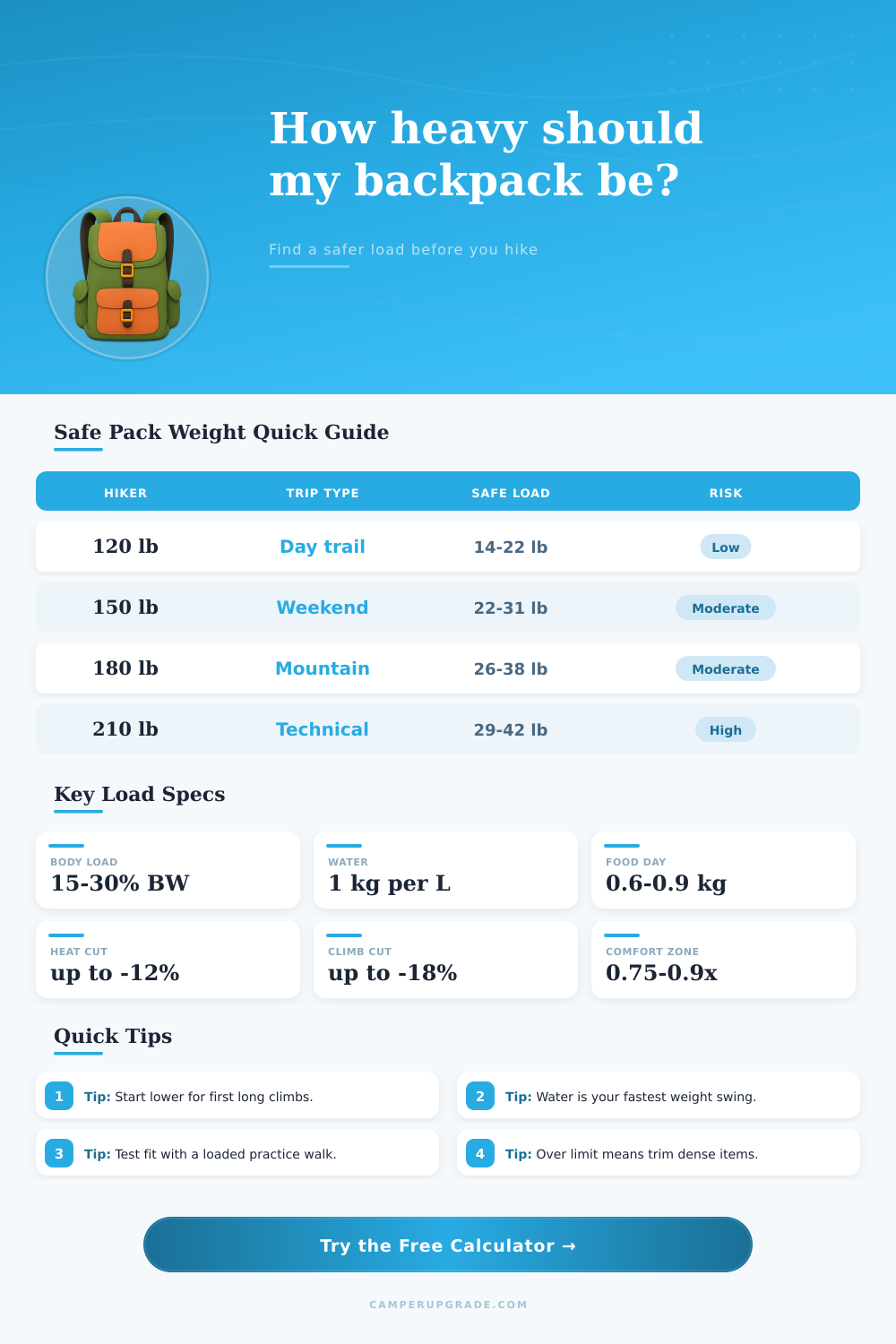
Find the right weight of rucksack for every camping or hiking trip. A loaded pack should not be more than 20 percent of your body weight. Here is a good rule to follow For hikers and travellers, a comfortable range usually is between 20 and 30 percent of body weight.
Too heavy a load brings tirednes, back pain and even long term injuries.
How Heavy Should Your Rucksack Be
For new backpackers, that is around 20 to 30 pounds. Season, terrain and goals change the rucksack. Climate, year, water and landscape, all change the weight.
Traditional rucksack usually has base weight of at least 20 pounds, without food or water. Perfect for weekend trips or some miles to a near camp. Expert hikers reach 5 to 10 pounds basic, using only things they need without losing comfort.
Ultralight-bags weigh base 8 to 10 pounds, full 15 to 20. In ultralight-world, under 10 pounds is the limit.
Summer base sits around 13 pounds. Shoulder season reaches 16 to 17 pounds. Starting weight is low to mid 20s for 3-4 days, or even 30 pounds with water.
Quick trip: around 12 pounds. For five day haul: around 20 pounds.
Under 30 pounds is possible with a bit of work, maybe under 20 with fancy ultralight and cutting surplus. 40 pounds in winter beats almost all. 15 against 20 pounds does knot always matter however.
Lay heavy stuff up, for equal weight on chest, not on lower back. Waist belt bears most to hips. Well fitted rucksack loads pelvis and legs, not back or shoulders.
Short trips use heavy traditional, they are comfortable, easy to fit and versatile. Less weight equals more fun in backpackingworld.