⛺ Tarp Size Calculator
Find the exact tarp dimensions you need for any campsite, RV pad, shelter, or outdoor project
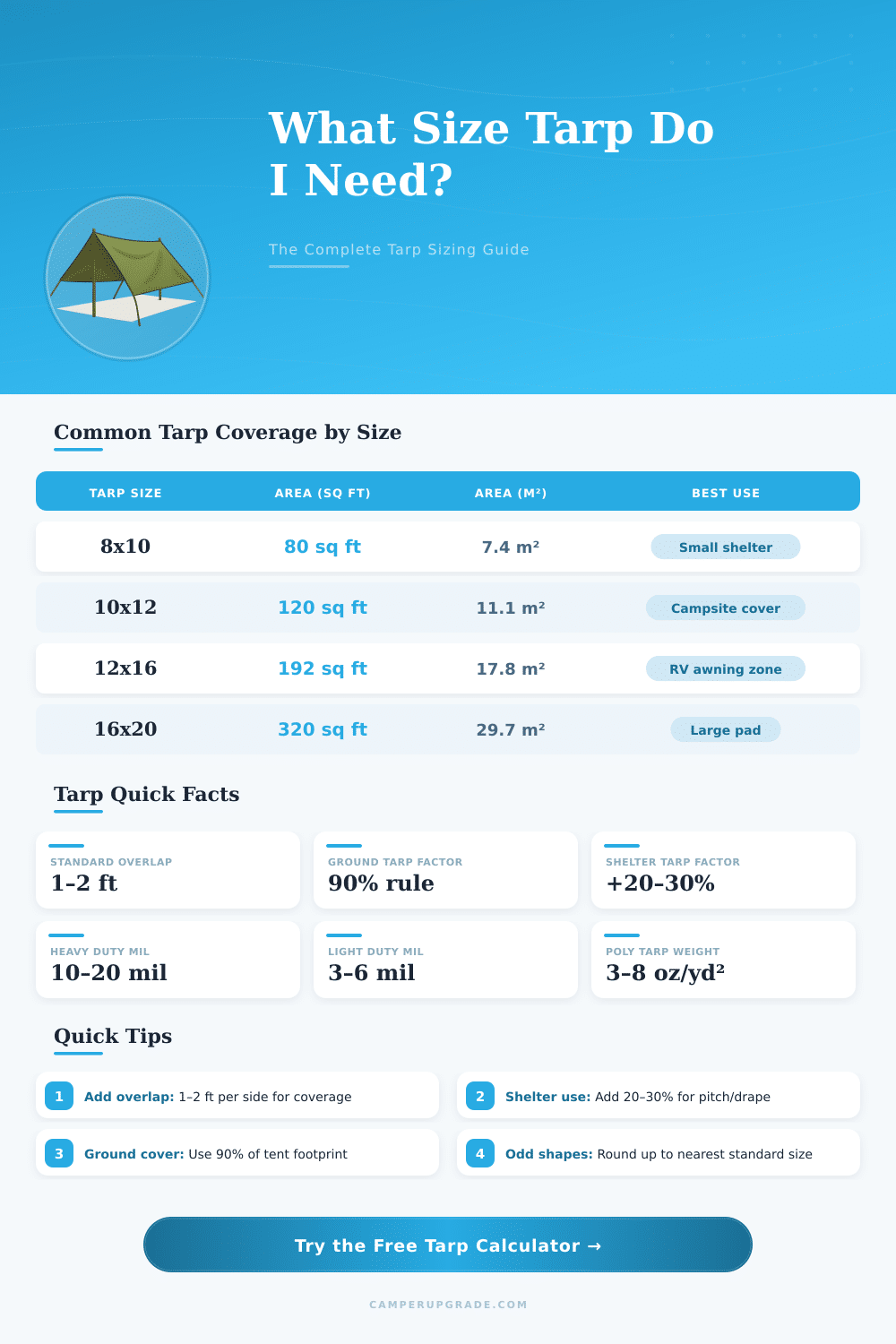
| Tarp Size (ft) | Area (sq ft) | Area (m²) | Common Use |
|---|---|---|---|
| 5 x 7 | 35 | 3.3 | Small gear cover, emergency |
| 6 x 8 | 48 | 4.5 | Firewood, small equipment |
| 8 x 10 | 80 | 7.4 | Small shelter, ATV cover |
| 10 x 12 | 120 | 11.1 | Campsite, single tent fly |
| 12 x 16 | 192 | 17.8 | RV awning zone, group shelter |
| 16 x 20 | 320 | 29.7 | Large RV pad, event area |
| 20 x 30 | 600 | 55.7 | Event canopy, large equipment |
| 30 x 50 | 1500 | 139.4 | Commercial/industrial cover |
| Area Size (ft) | 0 in Overhang | 6 in Overhang | 12 in Overhang | 24 in Overhang |
|---|---|---|---|---|
| 10 x 10 | 10 x 10 | 11 x 11 | 12 x 12 | 14 x 14 |
| 12 x 20 | 12 x 20 | 13 x 21 | 14 x 22 | 16 x 24 |
| 15 x 30 | 15 x 30 | 16 x 31 | 17 x 32 | 19 x 34 |
| 20 x 40 | 20 x 40 | 21 x 41 | 22 x 42 | 24 x 44 |
| 12 x 40 (RV) | 12 x 40 | 13 x 41 | 14 x 42 | 16 x 44 |
| Project | Area (sq ft) | Recommended Tarp | Tarp Type |
|---|---|---|---|
| Single Tent (2-person) | 30–50 | 8 x 10 | Ripstop / Light Poly |
| Family Campsite | 100–150 | 12 x 16 | Medium Poly |
| RV Pad (Class C) | 300–400 | 16 x 20 | Heavy Poly / Vinyl |
| RV Pad (Class A) | 480–600 | 20 x 30 | Heavy Poly / Canvas |
| Truck Bed (6.5 ft) | 40–55 | 8 x 10 | Heavy Duty Poly |
| Firewood Cord (4x4x8) | 32–48 | 6 x 8 | Poly / Vinyl |
| Outdoor Event | 400–600 | 20 x 30 | Canvas / Vinyl |
| Pool/Hot Tub Cover | 80–120 | 10 x 12 | Waterproof Vinyl |
A tarp… Short for tarpaulin… Is a big waterproof sheet that comes in all kinds of materials.
You can find plastic, canvas, vinyl, polyolefin, mesh and even clear versions to choose. Most are made of HDPE or LDPE plastic. What makes them so useful is that they work inside and outside equally well, caring about everything from painting drop covers and dust coverings to garden guard and shelter against rain.
Tarp Types, Uses and Safety Tips
The choice by size is really wide. Usual options range from 5×5 feet to far bigger 170×170 foot sheets and if you need something custom, that is also possible. There are models with strong build that are made to last the most harsh conditions.
For yearlong use under the sky there are UV-resistant options. Whether you search for heavy canvas, vinyl or lightweight tent tarp, the market offers a good answer for every need that you have.
For camping tarp setups are especially liked. Lightweight waterproof models are made for bike journeys with tent, wild camping and weather protection. The advantage lies in their flexibility for many setups.
The frame system, probably the most used, gives firm covering and is not hard to set up. For one person, a tarp of around 5×8 feet forms the minimum, although 6×9 or even 8×10 feet give more comfortable space. You need a tarp quite a bit bigger than your tent spot, together with strings for ridge lnies and stakes to set everything.
Cheap tarp setups at around ten dollars work for practice, but honestly, they sound really noisy. When wind hits, spending more at first really pays off. Models like the Cool Gorilla hexagon tarp, which costs about 35 dollars, reach better value.
Many expert campers pass hundreds of nights under tarp setups without problems.
Here is the problem with tarp setups and campfires: nylon versions have a pretty low flash point, so fires easily pierce them, if the tarp is too near. It is more smart to keep it six to seven feet above the flame and three too five feet away. Small cooking fires under a tarp mostly are safe.
Setting the tarp to block wind and placing the fire a bit past the edge works surprisingly well.
A tarp under a tent acts really well. It helps to keep the bottom clean and stop that stressful dampness from the soil. Some call it a ground cover.
Tyvek or polycro work as cheap, lightweight and easily packed ground sheets to lay below.
For owners of RV tents tarp setups protect the roof against sun, rain and snow damage. They usually last for around two years in that task. Even so, there is a catch: using a tarp instead of a proper cover can cause harm, if it flaps in strong wind.
Pulling it tightly with elastic strings avoids that. Some service centers for RV tents noted morewounds from tarp setups than from anything else, mostly because of that flapping and rubbing against the skin.