🧳 Vacuum Sealed Dehydrated Food Shelf Life Calculator
Estimate how long your dehydrated food will last based on food type, packaging, and storage conditions
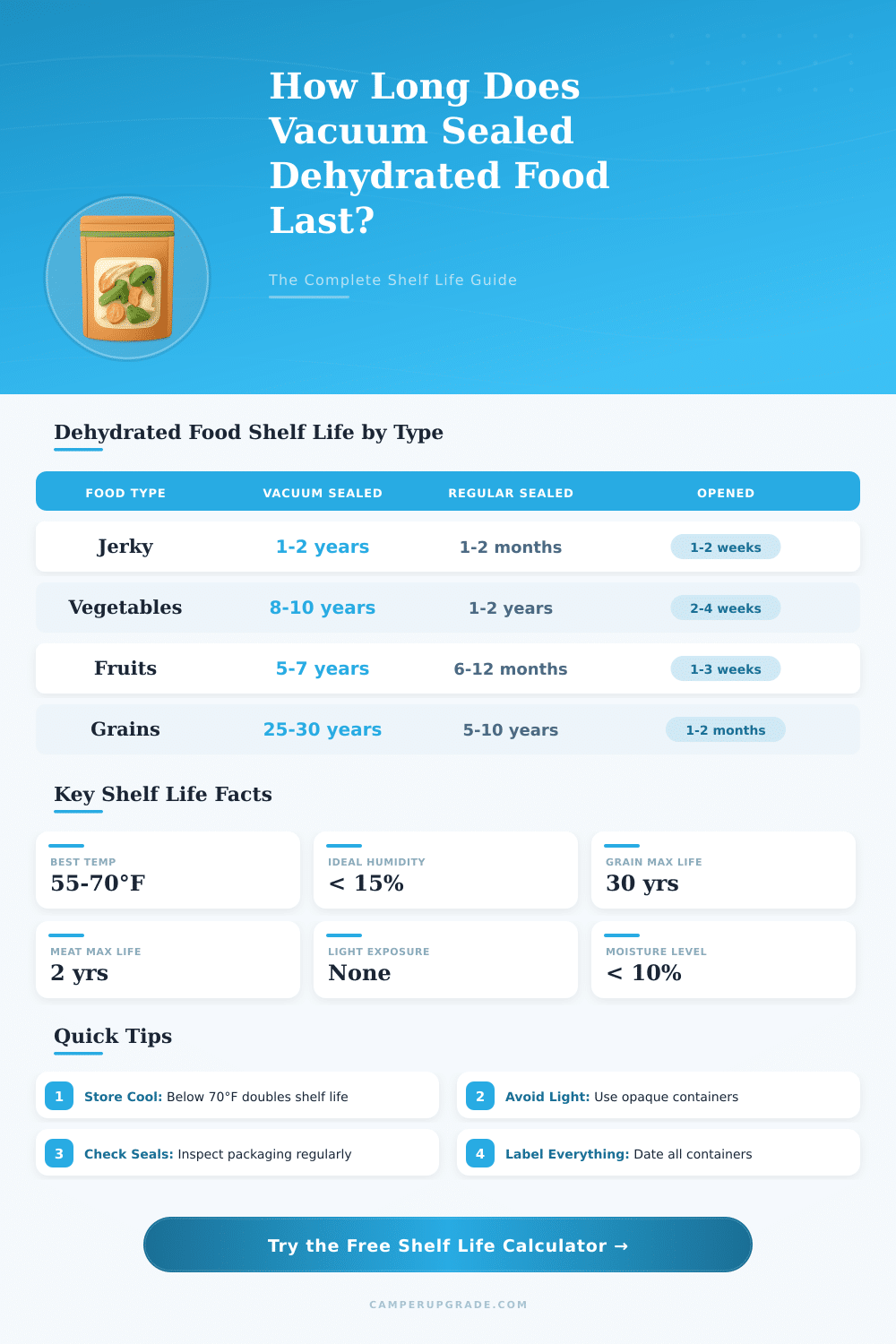
| Food Category | Mylar + O2 Absorber | Vacuum Sealed | Regular Sealed | Open Container |
|---|---|---|---|---|
| Beef / Meat Jerky | 1–2 years | 1–2 years | 1–2 months | 1–2 weeks |
| Dehydrated Vegetables | 25–30 years | 8–10 years | 1–2 years | 2–4 weeks |
| Dehydrated Fruits | 15–20 years | 5–7 years | 6–12 months | 1–3 weeks |
| Whole Grains / Rice | 25–30 years | 5–10 years | 5–10 years | 1–2 years |
| Dried Legumes / Beans | 25–30 years | 5–10 years | 3–5 years | 1–2 years |
| Dried Herbs & Spices | 5–10 years | 3–5 years | 1–3 years | 6–12 months |
| Powdered Dairy | 20–25 years | 2–5 years | 2–5 years | 3–6 months |
| Dehydrated Fish | 1–2 years | 6–12 months | 1–3 months | 1–2 weeks |
| Mushrooms | 10–15 years | 5–8 years | 1–2 years | 2–4 weeks |
| Cooked Pasta / Meals | 3–5 years | 6–12 months | 3–6 months | 1–2 weeks |
| Temperature | °F Range | °C Range | Shelf Life Impact | Recommended For |
|---|---|---|---|---|
| Frozen | 0–32°F | -18 to 0°C | Extends by 2–5x | Long-term meat storage |
| Refrigerated | 35–40°F | 2–4°C | Extends by 1.5–3x | Meat, fish, dairy |
| Cool & Dark | 55–65°F | 13–18°C | Optimal (baseline) | All food types |
| Room Temperature | 65–75°F | 18–24°C | Reduces by 20–40% | Short-term use only |
| Warm / Variable | 75–90°F | 24–32°C | Reduces by 50–70% | Not recommended |
| Moisture Level | % Content | Shelf Life Effect | Risk Level |
|---|---|---|---|
| Optimal Dry | < 5% | Full shelf life achieved | 🟢 Low |
| Good | 5–10% | Reduces shelf life 10–30% | 🟡 Moderate |
| Marginal | 10–15% | Reduces shelf life 40–60% | 🟠 High |
| Unsafe | > 15% | Risk of mold / spoilage | 🔴 Very High |
Vacuum sealed dehydrated food helps to keep food fresh for a long time. That method works well for camping trips, while packing and in everyday life. The main idea is very simple.
One dries the food to remove the moisture, then one seals it in a bag from which one pumped the air. That mix makes the food stay good much more long than in usual storage.
How Vacuum Sealing Makes Dehydrated Food Last Longer
The shelf life of vacuum sealed dehydrated food ranges between one and five years depending on the kind of food. Dried fruits, like apples or bananas, can stay good up to one year. Foods that are well prepared without vacuum sealing even so last one to two years.
Some brands show a best use date, that usually falls between one and three years. So if one seals well and keeps the dried foods in cool, dark places, one can eat them even after twenty-five years, and they should still taste good according to theory.
Freezing dehydrated food extends the life even more. Combining vacuum sealing with cooling is especially useful for dried fruits and vegetables. But if food is not well packed in the freezer, it can suffer freezer burn.
It happens when the water molecules from the food migarte to the coldest surfaces of the freezer and cause the food to dry outside in a bad way.
Before vacuum sealing the food must be fully dry. One aims for content of about ten percent of moisture. If there stays a bit of moisture inside, it can move to the surface.
Shake the package now and then for a weak helps to check that. If the food feels sticky, one should dry it again. When mold appears, one must dump the whole amount.
Vacuum sealing removes also oxygen, which is important, because oxygen can cause the dehydrated food to fail. Sealed vacuum bags stop new bacteria from reaching the food. Oxygen absorbers can serve in mylar bags or in jars for extra guard.
The seals close only just like after usual cooking on the stove. For stuff that is meant to last more than eighty months, mylar bags are a good choice over regular vacuum bags.
One downside is that vacuum sealed bags become stiff and hardly fit in empty spaces of shelves. Sharp or hard dried bits can poke holes in the bags and allow air to enter. Useful is to first lay the food in a ziploc bag, cut corners, then in the vacuum bag.
Adding paper towels helps to protect the seal.
Vacuum sealing also shrinks the volume, which is very important for backpacking trips. Although freshness is not always the main issue, cutting the weight of foods saves place. For instance, dehydrated potatoes can stay years without cooling, if one vacuum seals them.
However the surrounding temperature matters, because colderand darker storage always helps the food last more long.