🦟 Insect Repellent Duration Calculator
Calculate how long your repellent lasts & when to reapply based on active ingredient, concentration & activity level
(5–100%)
(5–20%)
(7.5–20%)
(30%+)
(Clothing)
Citronella etc.
(BioUD 7.75%)
(Soybean, Neem)
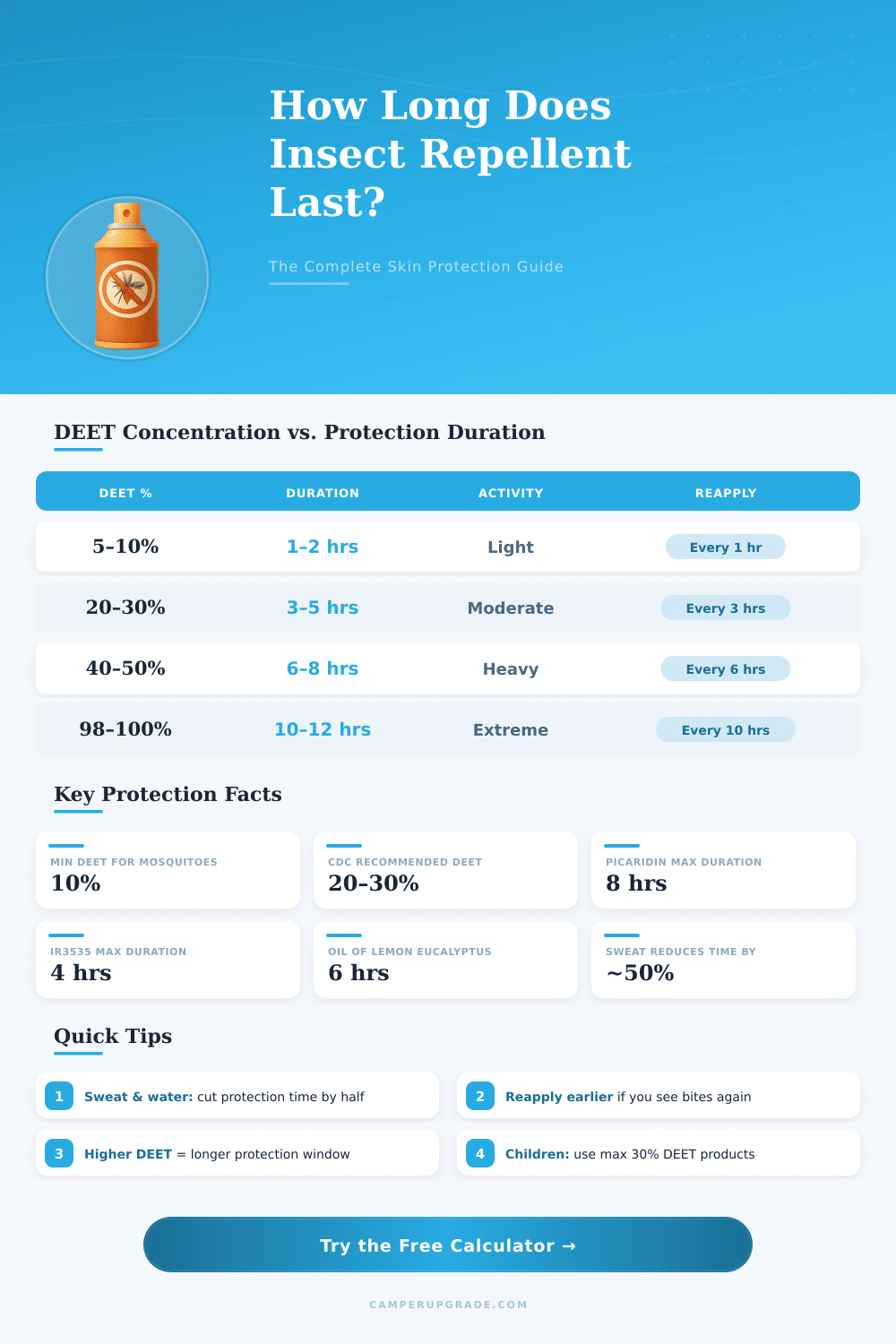
| DEET % | Base Duration | With Sweating | After Swimming | Recommended For |
|---|---|---|---|---|
| 5–7% | 1–2 hrs | ~45 min | Reapply immediately | Short outdoor errands |
| 10% | 2 hrs | ~1 hr | Reapply after exit | Kids, short hikes |
| 15–20% | 3–4 hrs | ~2 hrs | ~1.5 hrs | Day hikes, gardening |
| 25–30% | 5–6 hrs | ~3 hrs | ~2 hrs | Camping, fishing |
| 40–50% | 6–8 hrs | ~4 hrs | ~3 hrs | Dense forest, tropics |
| 75–100% | 10–12 hrs | ~6 hrs | ~5 hrs | Expeditions, high-risk areas |
| Ingredient | Typical Conc. | Duration (Dry) | Duration (Wet) | CDC Approved? |
|---|---|---|---|---|
| DEET | 10–100% | 2–12 hrs | 1–6 hrs | ✅ Yes |
| Picaridin | 5–20% | 2–8 hrs | 1–4 hrs | ✅ Yes |
| IR3535 | 7.5–20% | 2–4 hrs | 1–2 hrs | ✅ Yes |
| Oil of Lemon Eucalyptus | 30–40% | 4–6 hrs | 2–3 hrs | ✅ Yes |
| PMD (p-Menthane-3,8-diol) | 20–30% | 4–6 hrs | 2–3 hrs | ✅ Yes |
| 2-Undecanone (BioUD) | 7.75% | 4–5 hrs | 2–3 hrs | ✅ Yes |
| Permethrin (clothing) | 0.5% | 6 washes / 6 days | Wash-resistant | ✅ Yes (clothing) |
| Citronella / Plant Oils | 5–10% | 20 min–2 hrs | 20 min | ❌ No |
| Activity Level | Sweat Rate | Duration Reduction | Recommended Action |
|---|---|---|---|
| Light (sitting, slow walk) | Minimal | 0–10% reduction | Use full rated duration |
| Moderate (hiking, yard work) | Moderate | 20–35% reduction | Reapply 1 hr early |
| Intense (running, hard labor) | High | 40–55% reduction | Reapply every 2–3 hrs |
| Swimming / Heavy water | Constant wetting | 50–70% reduction | Reapply immediately after |
Insect repellent are made up of materials that one puts on the skin, clothing or other surfaces to stop insects and other bugs from landing or climbing. Many folks simply call it “bug spray” or “bug deterrent.” The thing about common sprays and creams is that they protect you by lowering your attraction to biting insects, rather than killing them.
DEET probably is the most well known active ingredient. Its whole name is N,N-diethyl-meta-toluamide, and it has been used since 1957. Scientists have well researched it and consider it the main standard for insect repellent against bugs.
Different Types of Insect Repellent
It received approval from EPA. On the other hand, picaridin works just as well as DEET. Insect repellent based on picaridin works well in warm and humid places, and they come as sprays or wipes.
There are also natural options. Oil from lemon eucalyptus is the only natural insect repellent that the CDC supports, and studies show that it is just as effective as DEET against mosquitoes. It even helps against some flies that other products do knot succeed to keep away.
Products with that oil usually last around four hours. Also citronella and neem products, as candles or coils, can burn to push mosquitoes from the area.
Permethrin is another good option, but you never should put it directly on the skin. It stays best on clothing and gear. Some studies mention that certain species stay active even after drying, so keep that in mind.
Thermacell devices heat insecticide from the permethrin-group to release it, what helps to protect against mosquitoes aroundcamping places.
Some oils help push away various species of insects, included ticks, ants, roaches, moths and fleas. Even so they did not receive FDA approval for guarding against diseases like the Zika-virus or Lyme-disease. Natural repellent products come in form of sprays, roll-ons, wipes, patches and labels for skin.
Many of them do not carry DEET and use natural ingredients.
Smoke from a campfire serves also as natural insect repellent against insects. If you add grasses like sage, lemon balm or citronella leaves to the fuel, it becomes even more effective for removing bugs. Some companies sell sprays that push away bugs and help them escape.
Repellent products differ according to the mode of use. For skin there are creams, sprays and wipes. For fabrics there are special insect repellent for clothing and gear.
Diatomaceous earth acts as natural and safe powder that works well in spaces with pets or children. A box fan can blow mosquitoes and small flies away from camping areas. Also there are clothes made against bugs, what gives added layers of protection.
Biting insects can ruin the time outside, but with DEET-products, natural options, treated clothes and mosquito nets, you have many ways to fight them.