🌧 Camping Rain Safety Calculator
Find out if rainfall levels are safe for camping — get instant risk ratings, drainage estimates, and safety guidance
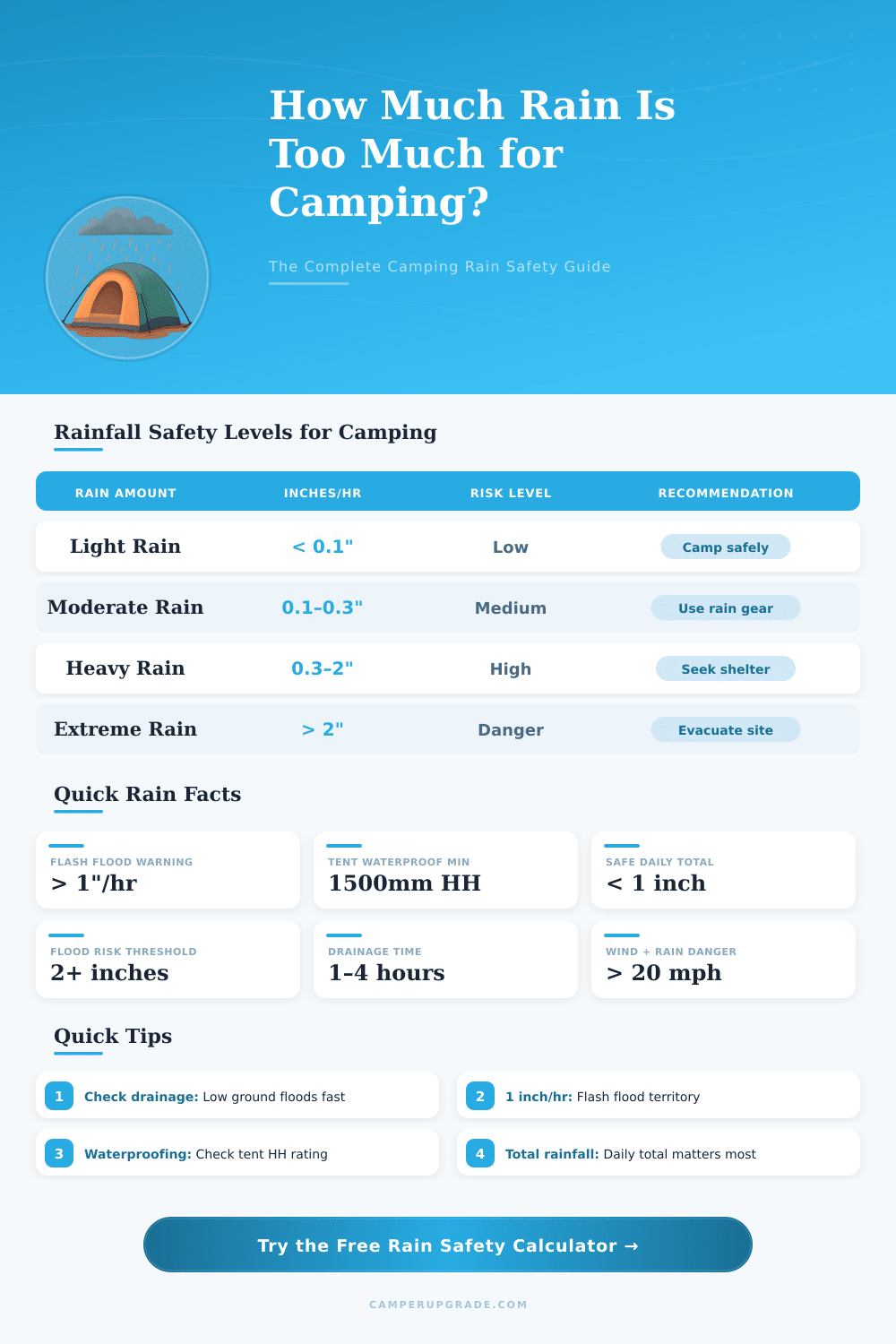
| Intensity | Rate (in/hr) | Rate (mm/hr) | Risk Level | Recommendation |
|---|---|---|---|---|
| Drizzle | <0.04" | <1 mm | LOW | Camp normally |
| Light Rain | 0.04–0.1" | 1–2.5 mm | LOW | Camp safely with gear |
| Moderate Rain | 0.1–0.3" | 2.5–7.6 mm | MODERATE | Use rain gear, waterproof tent |
| Heavy Rain | 0.3–2" | 7.6–50 mm | HIGH | Seek better shelter, monitor flooding |
| Very Heavy Rain | 2–4" | 50–100 mm | EXTREME | Consider evacuating campsite |
| Torrential | >4" | >100 mm | DANGER | Evacuate immediately |
| Terrain Type | Drainage Speed | Flood Risk | Max Safe Rain (in) | Notes |
|---|---|---|---|---|
| Flat Sandy Ground | Fast | Low | 2.0" | Sand drains quickly |
| Flat Clay / Hard Ground | Very Slow | High | 0.5" | Pooling likely after 0.5" |
| Mild Slope (5–10%) | Good | Low–Mod | 1.5" | Water runs off the site |
| Steep Slope (>10%) | Fast | Moderate | 1.0" | Erosion and runoff risk |
| Low-Lying / Valley | Very Slow | Very High | 0.25" | Collects water from uphill |
| Elevated / Hilltop | Fast | Very Low | 3.0" | Best drainage, wind risk instead |
| Near River / Creek | N/A | Extreme | 0.1" | Flash flood danger zone |
| Rocky Ground | Fast | Low | 2.5" | Runoff is rapid |
| Shelter Type | HH Rating | Max Rain Rate | Max Rain Rate (mm/hr) | Suitable For |
|---|---|---|---|---|
| No Shelter | N/A | Drizzle only | <1 mm/hr | Dry weather only |
| Budget Tent (<1000mm) | <1000mm | <0.04 in/hr | <1 mm/hr | Light drizzle only |
| Standard Tent (1000–2000mm) | 1000–2000mm | 0.1 in/hr | 2.5 mm/hr | Light to moderate rain |
| Good Tent (2000–3000mm) | 2000–3000mm | 0.3 in/hr | 7.6 mm/hr | Moderate to heavy rain |
| Premium Tent (3000mm+) | 3000mm+ | 0.5 in/hr | 12.7 mm/hr | Heavy rain conditions |
| RV / Hard Shell | Waterproof | 2.0 in/hr | 50 mm/hr | Very heavy rain (flooding caveat) |
| Cabin / Solid Structure | Waterproof | Any rain | Any | All rain; check local flooding |
| Wind Speed | Wind (km/h) | + Light Rain | + Moderate Rain | + Heavy Rain |
|---|---|---|---|---|
| Calm (0–10 mph) | 0–16 km/h | LOW | LOW | MODERATE |
| Breezy (10–20 mph) | 16–32 km/h | LOW | MODERATE | HIGH |
| Windy (20–35 mph) | 32–56 km/h | MODERATE | HIGH | EXTREME |
| Very Windy (35–50 mph) | 56–80 km/h | HIGH | EXTREME | DANGER |
| Storm (>50 mph) | >80 km/h | DANGER | DANGER | DANGER |
Rain and Camping rank between those things that folks either love or hate. It is not always ideal, but with the right attitude and a bit of planning Rain Camping can still become a fun experience. The Rain does everything messy a bit smelly and the dirt spreads everywhere very soon.
That simply belongs to real life, rather than the lovely Rain images that folks post on the net.
How to Camp in the Rain
One of the main problems is keeping the moisture outside and the dryness inside. Wet Rain coats spread water everywhere. Stepping in dirt with wet shoes is sad.
A better way is to remove the shoes before going in the tent and lay them under the car. Bringing outside shields and paper covers is also a clear advantage, when Rain is expected.
Good waterproof dress changes a lot. Fabrics like Gore-Tex give prime protection and deserve the extra price. Covering up with Rain gear helps a lot.
One should avoid jeans pants, because they become heavy and cold when wet. Rain pants are a good solution too. Use wool or similar, that stays warm even wet, is also useful.
Everything becomes difficult when one is soaked and feels the cold. Even so with good gear, staying outside during Rain indeed can pleas.
Some campers like to use rainy days inside. Turn the lights, prepare tea, watch films on a projector and cook snacks can turn a sad day into something comfortable. Others choose to go out anyhow.
Walking through the Camping ground in light Rain feels refreshing with a Rain coat and rubber shoes. The whole area usually empties, because the rest stay inside.
For owners of rural vehicles and campers, Rain causes separate issues. The marquees need to be tied sharply, because water pools in the centre can quickly drag the whole thing down. The exit covers can allow water to enter when closed, because of windy moves that push Rain according to the direction.
Slides from the vehicle can leave water flowing on the floor when opened during Rain. Many campers wait for the Rain to end before ending setup, simply sitting inside and relaxing untli it ends.
Pop-up campers have their own challenges. In rainy regions like the Pacific Northwest, if there is no place to open them and dry later, mold and moisture grow quickly. The noise of Rain on pop-up roofs can be surprisingly loud.
Shaking the canvas before going inside helps to remove water and stop buildup during active Rain, so thatthe inside does not get too wet.
Lighting a Camping fire in Rain is challenging. Plan to cook using a kitchen instead, because that is more reliable when strong Rain is expected.